
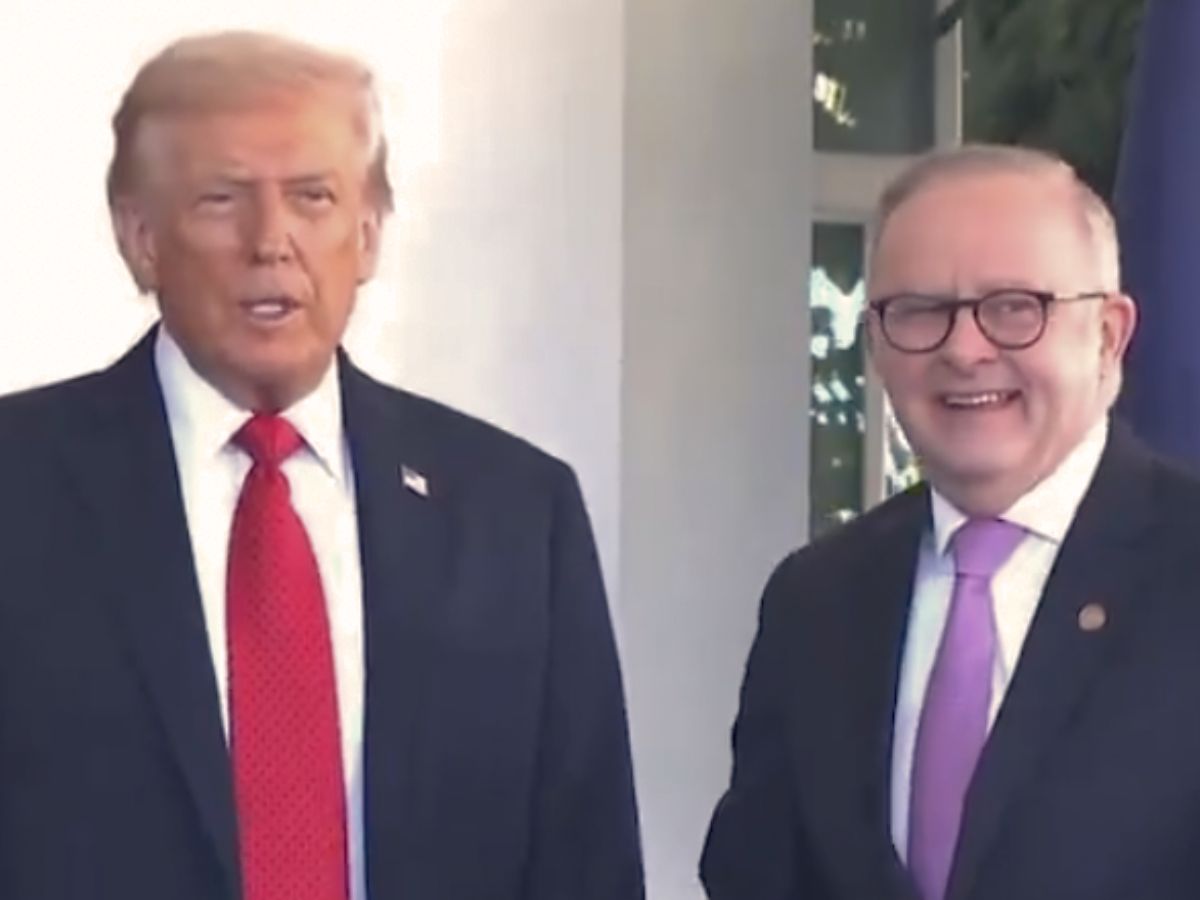

US President Donald Trump hosted Australian Prime Minister Anthony Albanese at the White House on Monday in their first formal summit since Trump was inaugurated. The two signed a historic rare earth and critical minerals agreement to counter China’s control of the world supply of such strategic materials.
The agreement, which Albanese termed an $8.5 billion pipeline “ready to go,” centers on securing a consistent supply of rare earths essential to high-tech sectors, such as electric cars, defense hardware, and jet engines. Both countries will put up $1 billion over half a year in joint ventures, with some of the agreement spent on refining these minerals.
Trump said about the strategic value of the alliance. “This is an agreement that has been negotiated for four or five months, and it’s essential for both nations and the world,” he stated, calling out the U.S.’s increasing dependence on secure access to rare earths as China increasingly constricts global markets.
Albanese confirmed that he had invited Trump to visit Australia, with the US President responding positively: “I’ve been invited to go, and I’ll have to give it serious consideration. It’s a real possibility.”
The summit also addressed the AUKUS nuclear submarine agreement, worth A$368 billion ($239.46 billion), that binds Australia to buying U.S.-made nuclear-powered submarines in 2032 before teaming up with Britain to work on a new submarine class. Trump had described negotiations of the AUKUS deal as “just minor details,” with the project now set to move “full steam ahead.”
Australia, one of the world’s leading producers of rare earths and strategic minerals, has moved strategically to become a trusted ally for the U.S. in lessening dependence on China. The collaboration between the two nations is a reflection of increasing Western anxiety over China’s export controls on these essential materials that are at the heart of global defense, technology, and energy industries.
This high-level sit-down reflects a deepening U.S.-Australia alliance in trade, defense, and strategic resources, reflecting a new order of global rare earths dynamics and a coordinated push to diversify supply chains from China.
Sofia Babu Chacko is a journalist with over five years of experience reporting on Indian politics, crime, human rights, gender issues, and stories about marginalized communities. She believes journalism plays a crucial role in amplifying unheard voices and bringing attention to issues that truly matter. Sofia has contributed articles to The New Indian Express, Youth Ki Awaaz, and Maktoob Media. She is also a recipient of the 2025 Laadli Media Awards for gender sensitivity. Beyond the newsroom, she is a music enthusiast who enjoys singing. Connect with Sofia on X: https://x.com/SBCism




