
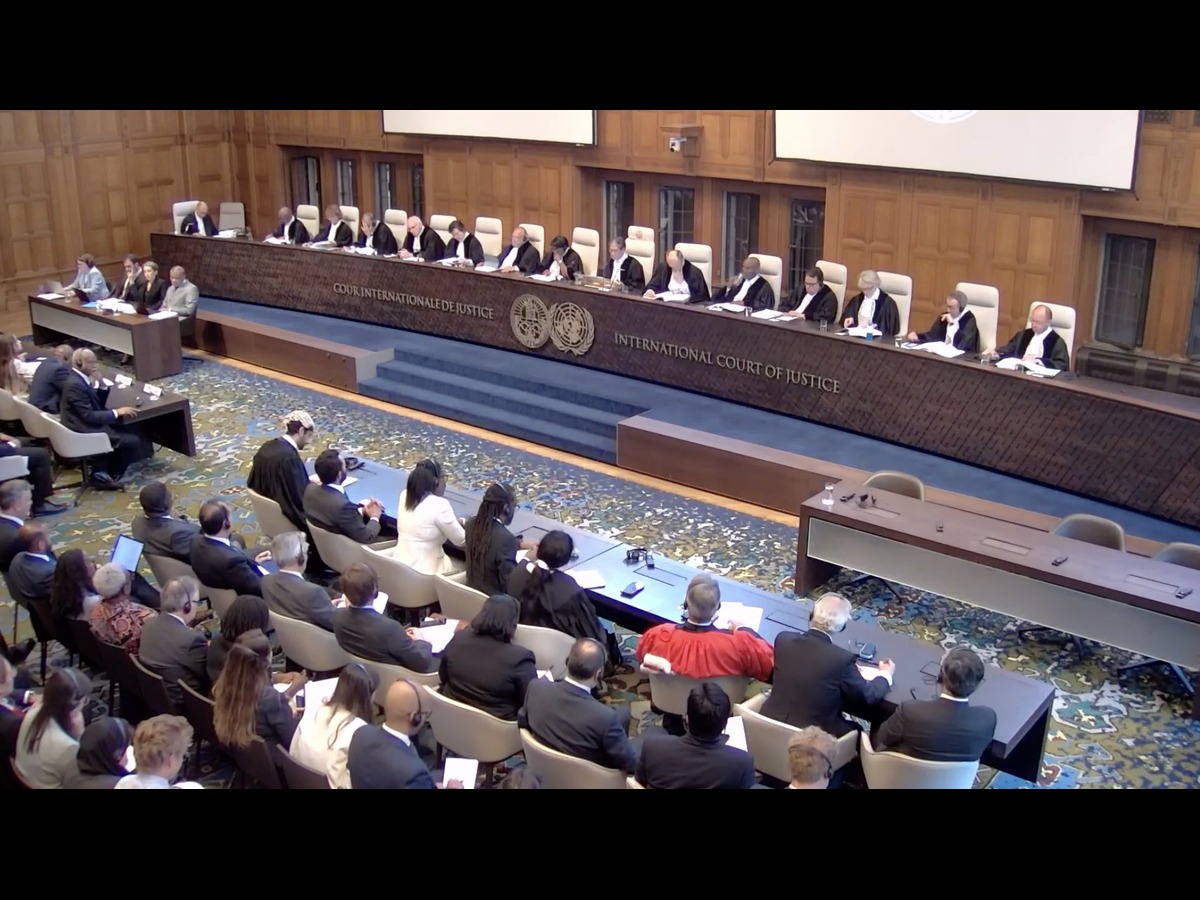

The International Court of Justice (ICJ) has said climate change is “an urgent and existential threat.”
Yuji Iwasawa, the ICJ president, stated that greenhouse gas emissions are “unequivocally caused by human activities.”
He added that the consequences of these are “severe and far-reaching,” and they will affect both ecosystems and populations.
The court noted that being unable to follow global climate treaties would be a breach of international law.
Final decisions are still unconfirmed, but experts still consider this a historic step.
This follows years of lobbying by island nations like Vanuatu, which are vulnerable and could get submerged due to rises in sea levels.
What Else Did The International Court of Justice Say On Climate Change?
The ICJ opinion is nonbinding but still holds legal and political weight and could easily transform the future of global climate governance.
It was asked to answer two critical questions: What are states required to do under international law to protect the environment from greenhouse gas emissions, both now and for future generations? And what are the legal consequences for states whose emissions harm others, especially vulnerable countries?
Then the ICJ reviewed thousands of pages of submissions and conducted two weeks of oral hearings, its most extensive case to date.
The climate activists gathered outside the court in support and chanted slogans like “What do we want? Climate justice! When do we want it? Now!”
Ralph Regenvanu, Vanuatu’s Minister for Climate Change, said that ICJ must consider that addressing climate change is a legal obligation.
He added that powerful states are involved in unchecked emissions, which threaten the survival of smaller countries.
What Would Be The Final Decision Of The International Court Of Justice?
The minister said incidents like these are reminiscent of colonial injustice, when stronger nations developed at the cost of smaller nations.
He hoped the decision of the ICJ would be a “game-changer.”
Earlier, the United States said that existing nonbinding treaties should form the base of climate obligations. The US gave an example of the 2015 Paris Agreement for it.
However, the agreement fails to offer direct compensation for earlier damage to smaller countries; a loss fund was agreed upon in 2022.
This would help vulnerable nations to deal with climate change, experts said.




