
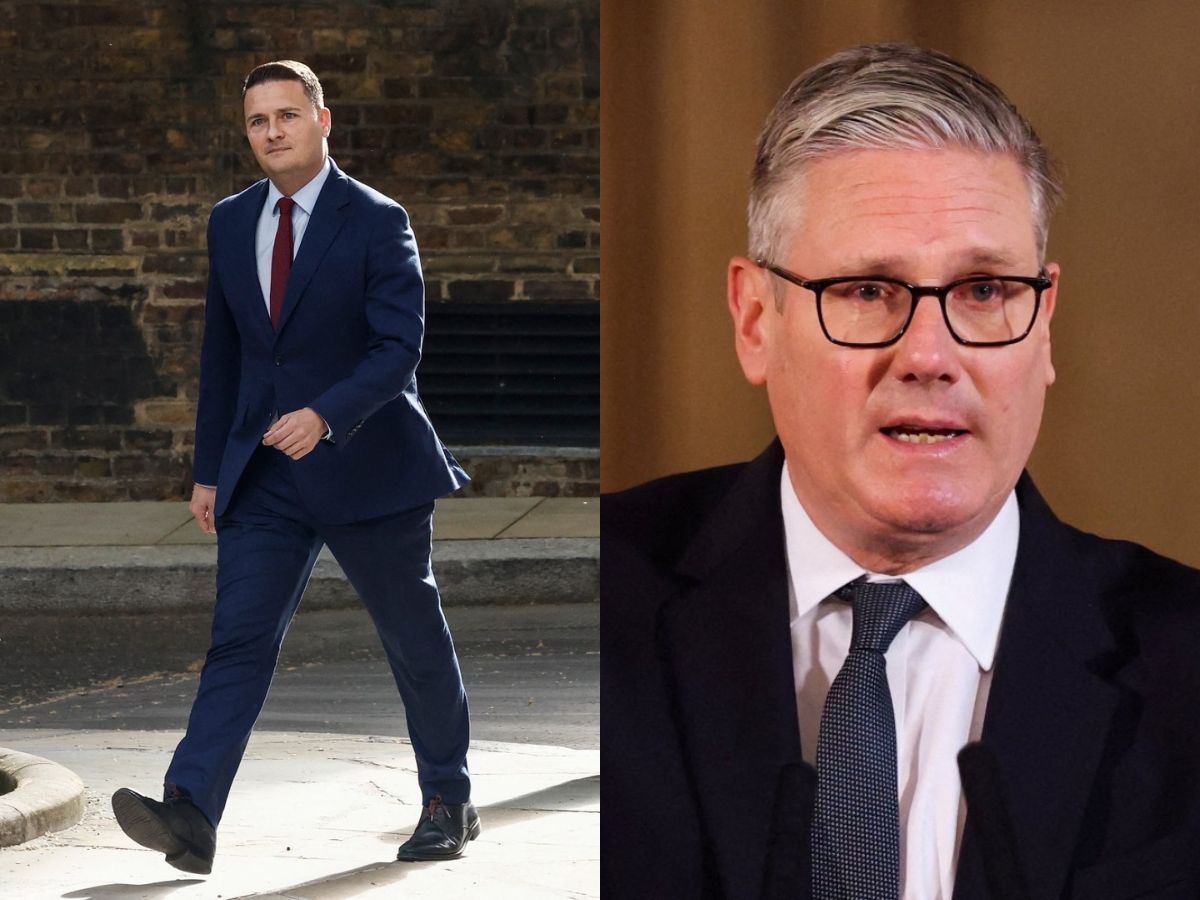
Wes Streeting on Thursday announced his resignation as Britain’s health minister and openly called for a leadership contest to replace Prime Minister Keir Starmer, deepening the political crisis inside the governing Labour Party after its poor local election performance last week. The resignation marks the first major break from within Starmer’s senior cabinet ranks and adds fresh pressure on the British Prime Minister, who has so far refused to step down despite growing unrest among Labour MPs and party unions. Britain’s political situation has become increasingly unstable just under two years after Starmer secured a huge parliamentary majority by promising stability and an end to years of political turmoil.
Pressure inside Labour grows after disappointing local election results
The latest turmoil follows disastrous results for Labour in recent local elections, triggering calls from sections of the party demanding that Starmer either resign or clearly outline a timeline for his departure. Streeting became the first senior minister to publicly step away from the government, saying in his resignation letter that “it is now clear you will not lead the Labour Party into the next general election”.
“It is now clear … that Labour MPs (members of parliament) and Labour (trade) unions want the debate about what comes next to be a battle of ideas, not of personalities or petty factionalism,” he wrote.
“It needs to be broad, and it needs the best possible field of candidates. I support that approach and I hope that you will facilitate this.”
Streeting’s resignation increases uncertainty around Starmer’s future
Although Streeting’s move did not formally trigger a leadership contest, it significantly increased pressure on Starmer, who has continued insisting that he plans to fight for his position. Sources close to Starmer said the Prime Minister remains determined to survive any possible leadership challenge. Reports suggest that if a contest takes place, Streeting could emerge as one of the challengers alongside senior figures from Labour’s so-called “soft left” faction.
Earlier on Thursday, Angela Rayner, Starmer’s former deputy, announced that she had been cleared of deliberate wrongdoing linked to her tax affairs. The issue had previously been viewed as a possible obstacle to any future leadership ambitions. However, Rayner declined to say whether she planned to launch a formal leadership bid.
Soft-left figures and trade union allies emerge as possible contenders
Other names being discussed as potential contenders include Andy Burnham and Ed Miliband, who currently serves as Britain’s energy security and net zero minister. The “soft left” faction within Labour generally supports stronger state involvement in industries, expanded workers’ rights and maintains close ties with trade unions.
However, Burnham currently does not hold a parliamentary seat, which would complicate any leadership challenge. Even if another Labour MP stepped aside to create space for him, the process could take weeks or even months, potentially limiting his chances in a quick leadership race. Party insiders indicated that members of Labour’s soft-left bloc are likely to try settling on one agreed candidate instead of splitting support across multiple challengers.
Starmer allies warn against political instability during economic recovery
Despite the growing unrest, Starmer still retains support from several senior ministers and party figures. The 63-year-old former lawyer has largely continued operating with what allies describe as a “business as usual” approach while refusing to publicly discuss stepping down.
On Thursday, Rachel Reeves defended the Prime Minister and warned Labour lawmakers against creating more instability at a sensitive moment for Britain’s economy. She urged MPs not to risk “plunging the country into chaos” while pointing to recent economic signs suggesting that Britain’s weak economy may finally be improving.
Official data released earlier showed that the British economy unexpectedly recorded growth in March, offering Starmer’s supporters fresh arguments against forcing an immediate leadership battle inside Labour.
(with inputs from Reuters)
Also Read: Iranian FM Abbas Araghchi Reaches New Delhi Ahead Of BRICS Foreign Ministers Conclave
Khalid Qasid is a media enthusiast with a strong interest in documentary filmmaking. He holds a Master’s degree in Convergent Journalism from AJK MCRC. He has also written extensively on esports at Sportsdunia. Currently, he covers world and general news at NewsX Digital.





