
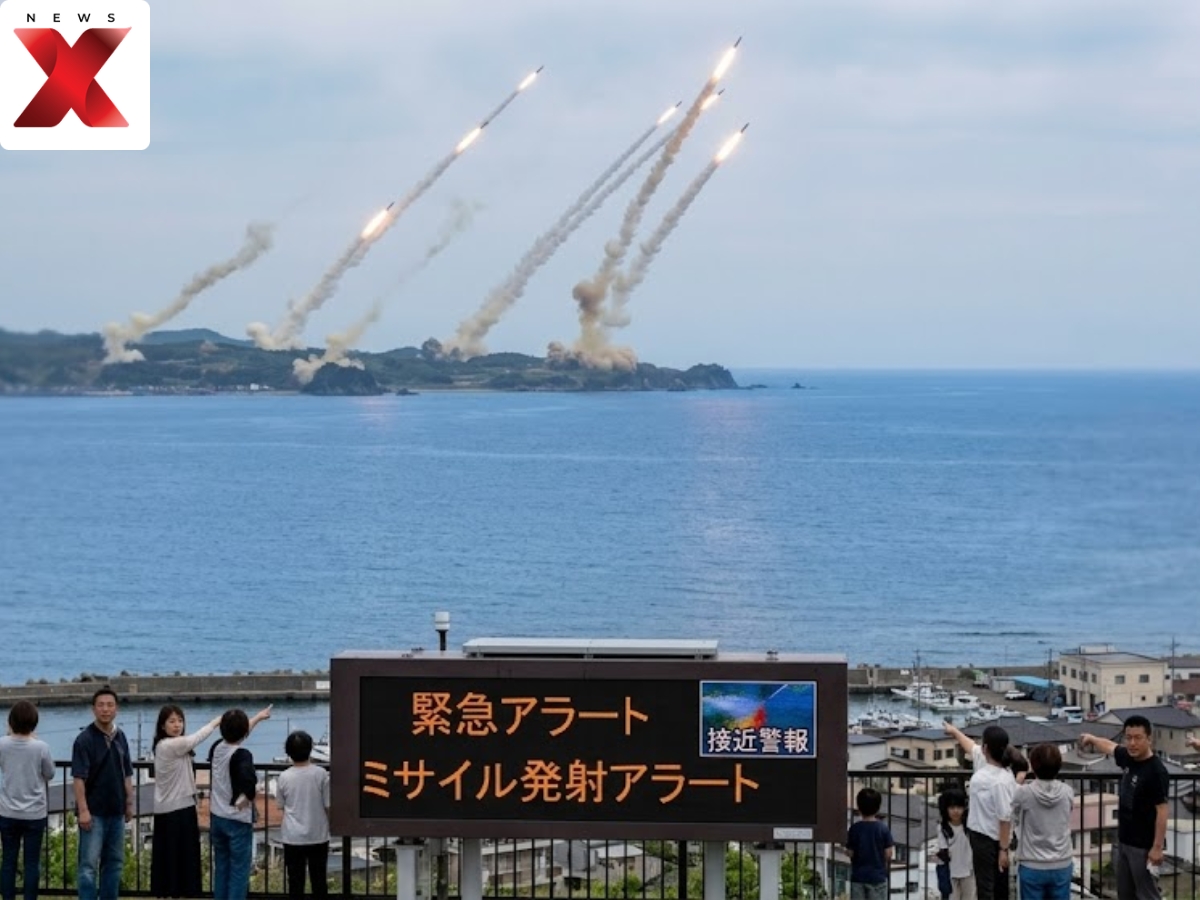

North Korea has launched around 10 ballistic missiles toward the eastern waters near Japan on Saturday, as Iran and US-Israel war continues in the Middle East. According to South Korea’s Joint Chiefs of Staff (JCS), the missiles were fired from the Sunan area in North Korea at approximately 1:20 pm local time. The projectiles were launched toward the East Sea, also known as the Sea of Japan.
The JCS said the missiles travelled about 350 kilometres (220 miles) after being launched from the vicinity of Sunan, which is also the site of Pyongyang’s international airport.
The ballistic missile tests follow another weapons demonstration earlier this week, when North Korea fired cruise missiles from a newly built naval destroyer.
Why Has North Korea Targeted Japan?
The latest launches appear to underline North Korea’s continued progress in its ballistic missile programme. Pyongyang has frequently conducted such launches to signal anger toward neighbouring countries and to demonstrate its growing military capabilities.
The missile tests came as the United States and South Korea are holding their annual spring military drills involving thousands of troops. At the same time, the administration of US President Donald Trump is engaged in an escalating conflict with Iran and the regional alliance often described as the “Axis of Resistance”.
Earlier in the week, North Korea had also protested the start of the Freedom Shield military exercises, a 10-day drill involving South Korean and US forces that will continue until March 19.
Japan Issues Emergency Alert
Japan quickly responded to the launch reports by issuing an emergency alert.
The Prime Minister’s Office warned the public about the situation in a post on X, stating, “[Emergency alert] North Korea has launched a suspected ballistic missile. More updates to follow.”
Following the alert, the government led by Japanese Prime Minister Sanae Takaichi activated emergency monitoring protocols to track the projectile’s trajectory.
Takaichi, Japan’s first female prime minister who recently secured a landslide victory in the February 2026 general elections, has maintained a strong stance on regional security and the protection of Japanese territory.
Why North Korea Targeted Japan: Longstanding Tensions Explained
North Korea and Japan do not maintain diplomatic relations, and ties between the two nations have long been strained. Key disputes include Pyongyang’s nuclear weapons programme, the issue of Japanese citizens abducted by North Korean agents, and the legacy of Japan’s colonisation of the Korean Peninsula between 1910 and 1945.
In 2002, North Korea admitted during a summit between late North Korean leader Kim Jong Il and then Japanese Prime Minister Junichiro Koizumi that its agents had kidnapped 13 Japanese citizens.
Japan believes the abductees were used to train North Korean spies in Japanese language and culture.
Koizumi later travelled to North Korea again in 2004 for a second meeting with Kim Jong Il. That meeting remains the last summit held between the two countries.
Also, North Korea’s expanding nuclear and missile capabilities continue to pose a major security threat to Japan, South Korea and the United States.
Zubair Amin is a Senior Journalist at NewsX with over seven years of experience in reporting and editorial work. He has written for leading national and international publications, including Foreign Policy Magazine, Al Jazeera, The Economic Times, The Indian Express, The Wire, Article 14, Mongabay, News9, among others. His primary focus is on international affairs, with a strong interest in US politics and policy. He also writes on West Asia, Indian polity, and constitutional issues. Zubair tweets at zubaiyr.amin




