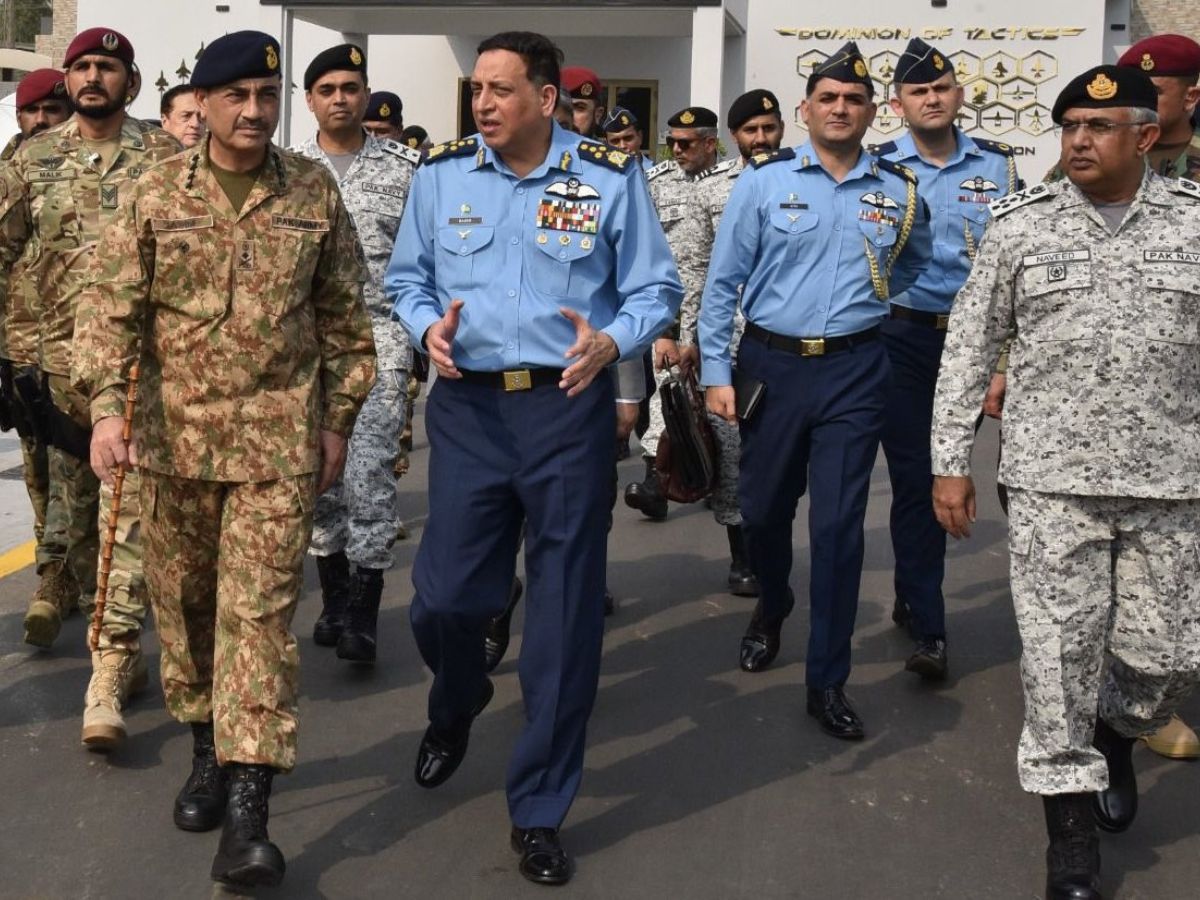

Pakistan is working on significant defence reforms that could reshape the structure of its armed forces. The proposed changes include the creation of a new senior military post titled Commander of Defence Forces (CDF), aimed at unifying operational command across the Army, Navy and Air Force. The move is being linked to strategic lessons Islamabad says it drew from its clashes with India in May during the Operation Sindoor.
Pakistan Proposes Unified Command Structure
According to a report in The News, the new designation is being considered under an amendment to Article 243 of Pakistan’s Constitution. The stated goal is to improve coordination and ensure an integrated response capability across the three services.
The reform, the report said, is “inspired by lessons drawn from recent Pakistan-India war scenarios and the evolving nature of modern warfare that demands an integrated operational response.”
The proposed CDF role would mirror India’s model of centralised military coordination. New Delhi notified rules in May for unified command across its three services, following the creation of the Chief of Defence Staff (CDS) post in December 2019. The CDS oversees inter-service integration, procurement and operational restructuring, and India is currently moving toward Integrated Theatre Commands and Integrated Battle Groups.
Constitutional Amendment Under Discussion
Pakistan is considering these defence reforms as part of the 27th Constitutional Amendment. According to Geo News, the federal government led by Prime Minister Shehbaz Sharif plans to use the amendment to modify Article 243, which currently states that the Federal Government holds command of the Armed Forces and that Supreme Command rests with the President.
Pakistani Defence Minister Khawaja Asif confirmed that internal discussions are underway.
“Consultations on amending Article 243 are underway. Defence requirements have evolved,” Asif told Geo News on November 5.
He added that the process would move forward “through mutual consultation.”
If approved, the amendment would create the CDF post and shift operational command toward a centralised authority. Critics say it could diminish direct oversight of the armed forces by the President and the civilian cabinet.
Shift in Civil-Military Power Balance
The amendment has political implications. At present, constitutional authority over the military rests with President Asif Ali Zardari of the Pakistan Peoples Party (PPP), a coalition partner in the government led by the Pakistan Muslim League-Nawaz (PML-N). Geo News reported that while the PPP had initially opposed several elements of the amendment package, it may support changes to Article 243 under certain conditions.
The push for centralised military command comes amid visible tensions between Pakistan’s civilian leadership and the military establishment, long regarded as the dominant power centre in national security and foreign policy. The military has also faced accusations from Afghanistan’s Taliban government of fueling cross-border tensions.
Possible Appointment of Asim Munir to the New Role
The timing of the reforms is notable. Pakistan’s Army Chief, Field Marshal Asim Munir, is set to retire on November 28. Pakistani media reports say he is being viewed as a likely candidate for the proposed Commander of Defence Forces post, if the amendment is passed in time.
Also Read: ‘No More Talks’, Pakistan’s Khawaja Asif Draws Red Line With Afghanistan
Zubair Amin is a Senior Journalist at NewsX with over seven years of experience in reporting and editorial work. He has written for leading national and international publications, including Foreign Policy Magazine, Al Jazeera, The Economic Times, The Indian Express, The Wire, Article 14, Mongabay, News9, among others. His primary focus is on international affairs, with a strong interest in US politics and policy. He also writes on West Asia, Indian polity, and constitutional issues. Zubair tweets at zubaiyr.amin