
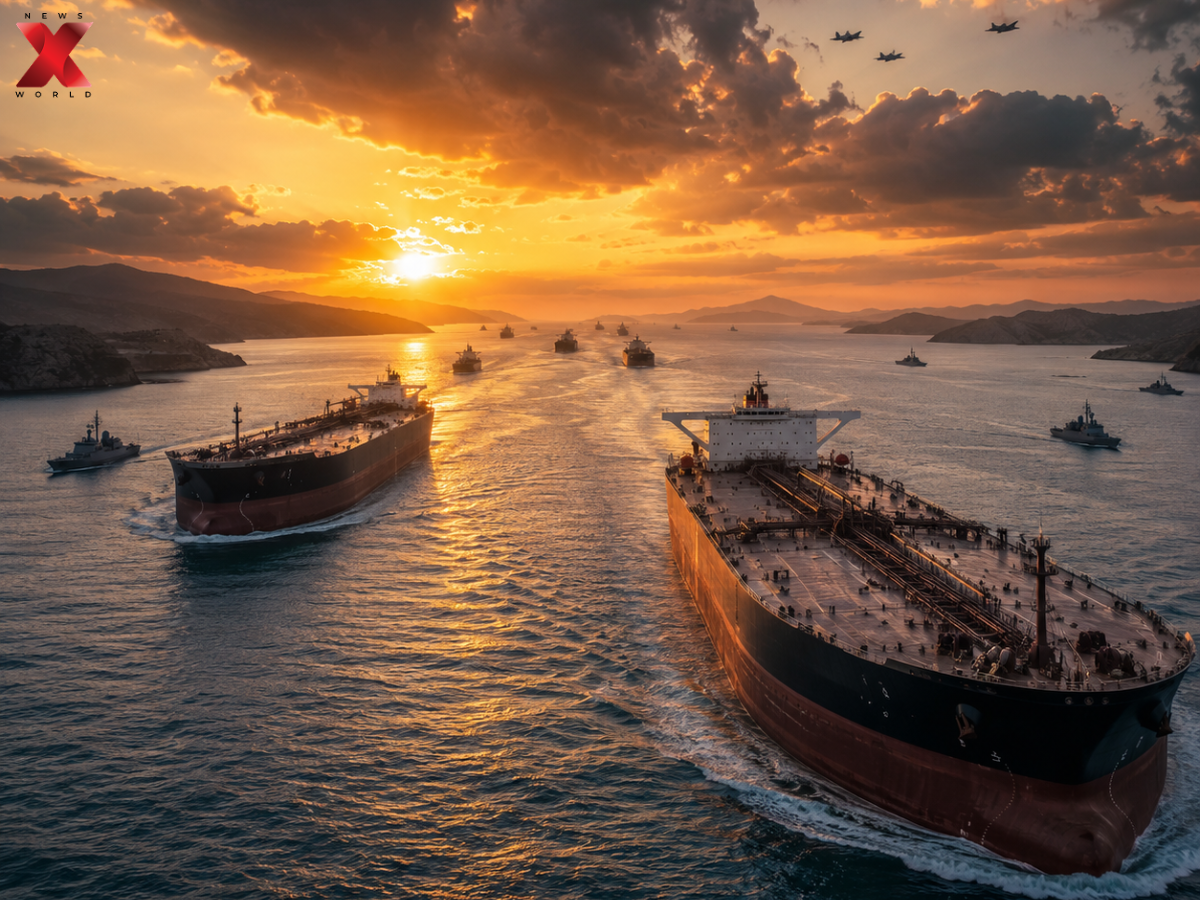

STRAIT OF HORMUZ: Iran’s Revolutionary Guard said that passage for the Strait of Hormuz would be guaranteed, but without providing any specifics, following President Donald Trump’s decision to put on hold a U.S. plan to escort ships through the vital waterway following the attacks on two tankers near the Gulf region last week. “With the termination of the aggressors’ threats and given the new procedures, passage of ships safely and securely will now be facilitated,” the Iranian Navy said in a written statement. Further details about the new terms have not been announced yet.
How will Markets React To The Big US-Iran war update
The Strait of Hormuz has been shut down for weeks due to the ongoing operation by Israel and the United States on Iran beginning Feb. 28, affecting the supply of global energy and driving up fuel costs. Iran has been attacking cargo ships attempting to travel through the strait without permission. The United States has been blocking Iranian ports with a naval blockade since mid-April.
Military advisor to Iran’s Supreme Leader states that Iran will attack American ships in the Strait of Hormuz and could escalate further if the U.S. does not accept its offers.
MARKET IMPACT:
• OIL: Rising due to supply concerns (+5-8% recently; possible $90-$100+)
• BITCOIN: Volatile yet rallying as a risk/safe-haven asset ($78K-$81K)
• Overall: Elevated geopolitical risks driving equities lower, higher energy and safe-havens.
🚨 BREAKING: Iran Escalation Warning
A military adviser to Iran’s Supreme Leader warns Iran will sink U.S. ships in the Strait of Hormuz and may take broader actions if the U.S. rejects its proposals.
MARKET IMPACT:
• OIL: Surging on supply fears (up 5-8% recently, potential… pic.twitter.com/B7Cc8noexw— Crypto Emperor (@Cryptoemperor06) May 6, 2026
The Strait of Hormuz is the artery of global oil flows; it is a passage that sees daily transport of up to 20 percent of the world’s oil supply. In any case of disruption due to military conflict or navigation problems, markets are immediately concerned since it implies supply issues on a global level.
The latest tensions between the US and Iran have led to the first price increases in oil markets. Following the reopening of the Strait of Hormuz, markets view it as an important signal about avoiding a full-scale supply shock.
Oil Markets React First and Fast
The first to be affected are obviously crude oil markets. Disruption causes prices to rise because of supply concerns and logistical bottlenecks. Reopening will mean that the fear premium starts unwinding as markets expect an improvement in supply outlooks, thus reducing geopolitical risks. Oil markets can stabilize after the reopening as it removes some uncertainties. However, they don’t usually revert to their previous level straight away.
Oil and gas prices have been falling today, driven by hopes for an imminent US-Iran peace deal. Brent crude futures tumbled 11 percent to below $98 per barrel before rebounding slightly to trade down 6 percent.
With 13 years on the line, Ashish Kumar Singh loves everything when it comes to movies, music, travel and pop culture. Formerly employed at ANI, Pinkvilla, India Today and HT, Ashish has interviewed some of the top celebrities of India, including Shah Rukh Khan, Aamir Khan, Ranveer Singh, Ranbir Kapoor and Hrithik Roshan, among others. Breaking news excites him and deadlines are what he chases. Interviewing comes naturally to him. Hit him up at ashish.kumar02singh@gmail.com.




