
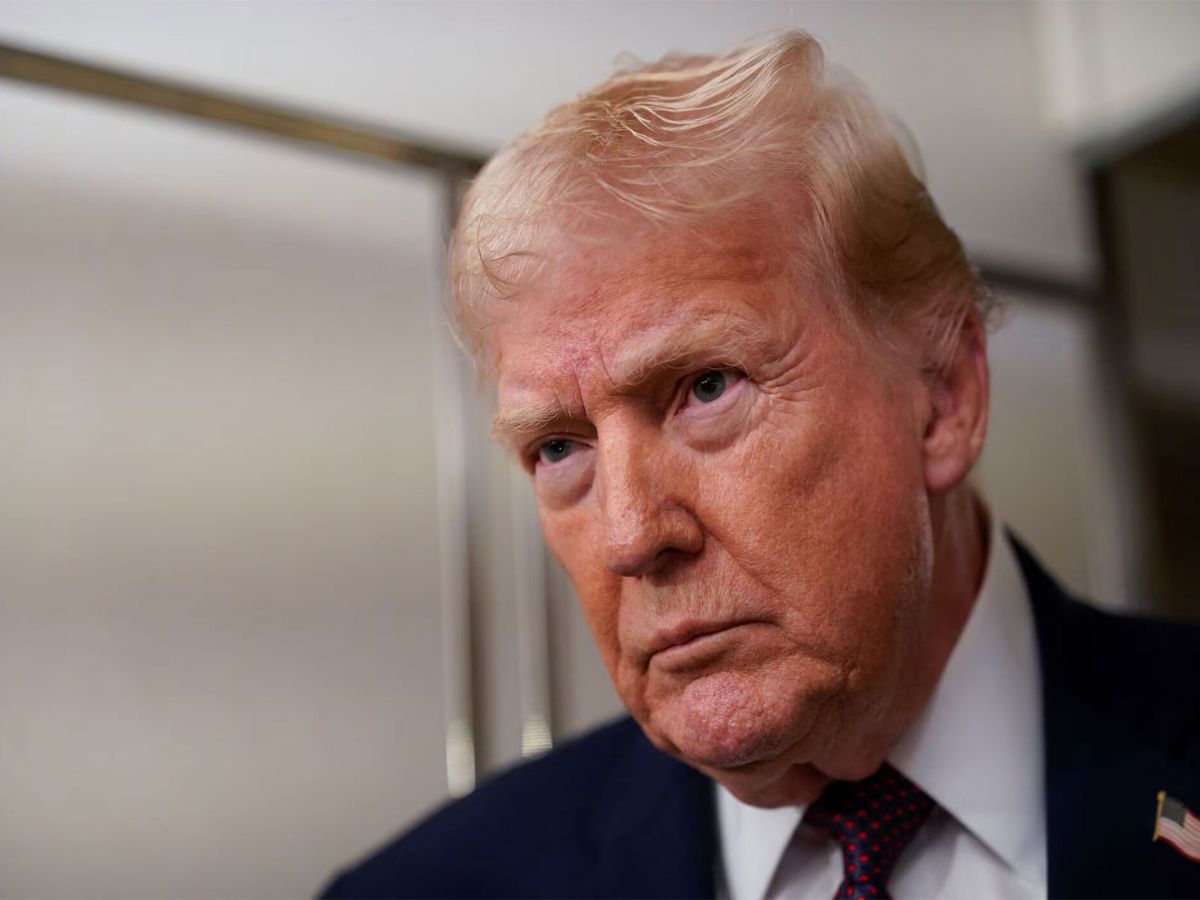
Fresh tensions are once again threatening to push the Middle East toward conflict, after US President Donald Trump linked any final peace agreement with Iran to Gulf nations stepping into the Abraham Accords. During a Cabinet meeting, Trump said, ‘I’m not sure we should sign a deal on Iran if the Gulf states do not join the Abraham Accords’, and then added, that countries like Saudi Arabia, Qatar and the UAE ‘owe it to us’, after extensive US involvement in that regional crisis, so yes. His remarks have already set off worries that the ceasefire talks, which are still pretty fragile, between Washington and Tehran could collapse, and that it could bring back the fear of US-Iran war to start again.
Watch What Trump Said
Trump wants ‘Saudi Arabia, UAE, Qatar, the others’ to join Abraham Accords
‘I think those countries OWE it to us’
‘I’m not sure we should make the [Iran] deal if they don’t sign, you wanna know the truth’https://t.co/7wMQZr4TD3 pic.twitter.com/qjnlSW9yw4
— RT (@RT_com) May 27, 2026
Why Is Trump So Fixated On Abraham Accords?
The Abraham Accords, brokered during Trump’s first term in 2020, helped normalize relations between Israel and a few Arab countries, like the UAE and Bahrain. Now Trump is pushing for more Muslim majority nations including Saudi Arabia, Qatar, Turkey, Pakistan, Egypt and Jordan to get formally in the framework, sort of as a part of a broader Iran settlement. But this request has tangled the ongoing diplomacy a bit, since Iran is strongly against Arab recognition of Israel, and it looks at the accords like a move to isolate Tehran both politically and strategically. Trump has said, more than once, that talks with Iran would either end in a ‘great and meaningful’ deal or else, ‘no deal at all’.
What About The Ceasefire?
Meanwhile, the ceasefire itself looks like it’s getting more and more unstable. Iran says the United States has been doing ‘continuous violations of the ceasefire’ after new US strikes, reportedly, hit Iranian drone activities near the Strait of Hormuz. Tehran argued these attacks threw a wrench into the talks that are supposedly still underway , and Washington then pushed back on claims that some final agreement has already been locked in. Trump also warned that if diplomacy doesn’t work out, the US may ‘finish the job’, so military action is still basically on the table. The Strait of Hormuz, which is one of the world’s key oil shipping corridors, remains a major hotspot, where people are worried that any escalation could mess with global energy delivery, and spark more economic instability across the world.
Also Read: Who Is E. Jean Carroll? Writer Who Accused Trump Of Sexual Assault, Now Under Criminal Investigation





