
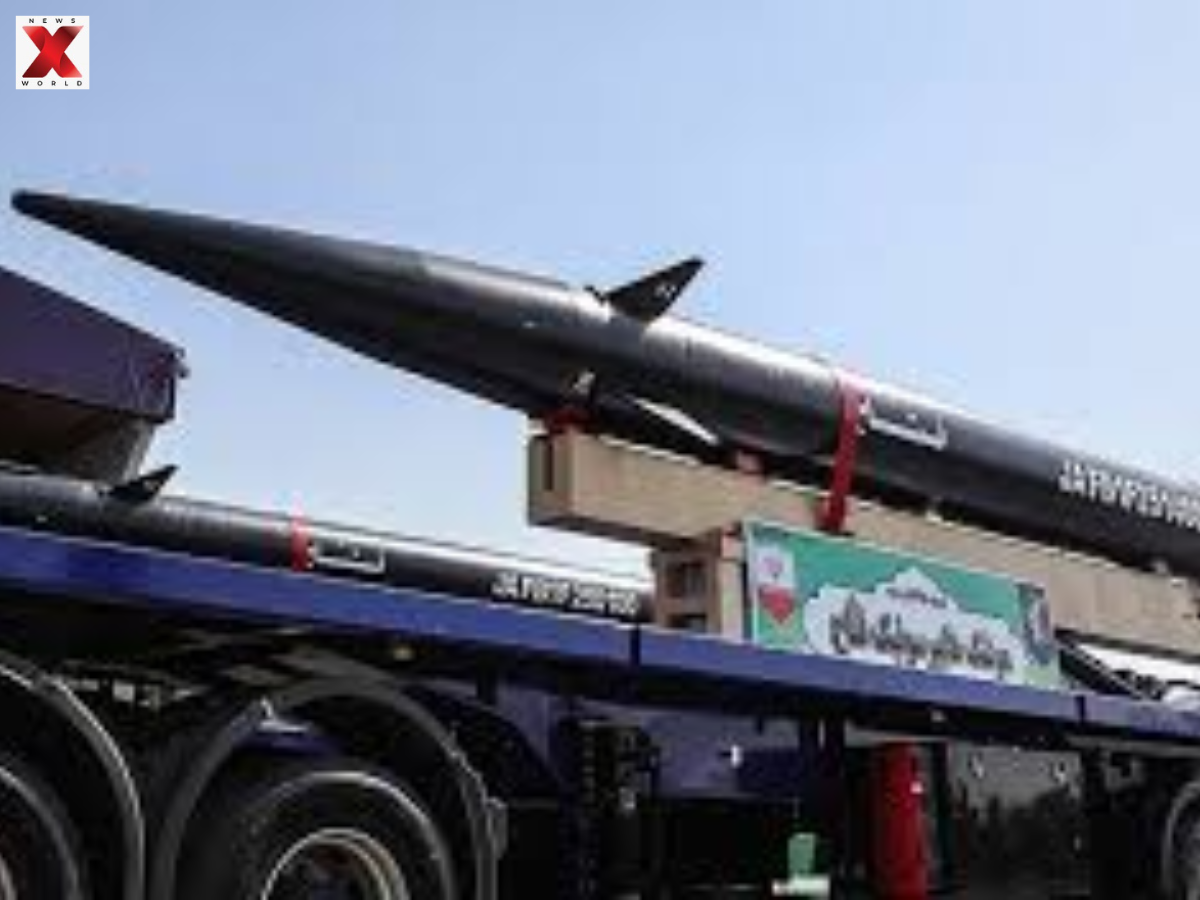

Iran rolled out the Fattah-1 in 2023, a two-stage, solid-fuel hypersonic missile that’s got a range of 1,400 kilometres and a movable nozzle for more control. Iranian officials say it can hit speeds between Mach 13 and Mach 15, which is just wild.
Inside Iran’s Fattah Hypersonic Missiles
Fattah means “conqueror” in Farsi, and it’s Iran’s latest hypersonic ballistic missile. This new version builds on Iran’s first homegrown hypersonic missile, also called ‘Fattah.’
What sets the Fattah 2 apart? For starters, it carries a hypersonic glide vehicle (HGV) warhead. That lets it manoeuvre and glide at extreme speeds up to Mach 15, which is about 18,500 km/h. It uses liquid-fuel rocket propellant, and the engine can adjust its thrust as needed.
This is a precision-guided, two-stage missile with an impressive range up to 1,500 kilometres. It’s about 12 meters long and can deliver a 200-kilogram explosive payload. During flight, it can make sharp trajectory changes to dodge defence systems.
When it’s outside Earth’s atmosphere, the missile can accelerate even more, and its control surfaces help steer it once it’s back inside the atmosphere.
The Fattah can change direction in the middle of flight, both in and out of the atmosphere, which helps it slip past most standard anti-missile systems.
🚨Iran has used Fattah-2 hypersonic missiles for the FIRST TIME in strikes on US bases in the Middle East – Fars, citing a source pic.twitter.com/RpuVtwEREW
— Sputnik (@SputnikInt) March 1, 2026
Where does the US Navy’s SM-6 stand?
To defend against threats like these, the US Navy uses the Standard Missile-6 interceptor. The SM-6 can fly at Mach 3.5 and uses dual-mode radar homing to find its target. Its 64 kg blast-fragmentation warhead takes care of incoming missiles.
The SM-6 can protect an area up to 460 kilometres out. Ships with the Aegis combat system launch these missiles vertically from Mk 41 canisters, getting real-time guidance from the ship’s radar during the initial flight.
When it comes to stopping hypersonic missiles, the Navy focuses on catching them during the terminal phase—as they’re plummeting toward their target. The SM-6’s upgraded software lets it track and hit missiles even as they scream in at crazy high speeds.
Lately, the US Navy has actually used the SM-6 in combat, firing 80 of them in the Red Sea to take out multiple anti-ship ballistic missiles. Right now, it’s the only proven weapon in the US arsenal for terminal ballistic missile defense.
But each SM-6 shot is pricey, about $4.3 million a pop, or over Rs 390 million. Usually, two interceptors get fired at every incoming threat to make sure the missile goes down.
Stats show the SM-6 has about a 50 percent chance of killing complex targets with a single shot, but during recent Red Sea operations, it scored a perfect record on terminal missile defence. Its radar seeker worked well even when enemy jamming tried to throw it off.
A typical Aegis destroyer carries about 90 air defense missiles. But if Iran launches a swarm of drones and cruise missiles all at once, the idea is to overwhelm the ship’s defenses and drain its supply of interceptors before unleashing a hypersonic strike.




