

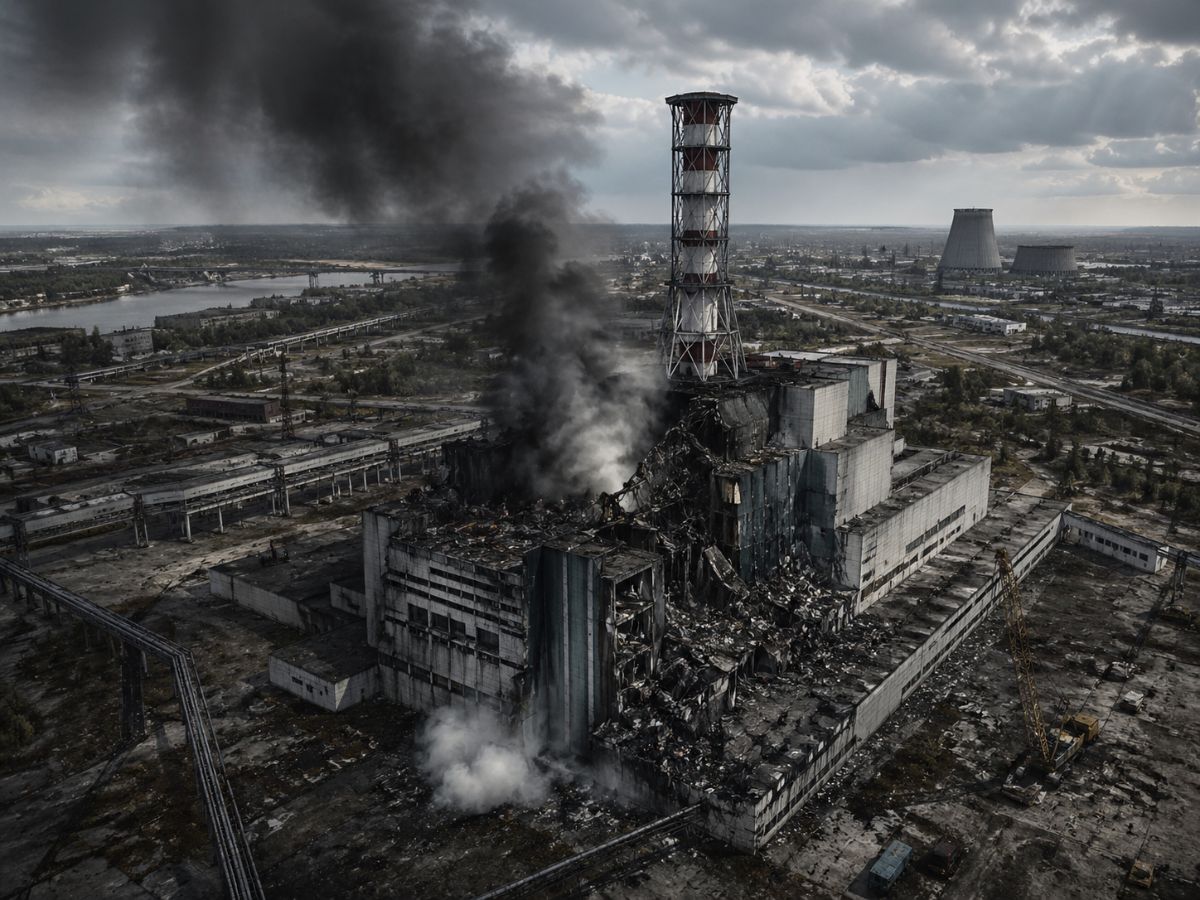
Chernobyl Disaster: One of the world’s most catastrophic events occurred on April 25–26, 1986, when the Chernobyl Nuclear Power Plant experienced a severe malfunction during a routine safety test, marking a major turning point in the history of nuclear energy production.
The incident involved personnel conducting a test on Reactor 4; however, at some point, the technicians disabled critical safety equipment and removed control rods even though the reactor was still in low power operation. This combination of poor design of the reactor and operator error resulted in an unexpected and uncontained chain reaction resulting in a massive explosion with an initial release of radioactive material into the environment.
Chernobyl disaster: What really happened that night
At approximately 1:23 AM, two explosive detonations occurred at the reactor causing the reactor core to be exposed and causing fires which released radioactive substances into the atmosphere. Many of the workers did not comprehend the magnitude of the calamity initially; one worker described her awestruck reaction: “I couldn’t comprehend what happened…I thought I was in some different dimension.”
Two workers perished in the initial explosion, numerous firefighters and emergency service workers survived being subjected to lethal levels of radiation attempting to extinguish the blaze. A number after that succumbed to radiation sickness, and thousands would endure long-lasting effects due to their exposure to high levels of radiation over time.
Chernobyl disaster: How radiation spread and affected people
Following the disaster, a huge amount of radioactive debris was released into the air, far beyond that produced by the bombings during World War II. This fallout from the Chernobyl explosion travelled over a vast area, spreading radiation throughout Ukraine, Belarus, much of Russia and even into parts of Europe.
The Chernobyl Nuclear Power Plant located in Pripyat, Ukraine did not immediately evacuate all its workers and their families from the site of the accident. Most residents of Pripyat were not evacuated until over 24 hours after the explosion occurred. Until they learned of the danger posed by this radiation, these people followed their normal routines without knowing how they were being affected by the deadly radiation in the air.
Over 335,000 residents of Chernobyl and surrounding regions had to move from their homes and will likely never be able to return to those homes.
Chernobyl disaster: Health impact and long-term effects
The long-term effects on human health were extremely severe. Many people who were exposed to the aftermath of the event went on to develop symptoms of Radiation Sickness. Thousands of people were diagnosed with different forms of cancer at later times but most commonly, children developed Thyroid Cancer through time as a result of Radiation Exposure.
To help contain the disaster, Emergency Responders, also known as liquidators, came in and provided assistance. Many of these individuals worked without personal protection. One of the Emergency Responders stated years later that no one exposed to the Chernobyl disaster is in good health today indicates how much damage has been done to these individuals who were exposed.
Chernobyl disaster: Environmental damage and exclusion zone
The environmental destruction was great. Millions of acres of forest and farmland became polluted due to this disaster. Many animals born during this disaster were deformed due to the extreme levels of pollution. Ecosystems were greatly affected due to this extreme level of contamination throughout the incident. In addition, an exclusion zone approximately 30 km from the nuclear plant was established in which no human habitation was permitted.
Many areas will remain unsafe even after the incident occurred. There are scientists who believe that these same areas will not be fully habitable for thousands of years. The radioactive particles that contaminated these regions are continually monitored and cleaned up for many years to come.
Chernobyl disaster: What the region looks like today
Chernobyl is still a powerful symbol of the accident which occurred there. The city of Pripyat, located near Chernobyl, is a frozen ghost town. It has abandoned buildings and empty streets. There are officially no people living in the exclusion zone (a 30 kilometer radius around the power plant), but some old people have returned to the area. Scientists visit to carry out research into the long-term effects of the accident.
The damaged reactor is now contained within a huge steel containment structure designed to hold in the radiation. However, there are still some risks from the accident. The accident continues to impact global nuclear policies, as well as providing a stark reminder of the dangers of human error and lack of transparency.
Khalid Qasid is a media enthusiast with a strong interest in documentary filmmaking. He holds a Master’s degree in Convergent Journalism from AJK MCRC. He has also written extensively on esports at Sportsdunia. Currently, he covers world and general news at NewsX Digital.





