
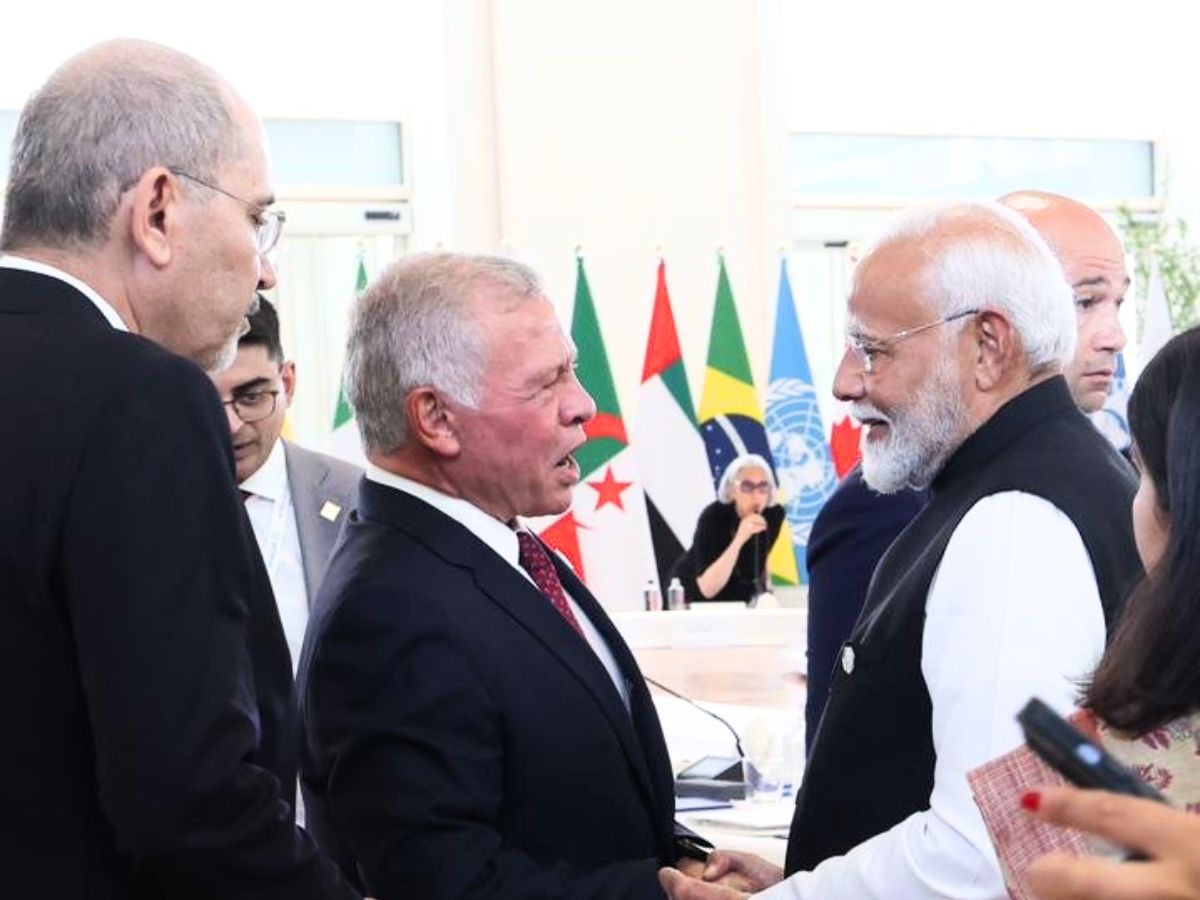

Prime Minister Narendra Modi’s upcoming two-day state visit to Jordan on the 15th-16th of December has been hailed as a “historic” and “landmark” event in the relationship between the two nations, as it is a great diplomatic achievement that is benchmarked in celebration of the 75 years of diplomatic relations between India and Jordan. This visit, organised by the personal invite of King Abdullah II of Jordan, is important not only for the timing but for its relevance as well.
“This is the first time that an Indian Prime Minister is making a full-fledged state visit to Jordan. This is one of the most memorable phases in the history of New Delhi-Amman relations,” India’s Ambassador to Jordan, Manish Chauhan, told journalists.
Historical Background of the Indian-Jordan Relations
One of the major factors for which this visit is being referred to as a historic one is that it is an uncommon event. Though there have been interactions at various levels between India and Jordan, it is for the first time that the Indian Prime Minister is visiting the country for a bilateral visit in the last 25 years.
PM Modi’s visit is taking place at a juncture where both the nations are keen to take their relations beyond the realms of normal diplomatic interactions to a more strategic one. This, as confirmed by Ambassador Chauhan, is an unprecedented event of great significance with the capability of changing the nature of bilateral collaboration.
India-Jordan Relations: 75 Years of Diplomatic Relations
This visit takes place amidst 75 years of establishment of diplomatic relations between the two countries, which is an important milestone for both nations. India and Jordan established their first official agreement for cooperation and friendship in 1947, which came into existence in 1950 after India became a republic.
Throughout the years, relations between the two countries have been characterised by mutual respect, political goodwill, and support for each other in international bodies such as the United Nations. Jordan has consistently shown its support for India’s candidature for important international roles such as membership of the UN Security Council.
Meetings with King Abdullah II of Jordan
During the visit, both Prime Minister Modi and King Abdullah II are likely to evaluate the entire range of their bilateral relationship, including their collaboration in political, economic, military, and cultural domains.
The leaders would also discuss their outlook on regional as well as international issues, including what is happening in West Asia, where the presence of Jordan helps ensure stability. This is likely to assume broader geopolitical overtones in view of India’s rising presence in the Middle East.
Boost to Economic & Trade Cooperation
Economic relations always remain one of the major focuses of any visit or event. India is presently Jordan’s third-largest trading partner, with trade between the two nations amounting to approximately $2.8 billion. This is likely to be further augmented with both sides wanting more cooperation in such areas as fertiliser, pharmaceuticals, textiles, chemicals, engineering products, and energy.
There are approximately 15 Indian public sector companies that have invested close to USD 500 million in Jordan, especially in the Qualified Industrial Zones of that country. These zones are major production centers for Indian companies, employing thousands of people.
PM Modi is also likely to address an India-Jordan business meeting along with King Abdullah II, symbolizing the increasing economic ties between the two nations.
Important Aspects of Its Positioning
This is especially important in the context of the current situation in West Asia. Talking about the importance of the visit, Ambassador Chauhan said that it could make difference not only in the relations of the two nations but also in the international community.
Being a moderate influence in the region, Jordan is an important partner for India, which is expanding its presence in the Middle East. India and Jordan are also cooperating with each other in various international organizations such as the United Nations and World Trade Organization.
Indian Diaspora Engagement
An important feature of this visit is the interactions with the Indian community in Jordan, which comprises 18,000 Indians. This community is represented in various industries like manufacturing, health care, education, and services, and is regarded as very well-integrated into the host society.
The Indian embassy has mentioned the eagerness of the community before the visit of the Prime Minister, with outreach to the diaspora a likely component of the total engagement.
Increased Connectivity and People-to-People Relations
The people-to-people ties between India and Jordan have also received impetus in recent years. Royal Jordanian airlines has begun direct flights between Amman and Mumbai, with plans for expansion to New Delhi as well. There is also a visa on arrival scheme for tourists from India to Jordan. This would enable more tourists to visit Jordan.
This is the FIRST LEG of a Three-Nation Tour
This is the first stopping point of PM Modi’s three-country tour. He would then head to Ethiopia for a state visit between December 16-17, before proceeding to Oman between December 17-18. This series of visits is a testimony to India’s increasingly active foreign policy outreach in West Asia and Africa.
A significant Visit
Overall, PM Modi’s historical visit to Jordan on the 15th-16th of December is significant as it is one of the rare instances of both symbolism and substance, topped with a high-level meeting between both nations in celebration of 75 years of diplomatic relations.
“It is not only a reflection of the long-standing friendship between India and Jordan,” as Ambassador Chauhan aptly stated, “but it is an important step in moving India-Jordan relations to a new level.”
ALSO READ: Watch: Police Release Footage Of Brown University Shooting Suspect In Deadly Attack That Killed 2
Sofia Babu Chacko is a journalist with over five years of experience covering Indian politics, crime, human rights, gender issues, and stories about marginalized communities. She believes that every voice matters, and journalism has a vital role to play in amplifying those voices. Sofia is committed to creating impact and shedding light on stories that truly matter. Beyond her work in the newsroom, she is also a music enthusiast who enjoys singing.




