
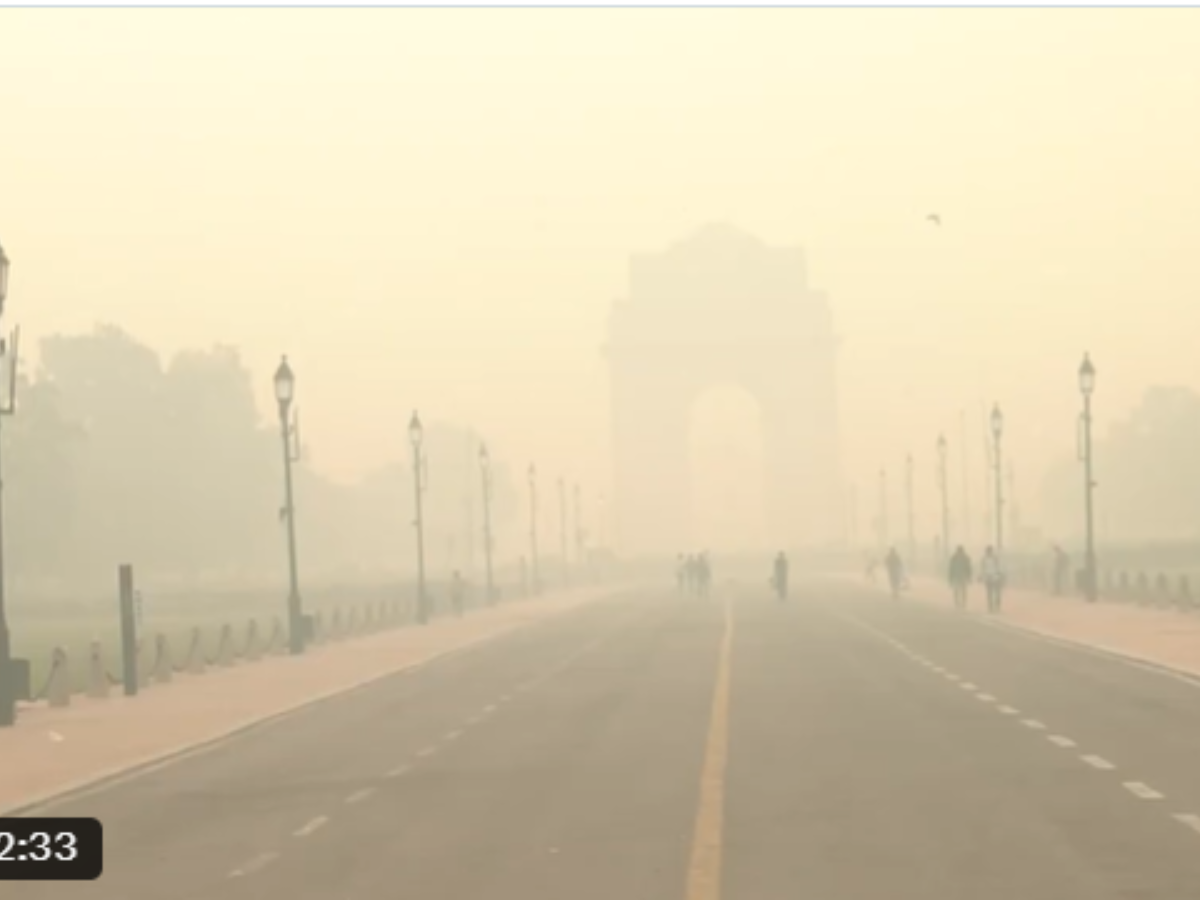

Delhi NCR wakes up with toxic air early morning today – a day after diwali. Heavy smog and toxic air ruins the freshness of the dawn.
The Delhi NCR, witnessed a thick blanket of smoke covered the skyline, cutting visibility across several areas. The average AQI level stood at 451 nearly twice the national average.
As festive fireworks filled the air, the pollution levels escalated sharply across Delhi-NCR. Residents reported breathing difficulties early in the morning as the air turned dense and visibility dropped significantly.
#WATCH | Visuals from the India Gate as GRAP-2 invoked in Delhi.
The Air Quality Index (AQI) around the India Gate was recorded at 342, in the ‘Severe’ category, in Delhi this morning as per the Central Pollution Control Board (CPCB). pic.twitter.com/ZUwDCWpdT8
— ANI (@ANI) October 21, 2025
Noida and Gurgaon Record AQI Above 400
On Diwali night, Delhi’s AQI slipped into the “very poor” range before turning “severe” by morning. The satellite cities of Noida and Gurgaon recorded AQI levels of 407 and 402, respectively, showing little relief from pollution.
The high concentration of particulate matter filled the region’s atmosphere, causing widespread haze. Health authorities issued fresh advisories urging people to avoid outdoor activities. The pollution spike followed massive firecracker use despite restrictions and low wind speed, trapping smoke close to the ground.
Air quality levels between 0–50 are classified as “good,” 51–100 as “satisfactory,” and 101–200 as “moderate.” When AQI reaches 201–300, it turns “poor,” while 301–400 marks the “very poor” zone.
Any reading between 401–500 falls into the “severe” category, posing serious health risks. In such conditions, experts advise limiting outdoor exposure, especially for children and the elderly. Prolonged inhalation of polluted air can cause respiratory distress, eye irritation, and throat discomfort across the population.
CAQM Activates Stage II of GRAP to Control Pollution
The Commission for Air Quality Management (CAQM) has implemented Stage II of the Graded Response Action Plan (GRAP) across Delhi-NCR to reduce pollution levels.
Under this stage, authorities restrict construction activities, deploy anti-smog guns, and intensify road cleaning operations. The move comes as air quality continues to deteriorate following the Diwali celebrations. Agencies also monitor industrial emissions and vehicle movement to prevent further pollution build-up in the national capital region.
The India Meteorological Department (IMD) stated that weak wind movement will trap pollutants, allowing smog to persist over Delhi-NCR. Officials forecast partly cloudy skies and hazy mornings for the next few days. The maximum temperature is expected to remain between 31–33 degrees Celsius, while the minimum may range from 20–22 degrees. The minimum temperature is likely to stay slightly above normal, with the maximum hovering close to the seasonal average, maintaining stable yet polluted weather conditions.
Must Read: GRAP- 2 Imposed In Delhi NCR A Day Ahead Of Diwali, What Does It Mean?
Swastika Sruti is a Senior Sub Editor at NewsX Digital with 5 years of experience shaping stories that matter. She loves tracking politics- national and global trends, and never misses a chance to dig deeper into policies and developments. Passionate about what’s happening around us, she brings sharp insight and clarity to every piece she works on. When not curating news, she’s busy exploring what’s next in the world of public interest. You can reach her at [swastika.newsx@gmail.com]




