
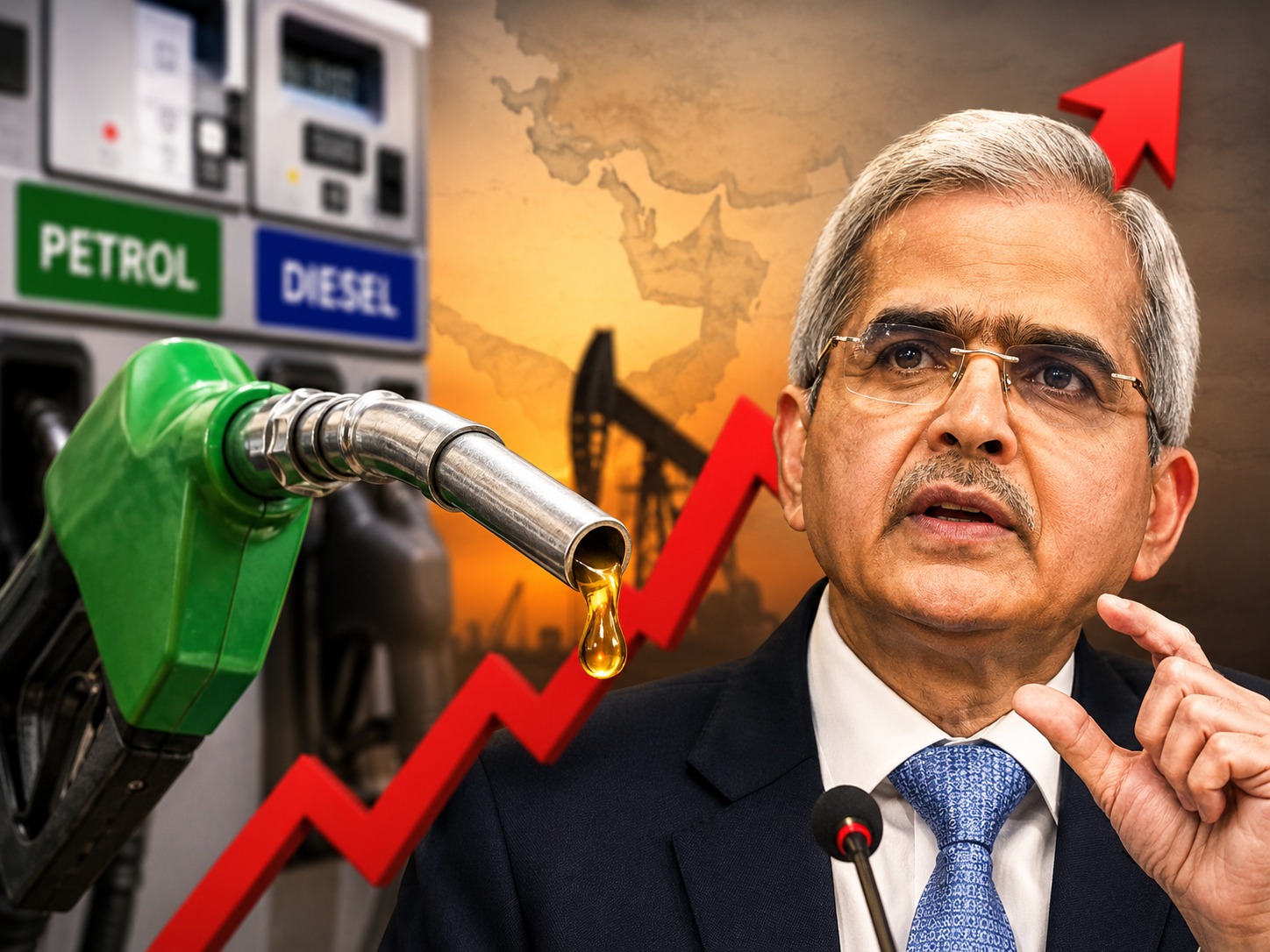
Petrol and diesel prices in India may soon increase as the ongoing West Asia crisis continues to disrupt global crude oil supplies and push international oil prices sharply higher. Fresh remarks from RBI Governor Sanjay Malhotra and Union Petroleum Minister Hardeep Singh Puri have intensified concerns that state-run oil companies may no longer be able to absorb massive financial losses while keeping retail fuel prices unchanged. With tensions around the Strait of Hormuz affecting global energy shipments, India’s crude import costs are rising rapidly, putting pressure on inflation, the rupee and the broader economy. Media reports suggest that oil companies are losing close to Rs 1,000 crore every day at present, even as petrol and diesel prices for consumers remain stable. While the government has so far shielded the public from direct fuel price hikes, increases in commercial LPG, industrial diesel, and jet fuel prices indicate that the pressure is already building within the energy sector.
Speaking at an international conference in Switzerland, RBI Governor Sanjay Malhotra warned that if the crisis continues for a prolonged period, the government may eventually have to pass on the higher fuel costs to consumers, raising fears that a petrol and diesel price hike could be only days away.
RBI Signals Possible Fuel Price Hike
Speaking at a conference hosted by the Swiss National Bank and the International Monetary Fund in Switzerland, Malhotra said the government may not be able to hold petrol and diesel prices at current levels indefinitely. “If this is to continue for a longer period of time, it is just a matter of time before the government will pass on some of the price increases,” Malhotra said.
India, the world’s third-largest oil consumer, imports the majority of its crude oil requirements. Any sustained increase in global oil prices directly impacts inflation, transportation costs, manufacturing expenses and the country’s import bill.
The current situation in the Strait of Hormuz has raised fears of disruption in the supply chain and a surge in energy prices globally. The Strait is critical for oil exports from the Gulf countries, and any instability in the region would have a direct impact on import-dependent nations like India.
Commercial LPG Prices Already Revised
Commercial LPG cylinder prices for 19-kg cylinders were recently increased by Rs 993, indicating that the pressure from rising crude prices is already being passed on in select categories.
Retail prices of petrol, diesel and domestic LPG cylinders, however, remain unchanged at present.
Prime Minister Narendra Modi had recently urged citizens to voluntarily reduce petrol and diesel consumption and avoid unnecessary gold purchases to help conserve India’s foreign exchange reserves amid the global energy uncertainty.
IMF Supports Passing on Crude Price Increase
The International Monetary Fund has also supported the idea of passing on higher crude oil prices to consumers, while stating that India still has some room to manage the current energy shock.
India’s fuel retail market remains largely dominated by state-owned refiners, which control nearly 90% of petrol pumps across the country. Although daily fuel pricing exists in theory, retail petrol and diesel rates are effectively influenced by government decisions.
India’s retail inflation rose slightly to 3.48% in April from 3.40% in March. Economists believe inflation could accelerate if oil prices remain elevated for an extended period.
RBI Monitoring Inflation and Growth Risks
The RBI has projected India’s economic growth at 6.9% for the current financial year and average inflation at 4.6%.
The central bank kept the repo rate unchanged at 5.25% in April. Malhotra said the RBI remains data-dependent and is prepared to take action if inflationary pressures become more persistent due to rising fuel and energy costs.





