
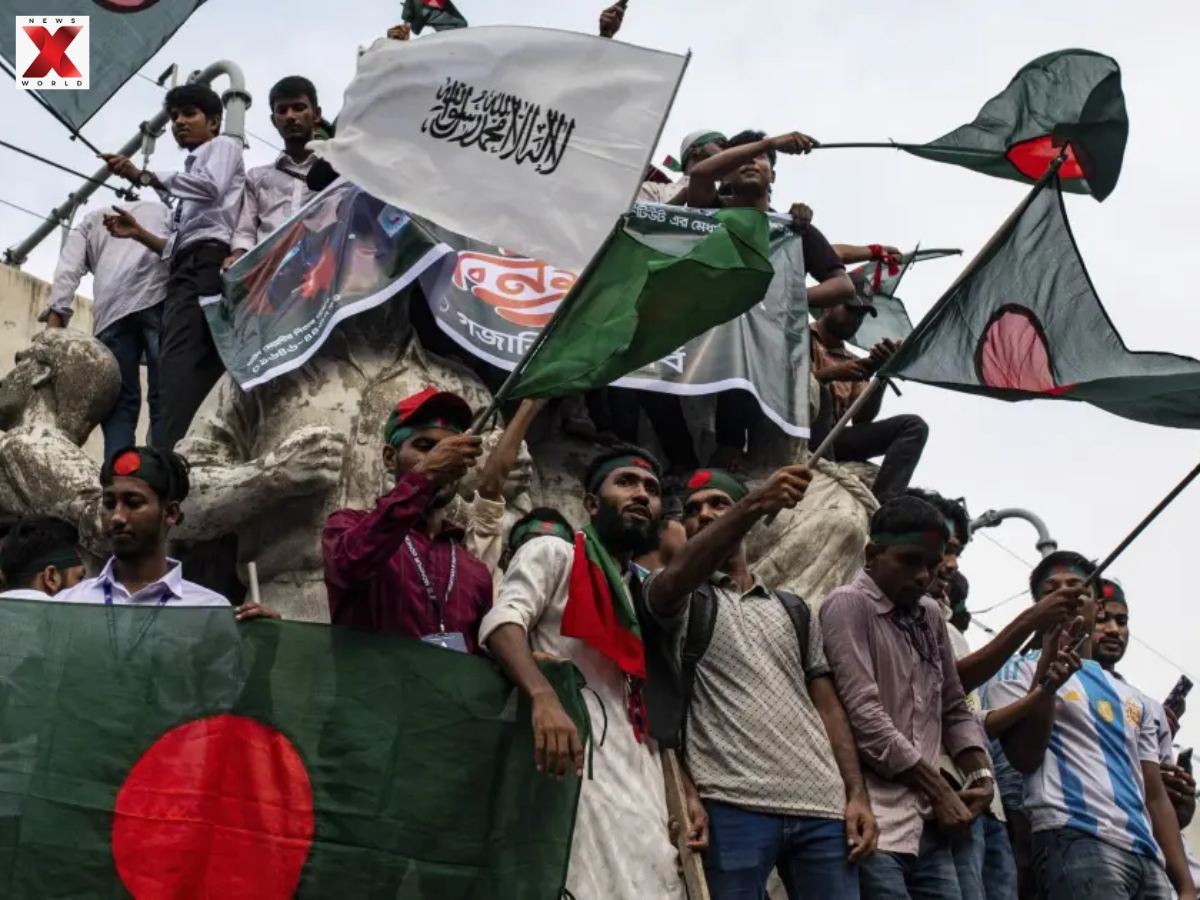

A Parliamentary Standing Committee on External Affairs suggested that the changing political environment in Bangladesh posed the greatest strategic challenge to India since 1971 because of the resurgence of Islamist forces, a changing domestic political environment and the rise in the power of China and Pakistan.
Shashi Tharoor-Led Committee Sounds Alarm
The report that was presented in Parliament by the panel headed by Shashi Tharoor is based on the testimonies of non-governmental experts and government officials and indicates that the difficulty facing India is no longer an existential one but rather a long-term and profound one.
The government has been predicted to revive cash in the coming pongal package with the Assembly elections of 2026 in sight.
The committee observed that it is not an existential threat to India as it was in 1971 because the situation in Bangladesh is not an emergency this time.
It, however, warned that this continued political transition and strategic realignment in Dhaka poses long-term challenges that would redefine the security and foreign policy landscape in India in the long run.
Awami League’s Decline Raises Red Flags for India
It was noted in the report that the political dominance of Sheikh Hasina-led Awami League had declined, and this was among the contributing factors to uncertainty.
It identified a decline in institutional control and a decrease in public confidence as having provided the political space to rival forces, as identified by the panel.
The January 2024 elections in Bangladesh, where the Awami League secured 224 out of 300 seats, also came to the attention of the committee, but with a reported voter turnout of approximately 40, the committee questioned the legitimacy of politics and engagement by the populace.
Youth nationalist feelings, as per the panel, are becoming a powerful political force in Bangladesh. The report also gave a warning of the resurgence of Islamist groups, and this mixture was a possible destabilising factor that had implications for internal security and the stability of the region.
What Is China–Pakistan’s Role in the Bangladesh Crisis?
The committee put the growing presence of China and Pakistan in Bangladesh as one of the strategic challenges facing India. It claimed that the regional realignments would make India lose its traditional role in Dhaka and make its neighbourhood security cooperation more difficult.
The Ministry of External Affairs told the panel that India had launched concerted efforts to ensure that bilateral relations were insulated against the effects of current developments in Bangladesh.
The government alleged that it is still in contact with the Interim Government in Dhaka and that it follows the dreams of the Bangladeshi people.
The political crises in Bangladesh, be it caused by election issues, the issues of governance or civil unrest, are mainly influenced by the internal factors. Pakistan and China are, however, significant external actors due to their strategic interests in South Asia.
Neither nation has a direct, operative involvement in the internal politics of Bangladesh; however, both countries have a focus on the geopolitical environment of the decisions made by Dhaka.
The role of China is, to a great extent, economic and strategic. Beijing is the largest defence distributor and also a significant development partner of Bangladesh, and has highly financed infrastructure, power undertakings, ports and connectivity within the Belt and Road Initiative (BRI).
China has always stressed the principle of non-interference and demanded that internal problems be solved internally. Meanwhile, Beijing gives priority to continuity and stability because political instability poses peril to all its long-term investments and regional dominance in the Bay of Bengal.
Why Bangladesh’s Political Shift Is a Long-Term Strategic Challenge for India
The committee also questioned how Indian authorities could not foresee the political crisis in Bangladesh, given that it said there were warning signs and many reports by the press before the unfolding events.
The government responded by saying that the situation in Bangladesh was being tracked in priority basis, with assessments being carried out on an ongoing basis.
The panel came to the conclusion that a changing political trend and external orientations in Bangladesh would demand a lasting concern for India, as the nation is the core of regional stability, and the Indian approach to its neighbours is an overall policy.




