
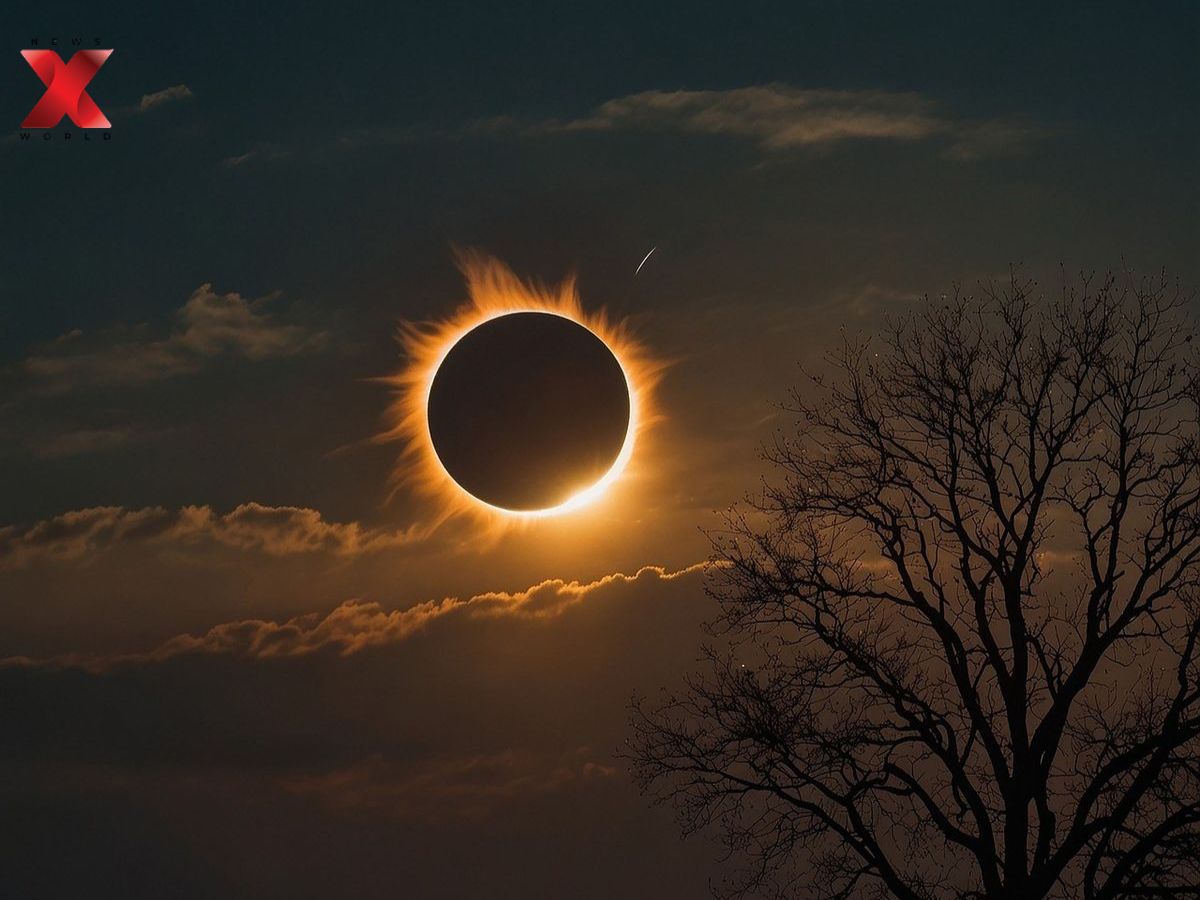

Solar Eclipse On February 17, 2026: Don’t Miss the “Ring of Fire”
Get ready for a celestial spectacle! On Tuesday, 17 February 2026, the sky will put on a show that even penguins will envy-the first solar eclipse of the year, an annular eclipse famously called the “Ring of Fire.”
During this cosmic dance, the Moon will play peek-a-boo with the Sun, sitting just a tad farther from Earth and leaving a dazzling fiery halo around its edges. It’s the universe’s way of showing off, and trust us-you’ll want front-row seats.
While the full “ring” will shine over remote Antarctica, much of the Southern Hemisphere will witness a dramatic bite taken out of the Sun. Even if you’re far away, you can still catch the action live online-because staring at this blazing ring without proper glasses is a hard no!
Mark your calendars, grab your ISO-certified eclipse glasses, and let the sky remind you just how spectacular our universe can be.
Will India Witness The “Ring Of Fire”? Spoiler: Not This Time
Skywatchers in India, brace yourselves: this celestial extravaganza is one you’ll only see in your dreams… or on a livestream. Haha, Sorry readers, this is the part where we were all disapointed!
The “Ring of Fire” annular eclipse will begin its display on 17 February 2026, shining above remote regions, including most of Antarctica, leaving us with nothing to see but empty skies.
So let me break your heart with science and facts, and this heartbreak occurs for two reasons. First, our geographic location prevents us from witnessing the spectacle. The Moon will execute its daring maneuver, producing the glowing fiery ring above the southernmost parts of Earth, while India sits too far north to join the celebration.
The second reason involves timing, which plays a deceptive trick. The eclipse will reach its maximum point at 05:42 PM IST, when the Sun has already started descending below the horizon, leaving only twilight for viewing.
But here is a a solution, the takeaway for Indian stargazers: stay home and watch the eclipse via online streams, Because sometimes, the sky reserves its best views for penguins only.
Where To See The Solar Eclipse “Ring of Fire”
The “Ring of Fire” annular eclipse will be a rare, exclusive spectacle, with the path of annularity passing almost entirely over remote Antarctica. Here’s how different regions will experience it:
Full “Ring of Fire” (Annularity) – Only visible in parts of East Antarctica, including:
-
Concordia Station (French-Italian research base)
-
Mirny Station (Russian research base)
Partial Eclipse – A larger area will see the Sun take a dramatic “bite,” including:
-
Southern Africa: South Africa (Cape Town, Durban), Zimbabwe, Namibia, Botswana, Tanzania
-
South America: Southern tips of Chile (Punta Arenas) and Argentina
-
Islands: Madagascar, Mauritius, Reunion
Not Visible – Regions missing the spectacle entirely:
-
India
-
North America (except some Southern Ocean parts)
-
Most of Asia and Europe
Solar Eclipse Timeline (17 February 2026)
The event spans several hours, but the peak “ring” phase is very brief.
| Phase | UTC Time | IST (India) |
|---|---|---|
| Partial Eclipse Begins | 09:56 UTC | 03:26 PM |
| Full Eclipse (Annularity) Begins | 11:42 UTC | 05:12 PM |
| Maximum Eclipse (Peak) | 12:12 UTC | 05:42 PM |
| Annularity Ends | 12:41 UTC | 06:11 PM |
| Partial Eclipse Ends | 14:27 UTC | 07:57 PM |
Source: Time and Date, Space.com
Upcoming Solar Eclipses And Lunar Surprises
The 17 February 2026 solar eclipse, which follows the “Ring of Fire” path, begins an exciting eclipse season, but you should keep your eclipse glasses handy. The sky presents another display just two weeks later, when a Total Lunar Eclipse occurs on 3 March 2026, allowing nearly everyone on Earth to witness the event.
The solar eclipse occurs mainly over Antarctica, while the lunar event offers widespread visibility, giving people across the globe a chance to see the Moon turn red. The cosmos will present two spectacular events this season, so be sure to mark your calendar and not miss the celestial show.
Next Solar Eclipses Visible in India:
-
May 21, 2031: Annular solar eclipse over southern India
-
March 20, 2034: Total solar eclipse visible from parts of northern India
Solar Eclipse Safety Tips: Protect Your Eyes During the “Ring of Fire”
Watching a solar eclipse can be mesmerizing, but your eyes need protection. Follow these essential tips:
-
Always wear ISO-certified eclipse glasses – Never look at the Sun with regular sunglasses.
-
Avoid direct viewing – Even a brief glance at the “Ring of Fire” can cause serious eye damage.
-
Use proper filters with cameras or telescopes – Protect both your eyes and your equipment.
-
Supervise children carefully – Make sure they also wear certified glasses at all times.
-
Never improvise – Avoid homemade filters or smoked glass; they won’t protect your eyes.
Stay safe and enjoy the solar eclipse responsibly!
(With Inputs)
Also Read: When Is Vijaya Ekadashi 2026: Is It On February 12…
Aishwarya is a journalism graduate with over three years of experience thriving in the buzzing corporate media world. She’s got a knack for decoding business news, tracking the twists and turns of the stock market, covering the masala of the entertainment world, and sometimes her stories come with just the right sprinkle of political commentary. She has worked with several organizations, interned at ZEE and gained professional skills at TV9 and News24, And now is learning and writing at NewsX, she’s no stranger to the newsroom hustle. Her storytelling style is fast-paced, creative, and perfectly tailored to connect with both the platform and its audience. Moto: Approaching every story from the reader’s point of view, backing up her insights with solid facts.
Always bold with her opinions, she also never misses the chance to weave in expert voices, keeping things balanced and insightful. In short, Aishwarya brings a fresh, sharp, and fact-driven voice to every story she touches.




