
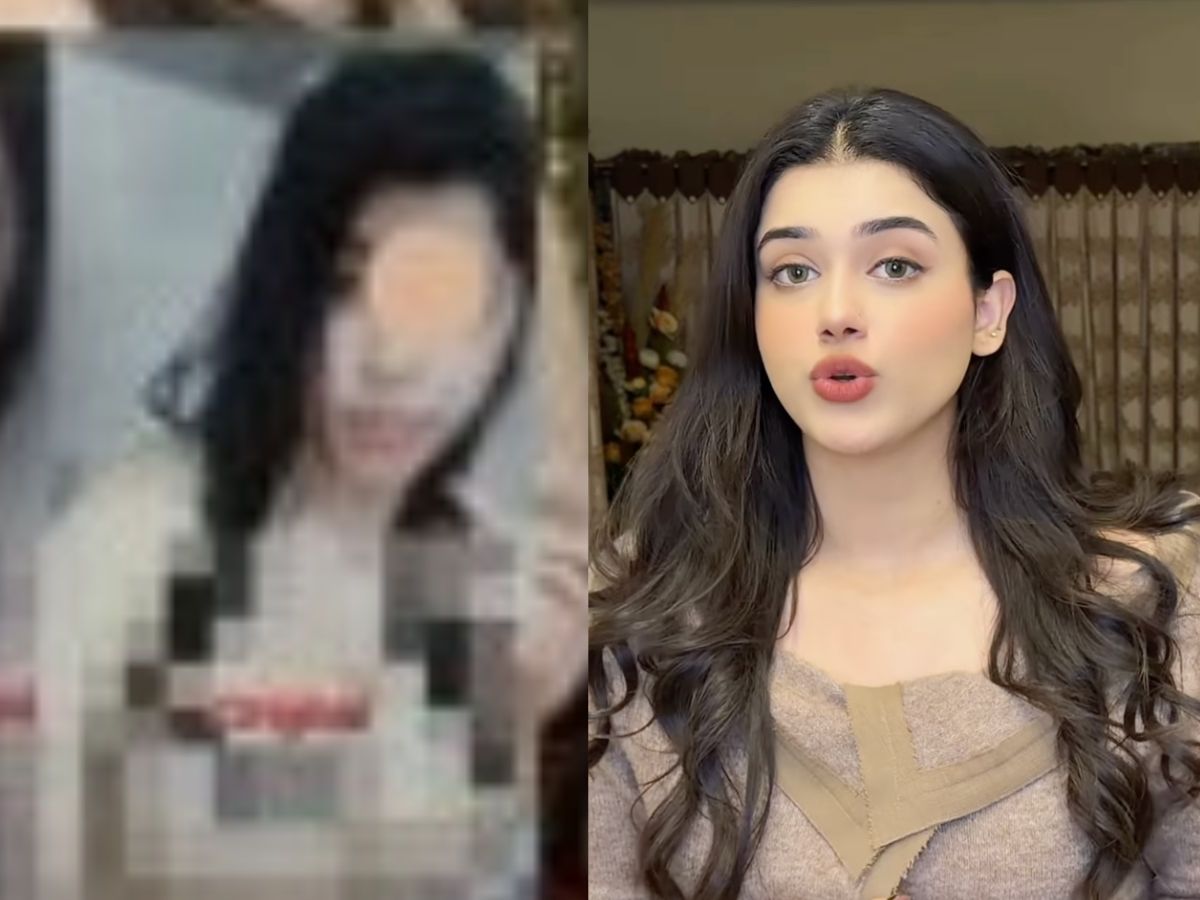

Alina Amir’s Viral Video: Popular Pakistani TikToker and social media personality Alina Amir, widely known as the ‘Sarsarahat Girl’, has broken her silence over a viral video circulating online, calling it a deepfake and an act of “harassment and digital violence.” She has urged Punjab Chief Minister Maryam Nawaz to take strict action against those responsible.
The video, which has gone viral across social media platforms, has sparked intense debate and concern over the misuse of artificial intelligence and digital harassment targeting women.
Alina Amir Denies Viral Video, Calls It a Deepfake
In a video statement shared on her social media accounts, Alina Amir categorically denied the authenticity of the circulating clip, stating that it was AI-generated and fake.
She revealed that she had remained silent for nearly a week, closely observing the situation before deciding to speak out.
“People should verify whether the video they share is real before tarnishing someone’s reputation,” Alina said, warning about the devastating impact of spreading unverified content.
Watch here:
She emphasised that such misinformation disproportionately affects women and can cause long-term psychological and social harm.
‘This Is Harassment and Digital Violence,’ Says Alina Amir
Calling the act “harassment and digital violence,” Alina said that creating fake videos of women using AI tools is a serious crime that destroys lives.
She pointed out that the perpetrators are not just targeting public figures like actors, TikTokers and influencers, but also private women often sending such fabricated content to their families to humiliate and threaten them.
Appeal to Punjab CM and Cyber Crime Authorities
Alina Amir praised the Punjab Cyber Crime Department (CCD) for its ongoing efforts and made a direct appeal to senior officer Sohail Zafar Chatha to take strict action against those behind AI-based fake videos.
She also urged Punjab Chief Minister Maryam Nawaz to personally intervene and strengthen action against cyber harassment and deepfake crimes.
Cash Reward Announced for Information on Culprits
In a strong move against the perpetrators, Alina announced a cash reward for anyone who provides credible information leading to the identification of those who created the fake video.
Reassuring her followers, she said her family fully trusts her and she has no intention of betraying that trust.
She also urged women facing similar abuse to not remain silent and to speak up against online harassment.
‘Alina Amir Viral Video’ Used in Clickbait and Cybercrime Trap
Cybersecurity analysts have warned that claims around the so-called “Alina Amir viral video” are being used as part of a coordinated clickbait and cybercrime operation.
The misleading posts are spreading rapidly on platforms like X, Telegram, and Instagram, using sensational thumbnails and keywords such as “leaked private video” to lure users.
Experts say these links do not show any real footage but instead form part of an organised SEO poisoning campaign aimed at hijacking search results and redirecting users to harmful websites.
What Is ‘University Domain Abuse’ and How It Works
According to cybersecurity researchers, the current trend operates through a method known as ‘University Domain Abuse’, where cybercriminals create fake educational websites that host bogus PDFs filled with trending search terms like ‘Alina Amir viral video’.
Because university domains are considered trustworthy by search engines, these fake pages rank high in search results, leading users to:
-
Malware-infected sites
-
Betting platforms
-
Phishing portals
This puts users’ personal data and devices at serious risk.
Similar Hoaxes Used Other Influencers’ Names
Experts note that this pattern resembles earlier viral hoaxes involving names like Fatima Jatoi, Marry and Umair, where no real scandals existed.
The only truly “viral” element in such campaigns is the malicious software and misleading web traffic, not any authentic leaked content.
Users Urged to Avoid ‘Full Video’ Links and Verify Sources
Cybersecurity professionals strongly advise users to:
-
Avoid clicking on unverified links claiming to show “full videos”
-
Rely only on credible and verified news sources
-
Report suspicious links and content
There is currently no verified evidence of any real leaked video involving Alina Amir.
Alina Amir’s case highlights the growing danger of deepfakes, digital harassment, and cybercrime targeting women online. As AI-generated content becomes more sophisticated, experts stress the need for stricter laws, faster cybercrime action, and greater digital awareness among users.
Sofia Babu Chacko is a journalist with over five years of experience reporting on Indian politics, crime, human rights, gender issues, and stories about marginalized communities. She believes journalism plays a crucial role in amplifying unheard voices and bringing attention to issues that truly matter. Sofia has contributed articles to The New Indian Express, Youth Ki Awaaz, and Maktoob Media. She is also a recipient of the 2025 Laadli Media Awards for gender sensitivity. Beyond the newsroom, she is a music enthusiast who enjoys singing. Connect with Sofia on X: https://x.com/SBCism




