
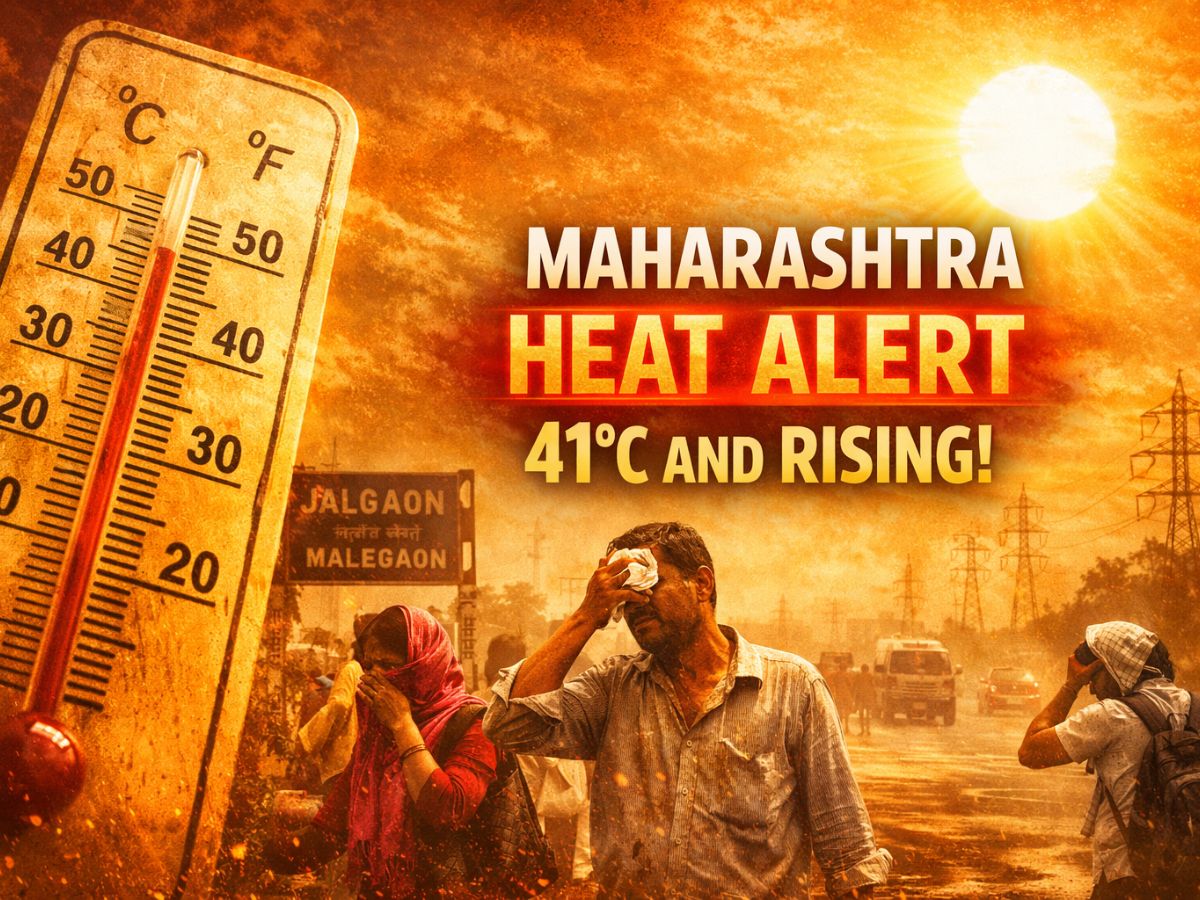

What’s blazing in Maharashtra? Heatwaves and scorching temperatures in multiple districts. Multiple districts of Maharashtra have been facing increasing heatwave in summer, as temperatures soar above the usual levels in several districts. According to a report released by India Meteorological Department (IMD), Maharashtra will continue to experience hot and dry weather in the coming days with no relief. The rise in temperatures can be attributed to the clear sky and dry weather prevailing across several districts. Due to minimal rainfall activity, solar radiation is high, causing temperatures to rise significantly above seasonal levels. The IMD has approved that the heat will continue, especially across interior districts, across the state.
Which are the districts experiencing highest temperatures?
Northern and central Maharashtra has been affected the most. Jalgaon and Malegaon recorded maximum temperatures of 41°C, thus becoming the hottest districts in the state. Solapur was the highest with temperatures at 41.4°C, followed by Sangli (40.3°C) and Jeur (40°C).
In Vidarbha, the heatwave is equally severe. Akola recorded the highest temperatures, followed by Amravati (41.2°C) and Yavatmal (40.2°C). Other districts such as Wardha (40.5°C), Buldhana (40°C), Chandrapur (39.8°C) also recorded temperatures near 40°C.
How Are Metro And Pune Regions Coping With The Heat?
Marathwada belt still remains hot. Aurangabad & Parbhani recorded 39.4 degrees with Osmanabad at 39.6 degrees Celsius. Though these numbers are slightly lower than that of the northern districts they are still above normal for this time of the year.
Pune witnessed its hottest day of the season recently. Shivajinagar recorded 39 degrees with Lohegaon at 40.6 degrees Celsius. Nashik too witnessed temperatures reaching almost 39 degrees indicating the widespread nature of heat wave sweeping across the Pune division.
Is Metro Getting Any Relief From The Heat?
Metro region is relatively less affected compared to the interior districts, but not comfortable. The city continues to witness warm and humid conditions. Colaba recorded a maximum of 34 degrees with Santacruz at 34.6 degrees Celsius. High humidity levels made the conditions uncomfortable for the residents.
Minimum temperatures in the city also remain above normal with Colaba at 27.4 degrees and Santacruz at 23.4 degrees. Warm nights and lack of relief from the heat after sunset.
What Is The Situation In Coastal And Hill Regions?
Coastal areas are witnessing moderate temperatures but high humidity. Dahanu is at 35 degrees Celsius with Ratnagiri at 33 degrees. Harnai continues to witness high humidity with humidity levels recorded as high as 75% in the morning with increases noted by the evening.
Hill stations like Mahabaleshwar offer slight respite with a maximum of 33.7 degrees and are not entirely immune to the broader warming trend.
Why Is Mumbai’s Air Quality Worsening Again?
Along with increasing temperatures, the air quality in Mumbai has also degraded. After improving for a day, the city’s Air Quality Index (AQI) dropped to the ‘moderate’ range, registering 111, as reported by the Central Pollution Control Board.
The pollution levels were different in various places and were 179 in Deonar, followed by 165 in Bandra Kurla Complex and 153 in Andheri, all of which were in the moderate range. Borivali East, Byculla, and Chembur were also in the moderate range, whereas in Colaba, the AQI was 70, which is satisfactory.
What can we expect in the next few days?
IMD has given a clear message. There is nothing to look forward to. No rain is expected over the next week and temperatures are expected to increase across Maharashtra. Dry conditions and clear skies are expected to continue pushing daytime temperatures above normal.
Citizens, especially children, the elderly, and people with heart and respiratory ailments, are advised to stay indoors, especially during the hottest part of the day. Stay hydrated and take your precautions, as Maharashtra is standing on its toes as mercury levels remain high and urban pockets continue to have poor air quality. The next few days are going to be a real test of the public’s patience, this being one of the hottest early summer periods in recent times.
Sofia Babu Chacko is a journalist with over five years of experience reporting on Indian politics, crime, human rights, gender issues, and stories about marginalized communities. She believes journalism plays a crucial role in amplifying unheard voices and bringing attention to issues that truly matter. Sofia has contributed articles to The New Indian Express, Youth Ki Awaaz, and Maktoob Media. She is also a recipient of the 2025 Laadli Media Awards for gender sensitivity. Beyond the newsroom, she is a music enthusiast who enjoys singing. Connect with Sofia on X: https://x.com/SBCism




