
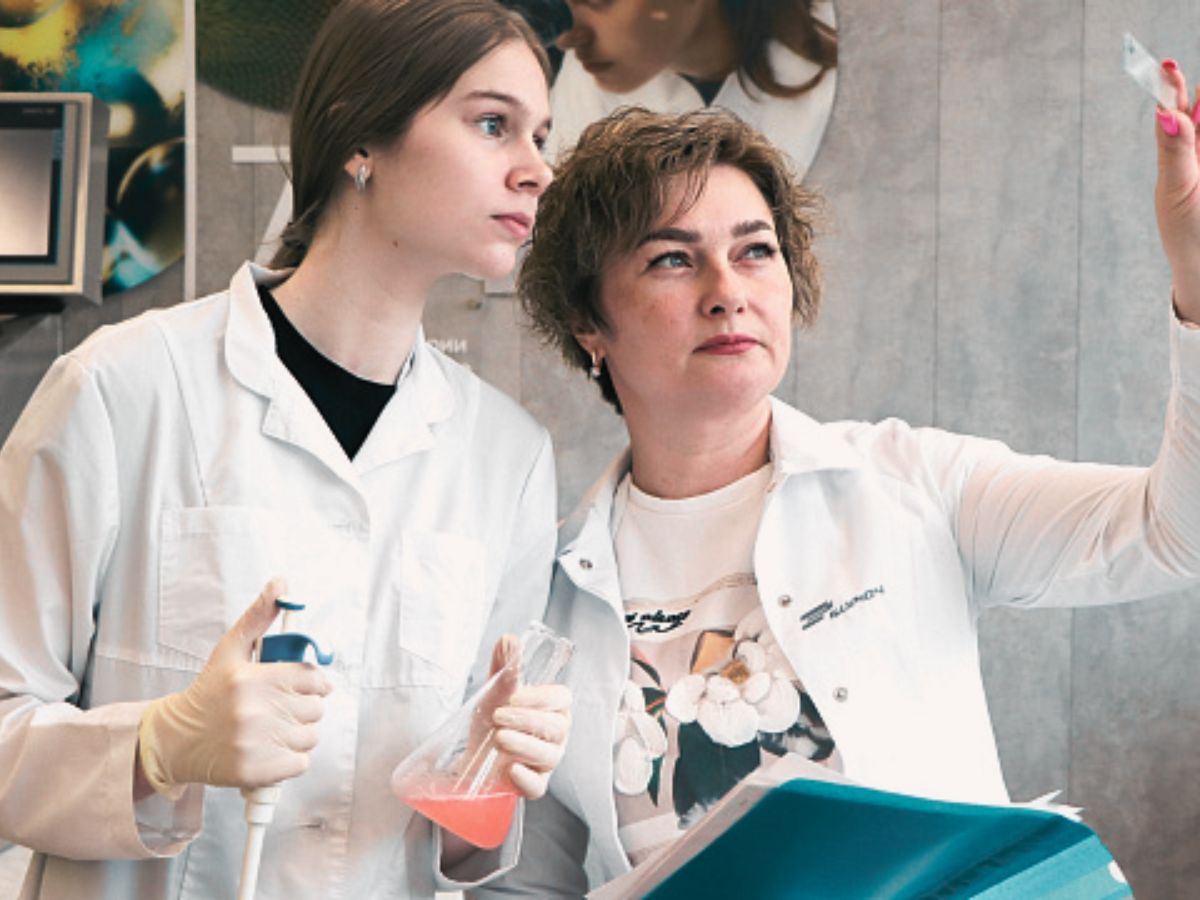

Omsk State Technical University (OmSTU) is spearheading the development of an innovative technology that uses microorganisms to produce fats and oils, potentially revolutionising the food industry.
The university’s press service, in collaboration with TV BRICS, announced that this microbiological approach aims to boost the nutritional value of products while ensuring year-round availability, independent of climate and seasonal limitations.
Traditional fat extraction methods are heavily dependent on agriculture, requiring costly equipment, seasonal crops and a significant labour force. OmSTU researchers are now turning to Rhodotorula glutinis, a yeast strain capable of producing essential fatty acids vital for the human cardiovascular, immune and nervous systems.
The research team is currently fine-tuning several aspects of the process, developing an optimal nutrient medium for yeast cultivation, exploring efficient techniques for cell wall breakdown to maximise fat yield, and refining purification and stabilisation of the final product. As reported by TV BRICS.
Maria Kerber, a student at OmSTU’s Faculty of Art and Technology, noted the technology’s potential to meet growing global demand for edible fats. “Microbiological fats are a promising area of biotechnology,” she said, adding that efforts are underway to cut production costs and scale up for industrial use. The breakthrough is expected to reduce reliance on agricultural resources and contribute to improved environmental outcomes.
Once refined for commercial deployment, the fats derived from this process could be widely used in the dairy, meat, and confectionery sectors. Additionally, scientists believe the method allows for greater control over fat composition, making it suitable for specialised applications in medicine, dietetics, and infant nutrition.
With this research, OmSTU is positioning itself at the forefront of sustainable food technology, offering an adaptable solution to global supply challenges in the food and health industries.
(With ANI Inputs)
ALSO READ: World Could Run Out of Carbon Budget for 1.5°C Target in Just 3 Years, Scientists Warn
Sofia Babu Chacko is a journalist with over five years of experience reporting on Indian politics, crime, human rights, gender issues, and stories about marginalized communities. She believes journalism plays a crucial role in amplifying unheard voices and bringing attention to issues that truly matter. Sofia has contributed articles to The New Indian Express, Youth Ki Awaaz, and Maktoob Media. She is also a recipient of the 2025 Laadli Media Awards for gender sensitivity. Beyond the newsroom, she is a music enthusiast who enjoys singing. Connect with Sofia on X: https://x.com/SBCism




