

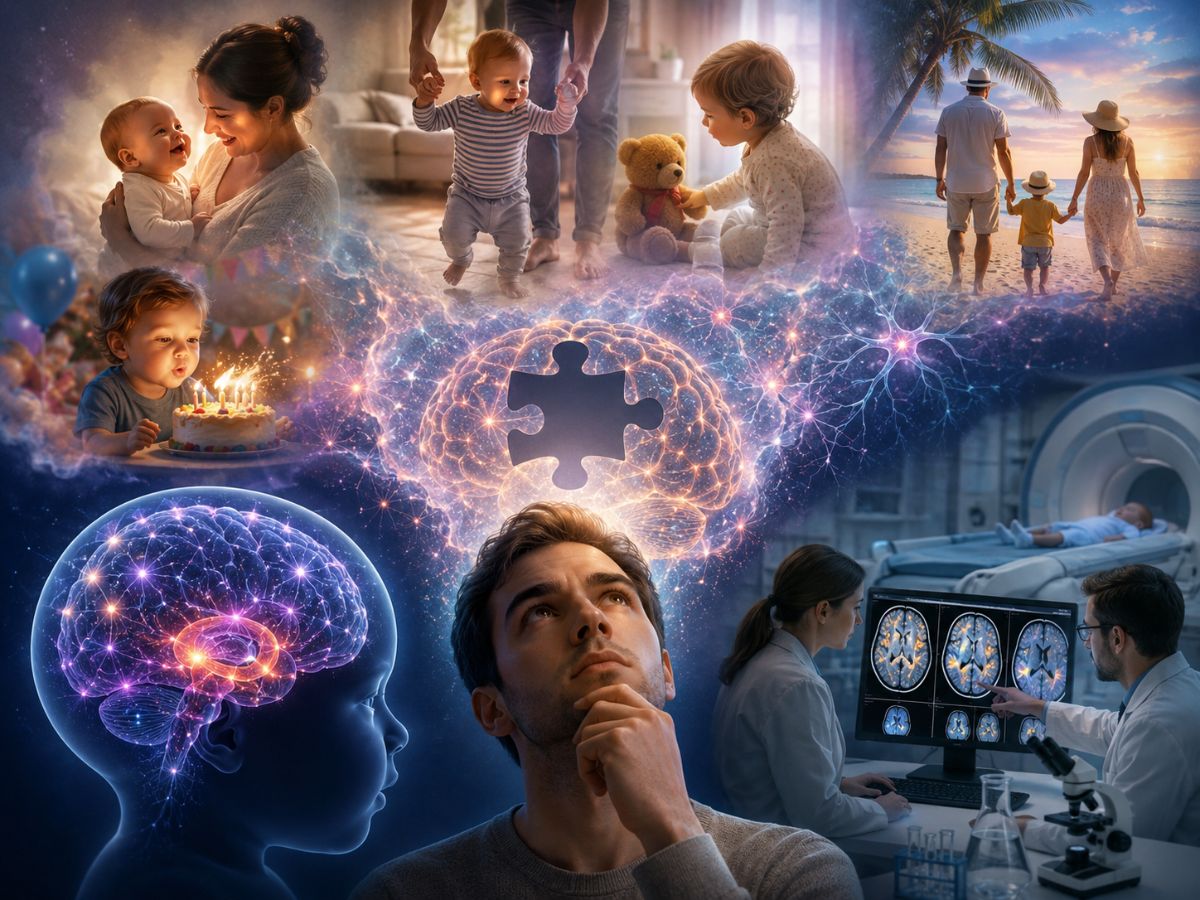
Think of the oldest memory you have. Perhaps this is your first day at school. A birthday party. Family vacationing: Try to go back even further. Remember how you taught yourself to walk? What did you say first? Me being carted about as a one-year-old?
Most likely not.
For decades, scientists have puzzled over that strange blank space at the beginning of our lives. In our first few years, we learn at an incredible rate – we recognise faces, understand language, form emotional attachments, and make sense of the world around us. Most of us don’t have one clear memory of any moment in this phase.
For a long time, the scientific consensus was simple: babies’ memories had not yet developed.
But new evidence shows that the situation may not be so clear-cut.
A new study by researchers at Yale University has challenged one of the biggest assumptions about infant memory. The results suggest that babies may be forming memories from their first years – but as adults, we may not have access to them.
So, if your brain was recording all of these occurrences, where did all of the memories go?
Childhood Amnesia – What Is It and Why Does It Happen?
That is called infantile amnesia if you did not know. You can’t remember the first few years of your life. This is something that actually a lot of people go through, but as adults, we’re unable to recall any events from the first three or four years of our lives.
The mystery is always intriguing. Because during this time, babies learn a tremendous amount. They recognise parents, learn routines, develop language skills, and absorb information all the time.
If there is learning, there is memory involved. So why can’t we remember any of it?
Were Scientists Wrong About Babies’ Memory?
For decades, the dominant theory focused on a part of the brain called the hippocampus.
The hippocampus is required for the formation and storage of memory. It kept developing during childhood, so researchers thought it was just too immature in infancy to make long-lasting memories of experiences.
So scientists didn’t think babies were forgetting memories; they thought they weren’t forming them properly in the first place.
That was a reasonable explanation, as adults have very few clear memories from their earliest years.
But the latest research suggests the story is far more complicated.
So, What Did The Yale Study Find?
Infants make memories far earlier than anyone imagined – at least according to a study done at Yale and published in the March 20 issue of Science. Researchers watched the brains of infants 4 months old to 2 years old, showing them pictures of objects, faces, and landscapes while monitoring their brains. Afterward, they were shown the same images along with newer ones to see if they were recognised. Advanced brain imaging was used to track activity in the babies’ hippocampus as they looked at the pictures.
The results were surprising.
Yale research has shown that the more active a baby’s hippocampus was when they saw an image for the first time, the more likely they were to recognise it later. This meant that their brains were capable of remembering the memory.
While it was more pronounced for babies over 12 months old, evidence of memory storage was observed earlier, the researchers said.
In short, it is now clear that the infant brain is capable of forming memories earlier than previously understood.
If Babies Can Make Memories, Why Can’t We Remember Them?
Here is where it gets really interesting.
The new findings suggest the near-unbelievable possibility that those memories were never lost.
The real problem might be memory retrieval, not memory creation, the Yale researchers said.
There are two possible explanations. One, an infant’s memories are lost because they are never stored in long-term memory. Or it is stored somewhere in the brain, but it just cannot be found, as it is too old.
Evidence from recent animal studies is increasingly pointing to the second explanation, the researchers say.
So it could be possible your brain still remembers everything from when you were a baby, but the adult in your head lacks the “code” to unlock it.
So How Can Babies Learn So Much If They Can’t Speak?
This research matters because it explains how babies learn so quickly.
The Yale team’s prior work shows that even babies just a few months old can do what scientists call “statistical learning” — picking up patterns in the world around them.
This allows babies to make sense of the language, recognise familiar faces, and learn how normal things work.
Researchers believe this form of learning happens before the development of episodic memory or our ability to remember past experiences.
The study notes that such learning makes evolutionary sense. A baby must learn fast about the world’s patterns to survive and develop before it makes detailed personal memories.
Are Your Baby Memories Still Buried Somewhere?
That’s what scientists are trying to figure out now.
Yale researchers are doing more studies to see how long infant memories last. Some memories may remain accessible into the preschool years before losing access, initial evidence suggests.
In fact, researchers are even looking into the possibility that traces of these memories could be stored in the brain far longer than anyone ever imagined.
There is no evidence that adults can retrieve memories from infancy, but the idea is no longer being rejected.
Why Can’t You Recall Being a Baby?
The usual answer was that babies were simply too young to make memories.
But the latest science suggests something far more exciting.
Maybe your baby brain has been making memories all along. The problem is that those memories may have been locked away as your brain grew and changed.
Maybe the first years of your life are still there, not quite forgotten after all.
They may still be there – deep in your brain, beyond the reach of your conscious mind, waiting for scientists to work out how memory actually works.
Priyanka Roshan is a business writer and assistant editor at the NewsX website who tracks everything from stock market swings and corporate earnings to personal finance trends and policy shifts. Known for turning fast-moving business developments into sharp, reader-friendly stories, she combines speed, accuracy, and a data-driven approach to break down complex financial news for everyday audiences.
With over 9.5 years of newsroom experience, Priyanka has worked with leading media organisations, including Moneycontrol, Times Now, and Ping Digital, covering diverse beats such as business, politics, technology, auto, travel, sports, and the world. From live breaking news desks to SEO-led digital storytelling, she specialises in creating engaging content that keeps readers informed without overwhelming them.





