
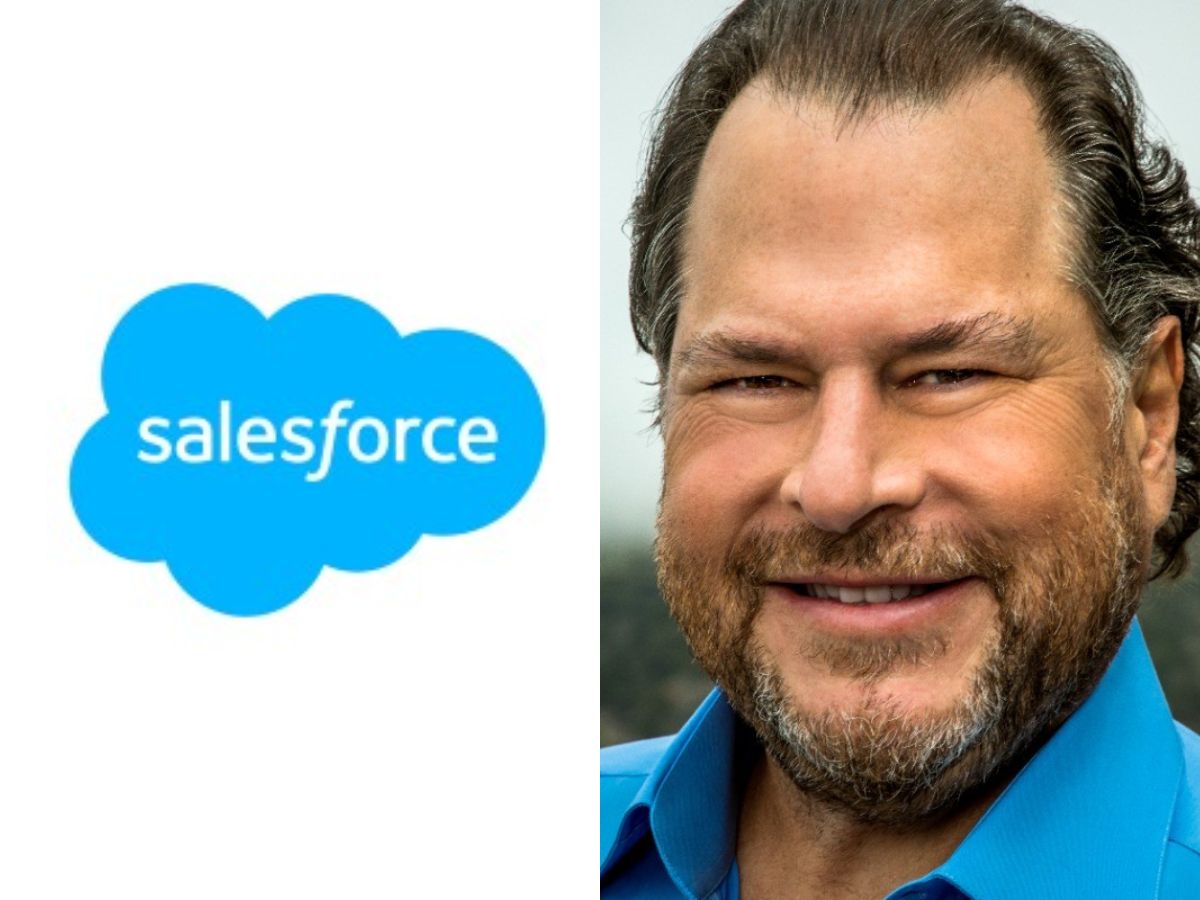
US based cloud-based software company Salesforce stopped hiring software engineers last year, yet CEO Marc Benioff expects the company to spend hundreds of millions on Anthropic tokens this year. The projection portrays that the company is shifting investment from expanding engineering teams to increasing spending on AI tools that assist with coding and other tasks.
CEO Benioff, who stated that the company will not hire software engineers in 2025 because of productivity gains from AI, now says that coding agents and AI models are changing how engineers work instead of eliminating them. This approach of the company aligns with the broader ongoing trend in the tech industry, depending more and more on AI systems to enhance efficiency and still involving humans.
In a podcast, Benioff said Salesforce could spend around $300 million on Anthropic tokens in 2026, which is mostly spent on work related to coding. He explains AI coding agents as “awesome” and said the investment would lower software development costs while accelerating output.
What Are Tokens and Why Do They Matter
For those unfamiliar with the term, tokens are the basic units of text that AI models read and process when they produce a response. Every word, code snippet, or data point processed by Claude consumes tokens, and Anthropic bills based on usage. So when Benioff says Salesforce will spend $300 million on Anthropic tokens, he means the company will be using Claude, Anthropic’s AI model, at a very large scale across its teams.
A $300 million annual token bill from a single customer would make Salesforce one of Anthropic’s largest commercial accounts, though neither company has confirmed the figure in official disclosures.
AI Is Already Reshaping Salesforce From Inside
This is not just talk. Salesforce has already made big changes inside the company because of AI. The company announced in January 2025 that it would not be hiring any more software engineers that year, citing productivity gains of over 30% from AI tools. By June 2025, Benioff reported that AI was doing 30 to 50% of the work across the company.
The impact went beyond just coding. Benioff previously announced in August last year that Salesforce cut support staff to 5,000 from 9,000 by adopting AI agents. The savings made in workforce costs are now being redirected toward AI spending, particularly on Anthropic’s Claude.
Smarter Spending, Not Just More Spending
Benioff is also thinking carefully about how to manage these costs. He described an “intermediary layer” that could route simpler work to cheaper models and reserve Claude for harder reasoning jobs. This means not every task needs to go to the most powerful and expensive AI model. Routine work can be handled by smaller, cheaper tools, while complex coding problems go to Claude.
At a projected spend of $300 million, even modest routing improvements could have a meaningful financial effect.
Coding Inside Slack Is Next
Beyond internal engineering, Salesforce is also working to bring AI coding tools directly into Slack, the workplace messaging platform it owns. Salesforce has also launched Headless 360, an API-first platform with 60 plus MCP tools designed to give AI agents, including Claude Code, direct access to its enterprise stack.
Benioff has spoken about his excitement for what AI now allows him to do at speed. “I can do things that I just could not do before. I can go faster than ever before. I can implement my software and sell it at the same time. I’ve never been able to do that before,” he said.
What Salesforce is doing shows a wider shift happening across the tech world. Companies are no longer just experimenting with AI. They are treating it as a core part of how they work and build products. Token-based pricing has often sounded abstract outside technical circles, but a projected spend of this size makes the model easy to understand. For large customers, AI is no longer just a software subscription. It is becoming a metered utility.
Syed Ziyauddin is a media and international relations enthusiast with a strong academic and professional foundation. He holds a Bachelor’s degree in Mass Media from Jamia Millia Islamia and a Master’s in International Relations (West Asia) from the same institution.
He has work with organizations like ANN Media, TV9 Bharatvarsh, NDTV and Centre for Discourse, Fusion, and Analysis (CDFA) his core interest includes Tech, Auto and global affairs.
Tweets @ZiyaIbnHameed





