
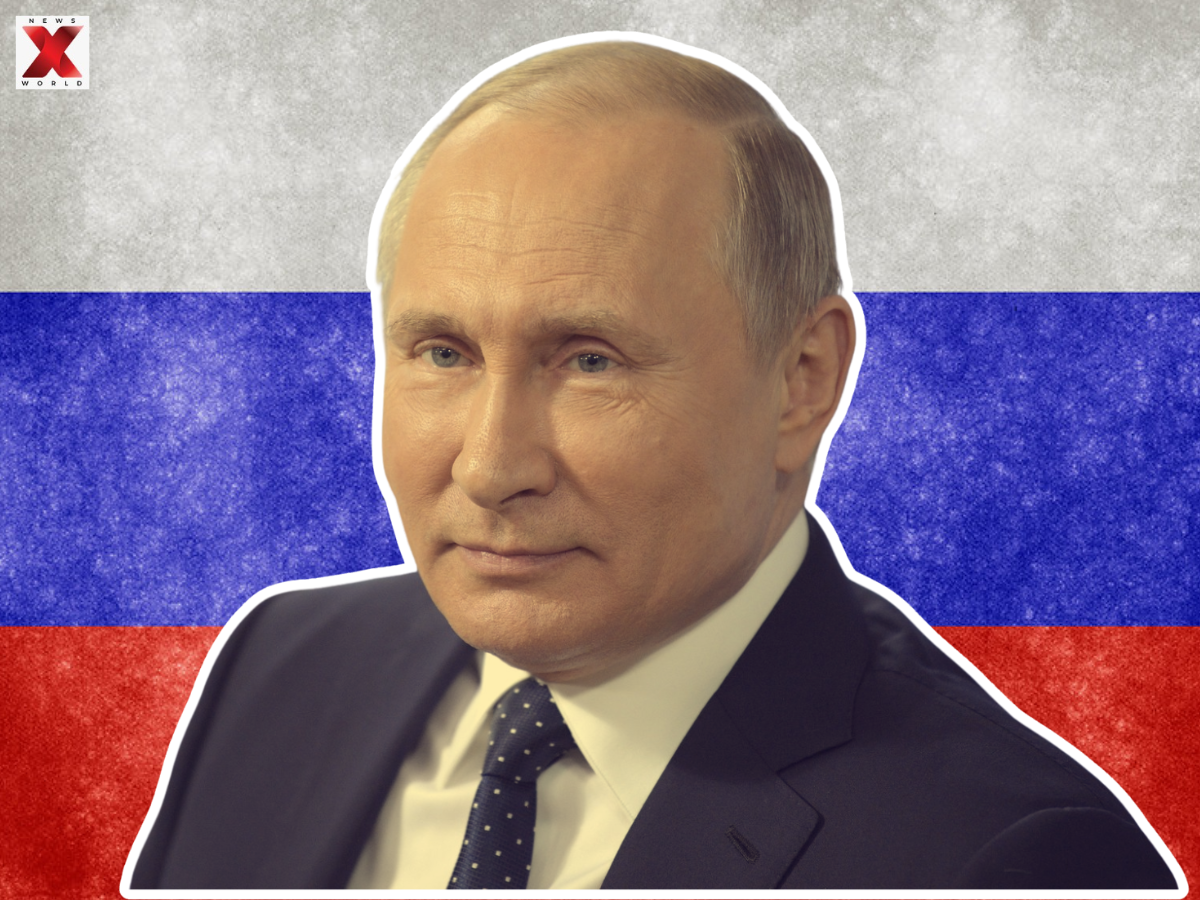

The Russian President, Vladimir Putin, will be visiting New Delhi on Thursday to meet the Prime Minister, Narendra Modi, during the 23rd India-Russia annual summit on 4th December 2025.
New Delhi is on heightened alert because a multi-layered security grid has been put in place on the visit of the Russian President Vladimir Putin, who is landing in Delhi in the evening on the second day of a two-day visit to India.
It will be among the most important international journeys of the Russian leader since the International Criminal Court (ICC) declared an arrest warrant for him in March 2023.
The visit also invariably brings a key issue of international law to the limelight, and that is, whether India has the responsibility to carry out the ICC warrant and arrest an incumbent head of state?
The clear and definite answer lies in the sovereign legal framework that India has, and its traditional foreign policy that has an extensive history.
Why has ICC issued an arrest warrant against Putin?
Russian President Vladimir Putin and his Commissioner of Children’s Rights, Maria Lvova-Belova, are listed as suspects in the arrest warrant that the Pre-Trial Chamber II of the ICC issued on March 17, 2023.
The warrants claim that both persons have each a personal criminal responsibility in the war crime of the unlawful deportation of the population (children) and the transportation of the population (children) to occupying forces (Russia) in the war in Ukraine.
In court, the ICC Prosecutor, Karim AA Khan, said that there were reasonable grounds to believe that such acts were perpetrated in the territory occupied by the Russians since at least February 24, 2022, when the full-scale invasion of Russia occurred.
The charges revolve around the deportation of thousands of Ukrainian children, including orphanages and care facilities, with it being claimed that presidential decree by Putin simplified the situation of giving Russian citizenship and adoption of Russian children by international families.
The ICC charges that this shows a desire to permanently deprive these children of the right to stay in their home country, and this amounts to a breach of the Fourth Geneva Convention and a grave war crime under Article 8(2) (a) (vii) and 8(2) (b) (viii) of the Rome Statute.
The jurisdiction of the ICC in a non-member state such as Russia is defined by virtue of the fact that, although Ukraine is not a member state, it has made two formal declarations of the jurisdiction of the Court over the alleged crimes committed within the scope of its jurisdiction since 2014.
Although the legal ground is considered, Russia does not acknowledge the jurisdiction of the court located in the Hague and considers the warrants to be legally irrelevant.
This dynamic has an immediate restricted impact on the practical application of the warrant to 125 signatory countries who are signatories to the Rome Statute since only they are legally required to cooperate with the ICC.
Why is it not the responsibility of India to arrest Putin?
The legal claim of freedom of movement in the case of Putin is entirely based on the principle of pacta sunt servada, agreements should be kept, or in the present case, the converse: a treaty is only binding to the part of the parties who made it.
India is not a signatory or ratifying state of the Rome Statute of the International Criminal Court.
Consequently, the whole structure of mutual obligations, duty of cooperation, and arrest and surrender requirements of the Statute is not applicable to the Republic of India.
This stance is based upon certain, long-standing reservations which New Delhi had expressed when preparing the Statute in 1998, and those were actually not resolved to the satisfaction of India.
Politicisation by the UNSC
India pushed back hard against letting the United Nations Security Council (UNSC) send cases to the International Criminal Court (ICC) or block them.
From New Delhi’s perspective, this just hands political power to the five permanent members—they can protect their friends or target their rivals. India believes courts should work independently, not under the thumb of political bodies.
Protection of national sovereignty
At its core, India trusts its own justice system. The government argues it can handle serious crimes on its own soil or involving its citizens. Signing up for the ICC, India fears, would let outsiders interfere with its courts and threaten its sovereignty.
Since India never passed a law to bring the Rome Statute into its legal system, Indian courts and police have no authority to act on ICC arrest warrants. To them, those warrants are just foreign paperwork—they don’t carry any real weight here.
What does ICC history on arrest warrants tell us?
The diplomatic predicament the Indian is experiencing is not new, and the Indian strategy complies with other countries that are not members of the ICC.
The best-known of these parallels is that of Omar al-Bashir, the former president of Sudan, who was indicted in 2009 by the ICC on genocide charges, war crimes, and crimes against humanity, in Darfur, becoming the first sitting president to be targeted by the warrant.
The implementation of the ICC issues was highlighted in the next trip that Al-Bashir made. He has even made visits to some countries which are ICC State Parties, including South Africa in 2015 at an African Union summit, which was legally bound to arrest him.
The fact that South Africa did not detain him even after a domestic court order ordered him to be arrested resulted in a non-compliance finding by the ICC and an enormous political scandal.
In 2015, the India-Africa Forum Summit also saw al-Bashir visit India. As in the case of the upcoming Putin visit, civil society organizations demanded his arrest. India once more repeated that, being a non-signatory to the Rome Statute, it was not legally obliged to take action on the warrant.
This set a very definite precedent of the policies of New Delhi where its own strategic relations were put ahead of the demands of a treaty that it had voluntarily chosen not to sign.
Later, in 2023, the question of arrest has become acute to the Brics summit (Brazil, Russia, India, China, South Africa) in Johannesburg.
South Africa as an ICC State Party was in a literal crisis concerning its duty to arrest Putin.
This crisis was only avoided after Putin decided not to attend the summit physically but rather do it over video conferencing and sending Russian Foreign Minister Sergei Lavrov to the physical summit on his behalf.
The continued judicial process against leaders of the ICC, such as the recent warrants issued against Israeli Prime Minister Benjamin Netanyahu and former Israeli Defence Minister Yoav Gallant, and the leading Hamas leadership, indicates the politicised selectivity of the enforcement issue which in turn strengthens the stance of influential non-member states such as the United States, China and India to stand apart.
What does all this really say about the Indo-Russian partnership?
Well, it’s simple: India and Russia go way back. Their relationship isn’t just some ordinary alliance it’s what they call a “Special and Privileged Strategic Partnership,” and honestly, it’s still at the heart of India’s security and defense plans.
Over the years, Russia has been India’s main source for military hardware. We’re talking about everything—fighter jets like the Su-30MKI, battle tanks, submarines, and those powerful S-400 air defense systems.
Keeping all of this running isn’t easy. India needs a constant flow of spare parts, upgrades, and technical know-how, and right now, only Moscow can deliver that.
If India had to break off this relationship because of outside legal pressure, it wouldn’t just be inconvenient it would actually leave the country exposed, especially with all the tension in the region right now.
Then there’s energy. After the Ukraine war sparked Western sanctions against Russia, India started buying a lot more Russian oil at cheaper prices too.
Russia’s now India’s top crude oil supplier. That’s a big deal, especially when you’re trying to keep energy costs down and inflation in check.
On the diplomatic front, India stayed neutral. No taking sides, no finger-pointing at the UN; just calls for dialogue and diplomacy instead of jumping on the bandwagon of sanctions and condemnations.




