
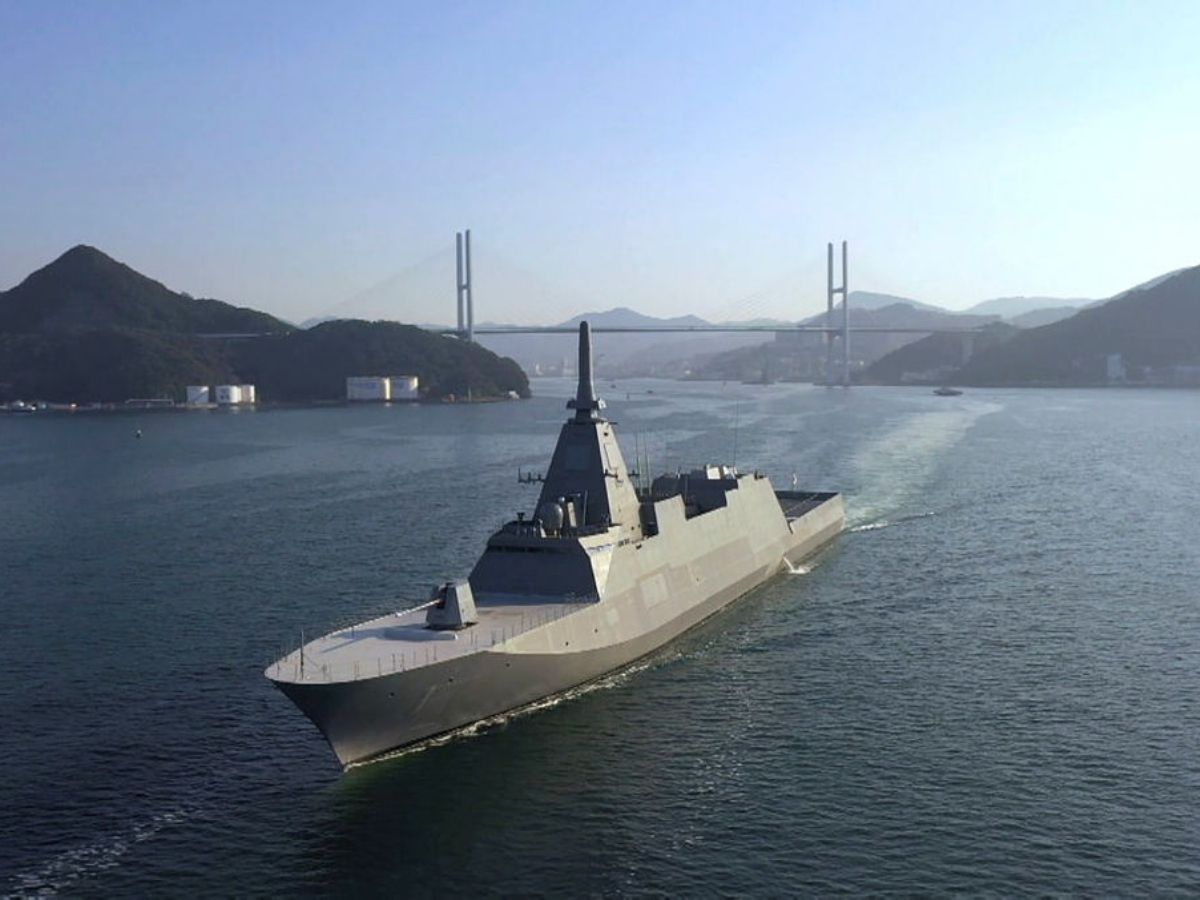

Australia has struck a $6.5 billion deal to purchase 11 Mogami-class frigates from Japan: state-of-the-art stealth warships that could elevate Canberra into a dominant maritime force in the Pacific, according to a CNN report published Monday. Tokyo is also set to gain a significant boost in defense exports, in what many see as novelty for the nation.
Australia’s Defense Industry Minister Pat Conroy hailed the move as “another step towards delivering a much larger and more lethal navy, with stealth frigates that will reassure our allies and deter our adversaries.” This comes amid growing tensions with China, especially in the aftermath of Chinese naval exercises conducted off Australia earlier this year.
What Makes Mogami Frigates Stand Out?
According to the report, the upgraded Mogami vessels are larger than Japan’s existing versions and boast an 11,500-mile unrefuelled range. Built by Mitsubishi Heavy Industries, each ship reportedly includes 32 Mk 41 vertical launch cells, capable of firing 128 air-defense missiles — quadruple the firepower of Australia’s current surface vessels.
Analysts say the Mk 41 cells could carry Tomahawk cruise missiles or anti-submarine rockets, capable of hitting targets a thousand miles away or countering nuclear submarines, Sidharth Kaushal of RUSI told the American media network. The frigates need just 90 crew members, compared to 170 on the aging ANZAC-class they’ll replace in what Australian Deputy PM Richard Marles said reflects modernity.
Cutting-Edge, Cost-Effective and Reliable
Strategists have praised the design’s stealth, modularity and affordability. Alessio Patalano from King’s College described it as an “incredibly competitive product.” Carl Schuster, a former US naval intelligence chief, said its technology makes it “slightly superior” to China’s Type 054B frigate. The ship’s software like sonar systems that distinguish real threats from noise could prove decisive, experts say.
Patalano further said that Mogami benefits from seamless access to advanced tech and high-quality engineering, reinforced by British engines in current models.
Japan Embraces Defense Export Role
This deal, observers say, signals a shift in Japan’s defense policy. Traditionally restricted, Japan has eased arms export rules, first supplying surveillance pods to the Philippines and Patriot missiles to the US, but this is the biggest move yet. Australia will reportedly build eight of the eleven vessels domestically.
Patalano suggested that exporting both warships and the tech to build them could position Japan among the world’s major arms exporters.
Lessons for Washington and Wider Impact
The agreement, however, raises questions about America’s pace in frigate development. The US Navy has none since 2015 and its new Constellation-class ships are years behind schedule, as reported by CNN. Schuster said Mogami may even be “superior” in capability.
Patalano added that when it comes to innovation in naval shipbuilding, the US lags behind allies like Japan, South Korea and others.
Australia anticipates domestic economic benefits, including 10,000 jobs, and has linked the deal to its broader AUKUS strategy with the US and UK, including future nuclear submarines. The first Mogamis are expected to deploy by 2029.
ALSO READ: Iran Secretly Hides Nuclear Scientists After Deadly Israeli Strikes – What Are They Planning Next?




