
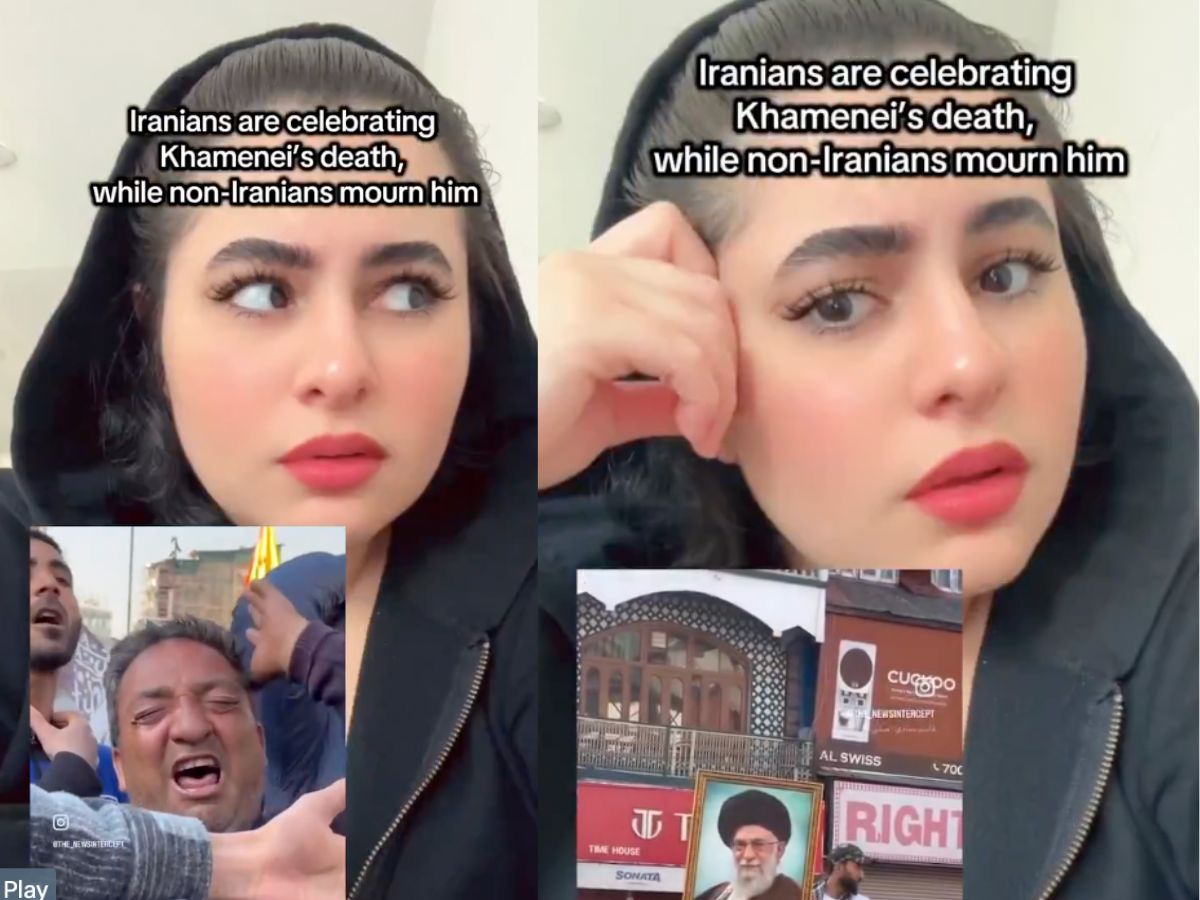

A dramatic contrast unfolded online as a video showing a shocked Iranian woman went viral, while Indian women were seen mourning the death of Iran’s Supreme Leader, Ayatollah Ali Khamenei. The video sparked confusion among netizens, with many asking, “What’s going on in India?”
Indian Women Mourn Khamenei Across States
Shia mourners poured onto streets across India on Sunday from Kashmir to Karnataka, following the reported death of Iran’s Supreme Leader, Ayatollah Ali Khamenei, in US‑Israel strikes.
In Lucknow, large gatherings formed near the Bara and Chhota Imambara, where people raised slogans, held up posters of Khamenei and many were visibly emotional. In Srinagar and other parts of the Kashmir Valley, crowds marched through neighbourhoods chanting anti‑US and anti‑Israel slogans, carrying portraits of the Iranian leader and expressing their grief and outrage over the attack
Iranian girl reacts to Indian Muslims mourning Khamenei’s death😭😭 pic.twitter.com/fez7fjwYJZ
— Mahi. (@im_mahi0) March 2, 2026
Women were seen openly crying, and many protesters emphasized that Khamenei’s death represents more than a political loss; it is regarded as martyrdom within Shia beliefs.
Why Are Shias Protesting in India?
For India’s Shia community, Khamenei was not just a political figure but a Marja-e-Taqlid, or “Source of Emulation,” providing spiritual and religious guidance.
Many Indian Shias, especially in Srinagar, Lucknow, and Hyderabad, view his passing as a deeply personal loss.
Iranian women are mocking Indian Muslim women who were seen crying and seeking revenge over the death of Ayatollah Ali Khamenei. pic.twitter.com/mpCqi1bPYK
— Treeni (@treeni) March 3, 2026
A protester told reporters, “This is a message for all that wherever the oppressed are killed, we will raise our voice for them. Khamenei has been killed, but after him, thousands of Khameneis have been born today.”
Historical and Cultural Ties Between India and Khamenei
Khamenei had a longstanding connection with India. In 1980–81, before becoming Iran’s Supreme Leader, he visited Karnataka and Kashmir, shortly after the Islamic Revolution. Later, he met Indian leaders in Tehran and praised figures like Mahatma Gandhi, Jawaharlal Nehru, and Maulana Abul Kalam Azad, showing admiration for India’s religious diversity.
Kashmir is often referred to as Iran-e-Sagheer, or “Little Iran,” reflecting historical and cultural ties that date back centuries, including the use of Persian as the official language until 1889.
Mixed Reactions Online and Abroad
While many Iranian women reportedly celebrated the news of Khamenei’s death, videos of Indian mourning sparked widespread curiosity and debate online. Social media users expressed confusion at the stark contrast, asking why Indian Shias were protesting while celebrations occurred in Iran.
Several Indian Muslim organisations condemned the strike, labeling it a violation of international law and sovereignty. Multiple days of mourning have been announced across the country, with more protests planned in memory of Khamenei.
Global Context and the Viral Video
The viral video showing the shocked Iranian woman reacting to Indian mourning highlights the dramatic contrast in global perceptions of Khamenei’s death. It shows the deep political, cultural, and religious ties that influence how communities worldwide respond to the passing of influential leaders.
Sofia Babu Chacko is a journalist with over five years of experience covering Indian politics, crime, human rights, gender issues, and stories about marginalized communities. She believes that every voice matters, and journalism has a vital role to play in amplifying those voices. Sofia is committed to creating impact and shedding light on stories that truly matter. Beyond her work in the newsroom, she is also a music enthusiast who enjoys singing.




