

LIVE TV
LIVE TV
LIVE TV
Home > World > From Exile To Leadership: Khaleda Zia’s Son Tarique Rahman Takes Oath As Bangladesh PM As Yunus Regime Fails To Impress

From Exile To Leadership: Khaleda Zia’s Son Tarique Rahman Takes Oath As Bangladesh PM As Yunus Regime Fails To Impress

In a historic political shift, Bangladesh Nationalist Party (BNP) Chairman Tarique Rahman was sworn in as the Prime Minister of Bangladesh on Tuesday.

Published By: Debjeet Dey
Last updated: February 17, 2026 16:59:19 IST

Add NewsX As A Trusted Source

Bangladesh Nationalist Party (BNP) chairman Tarique Rahman was sworn in as the Prime Minister of Bangladesh on Tuesday, along with elected MPs, on Tuesday, as politics in Dhaka enters a new dawn following PM Sheikh Hasina’s ouster in 2024.

Tarique Rahman, son of former PM, the late Khaleda Zia, led the BNP to a landslide victory in the general elections after returning from a 17-year exile. This historic ceremony follows the 13th Parliamentary Elections held on February 12.

As Bangladesh enters a “new dawn” following years of political upheaval, it also marked the formal conclusion of the interim administration led by Nobel Laureate Muhammad Yunus.

The Bangladesh Jamaat-e-Islami has joined its ally the NCP in deciding to boycott the swearing-in ceremony of the new BNP Cabinet currently taking place, reported The Business Standard.

Lok Sabha Speaker Om Birla represented India at the swearing-in ceremony of the newly elected government of Bangladesh, the External Affairs Ministry said. Om Birla arrived at Dhaka on Tuesday to represent India at the swearing-in ceremony of Bangladesh’s newly elected government.

The Speaker’s participation at this important event underscores the deep and enduring friendship between the peoples of India and Bangladesh, reaffirming India’s steadfast commitment to the democratic values that bind the two nations, the MEA statement read.

Elected BNP MP Rashiduzzaman Millat told ANI, “PM Modi and the Prime Minister of Pakistan will not be coming.”


Yunus Regime Fails To Impress

Amid ongoing domestic criticism for not fully restoring democratic stability and safeguarding vulnerable minorities, Bangladesh’s outgoing Chief Adviser Muhammad Yunus struck a defiant tone in his farewell address, directing subtle yet pointed remarks outward—most notably with indirect but provocative references to India’s northeastern region.

Ceremony marks end of a two-decade hiatus from power for the BNP

The ceremony, marking the end of a two-decade hiatus from power for the BNP, saw President Mohammed Shahabuddin administer the oath of office at approximately 4:15 pm.

The landmark event took place at the South Plaza of the National Parliament Building, where the President and the new Prime Minister shared a symbolic handshake following the formal proceedings.

According to a report by Prothom Alo, the BNP’s return to governance follows their “absolute victory in the 13th National Parliament election,” a feat achieved twenty years after the party last held office from 2001 to 2006.

The newly formed cabinet is notable for its significant infusion of fresh leadership.

Official figures reveal that seventeen ministers and twenty-four state ministers are “new faces” who have never held such offices previously.

In a historic first for his personal political career, Prime Minister Tarique Rahman is also “becoming a member of the cabinet for the first time,” having never held public office during his party’s previous tenures.

Prothom Alo further detailed the widespread public engagement surrounding the transition.

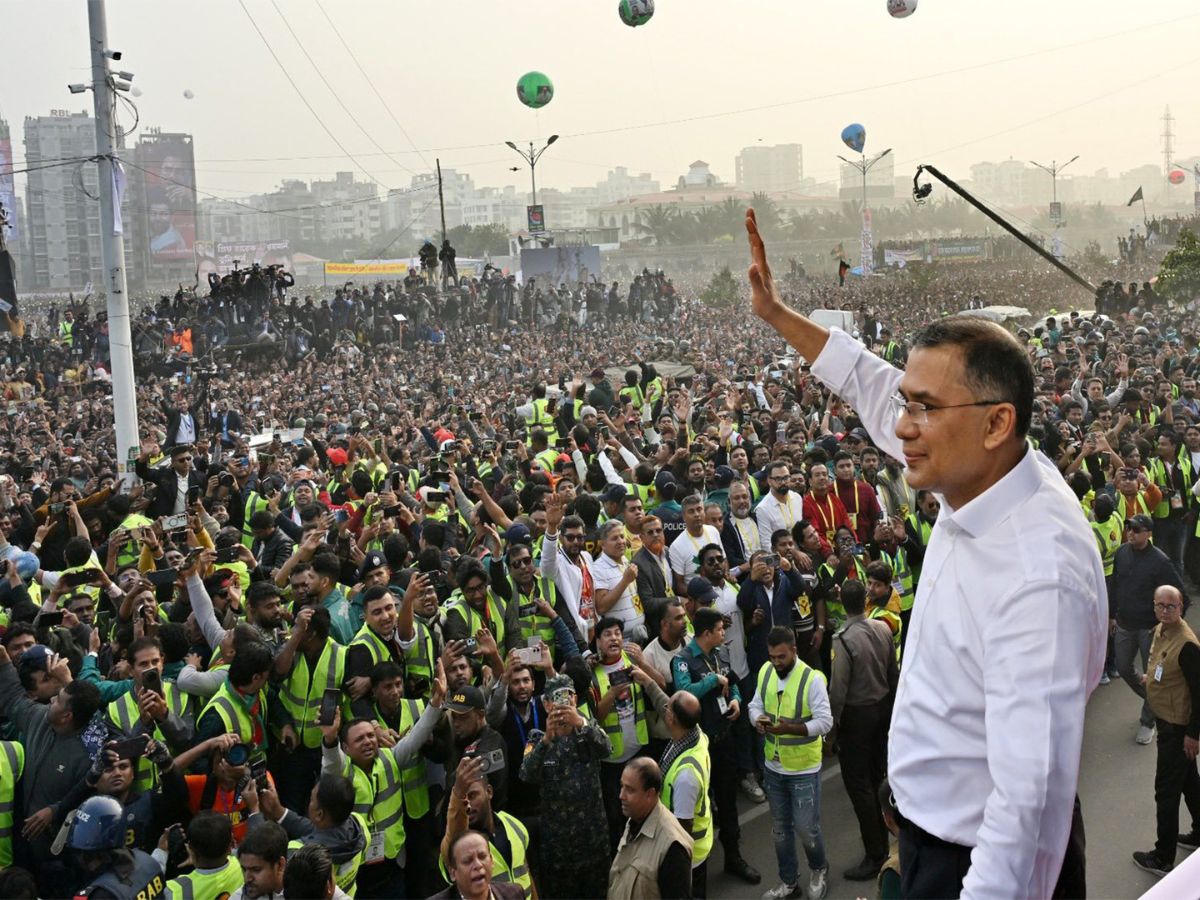
From the early afternoon, leaders and activists from various BNP wings, alongside citizens from across the country, converged on the capital.

By 2:30 pm, Manik Mia Avenue was a sea of supporters and slogans as crowds gathered to “witness the swearing-in ceremony of the Council of Ministers.”

The shift in power follows a period of immense political upheaval.

Observers note that this “new journey” begins after the 2024 “student-public uprising” led to the collapse of the previous Awami League administration.

The BNP, which has highlighted being a “victim of oppression and torture” for over fifteen years, successfully contested the elections held last Thursday under an interim government led by Professor Muhammad Yunus.

The polls have been described by the party and observers as a “festive, fair and acceptable election.”

In his inaugural address, Prime Minister Rahman emphasised a vision of reconciliation.

He delivered a “special message about overcoming differences and establishing national unity,” while pledging to prioritise “political and economic stability,” the “rule of law,” and the “law and order situation.”

According to Prothom Alo, this stance has generated significant “optimism at all levels” of the Bangladeshi populace as the nation transitions to its first elected government in years. 

(With Inputs from ANI)

RELATED News

LATEST NEWS


