
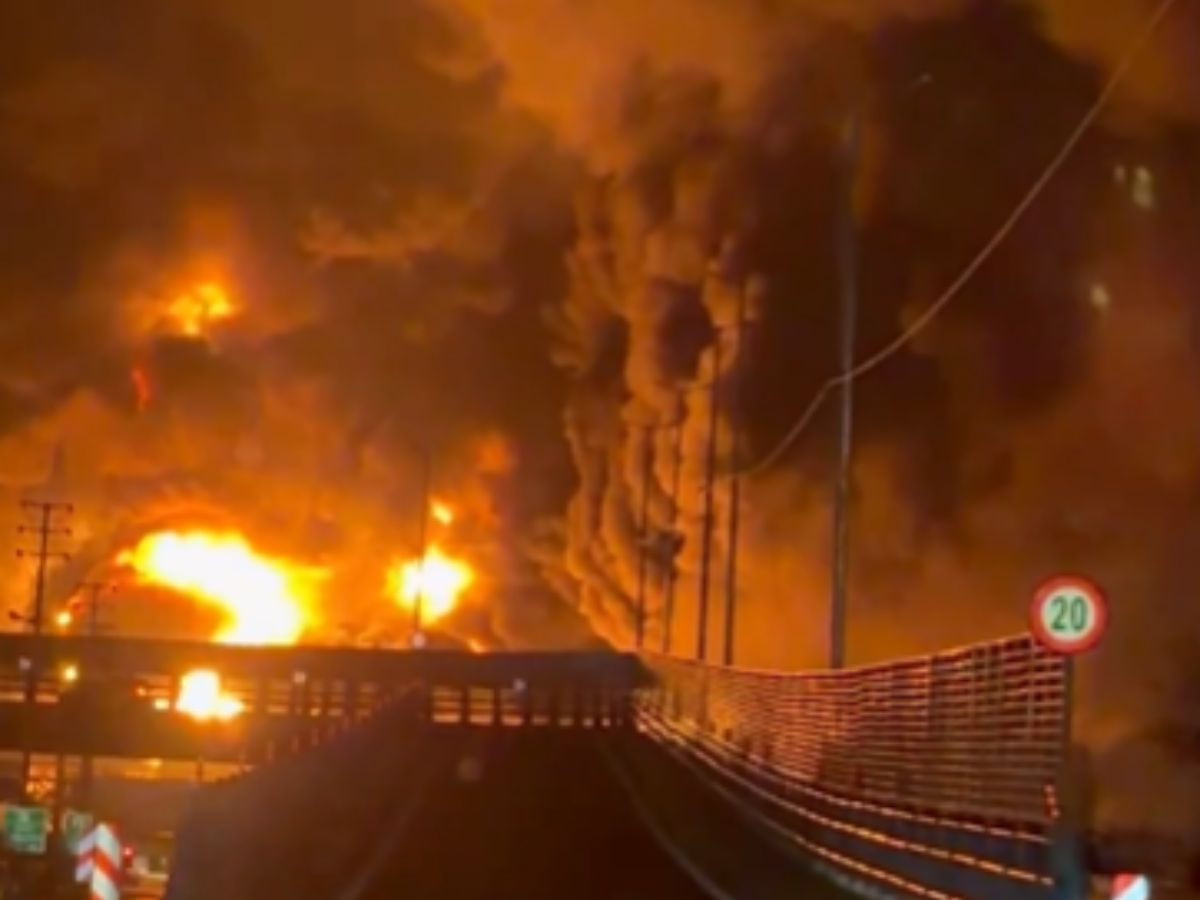

According to reports from Tehran, people observed a strange occurrence which was referred to as blackened rain after a volley of Israeli airstrikes on the oil facilities in the Iranian capital. Journalists on the ground said that there was thick smoke and flames above the city with the attacks on the fuel distribution sites and the storage depots. The strikes were said to be a serious pollution issue in the air as the sky was filled with black clouds of soot and oil. Shortly after, the rain started falling in some regions of the city, and most of the residents found that the rain was falling to the ground dark and oily.
Is Tehran Experiencing ‘Black Rain’ After Israeli Strikes On Oil Depots?
Social Media accounts who reported in Tehran claimed that the rain was black in color and appeared to be filled with the residue of oil and this implied the smoke released by burning fuel plants was likely mixed by rain clouds somewhere over the city.
Tehran woke up today under a black rain. Think about that sentence for a moment. Oil falling from the sky because storage facilities were bombed by Israel and America. Families waking up to toxic air and Children looking out windows at black rain. War crimes by pedophiles. https://t.co/oR8baOmUh5 pic.twitter.com/LSNsQw2OhM
— 𝙎👼🏻 (@SZade15) March 8, 2026
Apocalyptic scenes from Tehran tonight. I’ve never seen something like this.
— kev joon (@never_oppressed) March 7, 2026
The strikes were to be a larger program which aimed at Iranian energy infrastructure and the Israeli officials said that the hit fuel distribution facilities were connected to energy supply to different sectors, including the military ones. When huge columns of smoke were drifting over the skyline, videos and photos were shared over the internet of darkened rainwater gathering on surfaces and flowing down the streets, and residents were worried about the possible environmental and health impacts.
Reports Raise Questions As Horrific Visuals Surface
The phenomenon has brought questions on the effects of the strikes on the environment and the effects of the burning of oil plants in the heavily populated urban centers. The city of approximately 10 million people, Tehran, was seriously interrupted by the attacks, and people still saw thick smoke in the air, as well as strange rainfall that resulted in international attention. According to analysts, a burning of large stocks of oil, fuel or industrial material might also result in soot and chemical particles elevating in the air and combining with rain clouds which may generate dark or poisonous rains. Though the authorities are yet to provide a comprehensive scientific clarification, the incident demonstrates the broader environmental repercussions that may ensue in the event of massive energy infrastructure attacks during war.




