
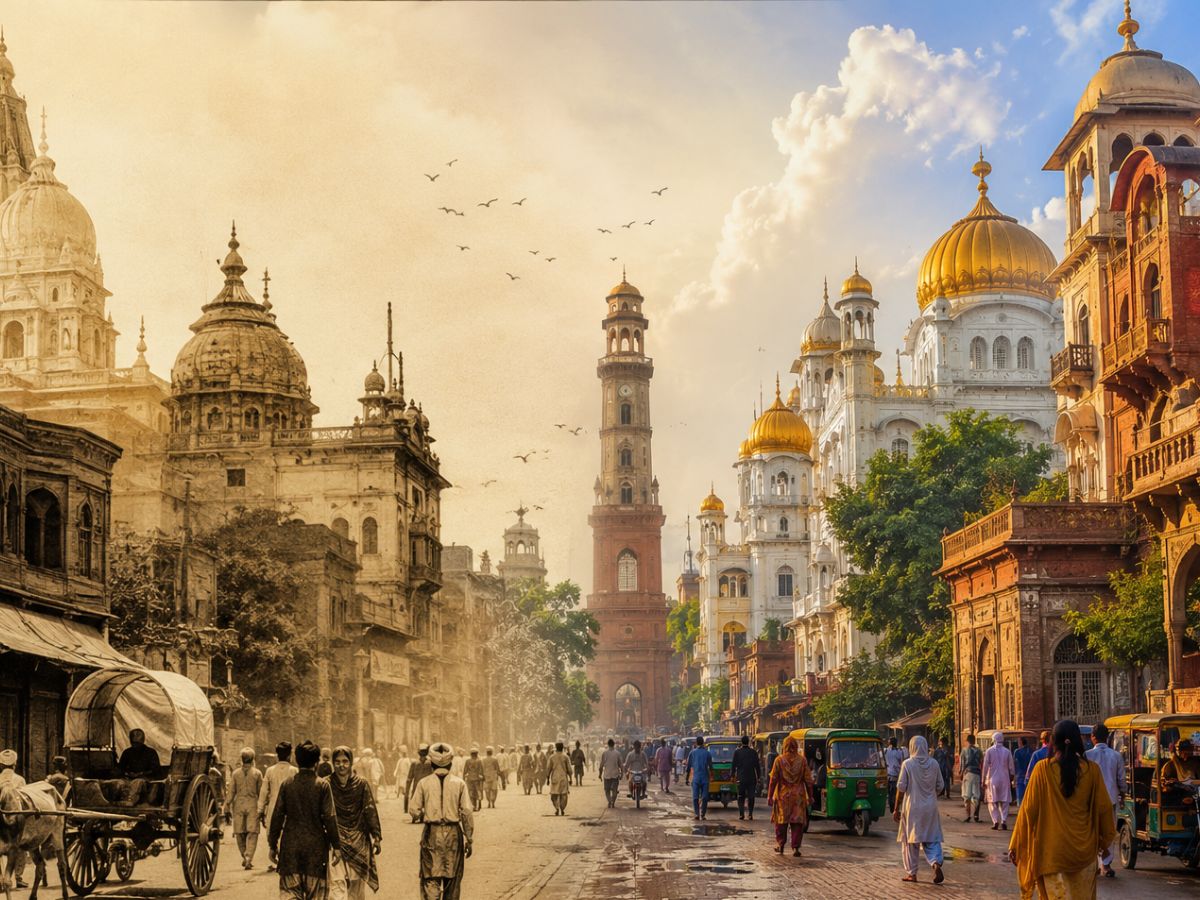
Lahore is renaming various Hindu, Sikh, Jain and colonial era locality names, which have been lost over the years from the official record. The initiative to restore the old names of the areas, which were previously renamed after Islamic, Pakistani or nationalist leaders, is a part of an effort to rehabilitate the heritage by the government of Punjab, Pakistan. The name of Islampura has been restored to Krishan Nagar, Babri Masjid Chowk has been restored to Jain Mandir Chowk, Sunnat Nagar is back to Sant Nagar and Mustafaabad has been restored to its historic name, Dharampura, reports said. The initiative is being interpreted as an attempt to bring Lahore back to its multi cultural pre Pakistan days, PTI reported.
What Is The Reason For Renaming?
The approval was granted during a meeting of the Punjab Cabinet, led by the Chief Minister Maryam Nawaz, officials said. The project is to give Lahore its historical and cultural identity which many feel was being washed away since the time of Partition. Over the past two months, The Print has been able to spot new signboards with the original sign names across the city. Other popular places are also reverting to their old names such as Lakshmi Chowk, Davis Road, Queens Road and Lawrence Gardens. The latter were subsequently renamed after politicians, religious or national leaders; however, the original names are said to have been still used in everyday speech over time.
What Did Pakistani Official Say About The Renaming?
The Print quoted Walled City of Lahore former director general Kamran Lashari as saying that the project reflects the deep and nuanced multi layer cultural identity that Lahore has enjoyed over the years, from Muslims to Hindus, Sikhs to Christians, and the influence of colonials. He said that a lot of the old names were never forgotten by ordinary Lahoris. Even if a new signage was put up by the government, tea vendors, shop keepers and cobblers used to name Lakshmi Chowk and Krishan Nagar by their old names. Even though official narratives tried to erase the city’s cultural memory, it lived on through generations, Lashari added.
What Was Lahore Like Pre-Partition?
Before Partition, Lahore was among the more culturally rich cities in Punjab , with different religious and ethnic groups in and around the area. You could find temples, gurdwaras, shrines, colleges, wrestling arenas and lively bazaars, and all that somehow hinted at this really deep Punjabi heritage, shared between its people. But, the violence and migration of 1947 reversed the city’s population pattern, with the majority of the Hindu and Sikh families either leaving or being expelled from the city. Over the past few decades many roads, neighbourhoods and landmarks linked to the Hindu, Sikh or British history changed their names to suit the changing national identity of Pakistan. In spite of official efforts, many of the older names continued to be known through people’s informal oral history.
What More Does The Renaming Bring?
The restoration drive has now gone beyond sign board and locality names, the report adds. The authorities are also engaged in the preservation of churches, buildings of Sikh era and colonial buildings in Lahore. Lahore Fort has been restored, with a painting of the last head of the Sikh royal family, Princess Bamba Sutherland, who belonged to Maharaja Ranjit Singh’s empire, revived. It is also reported that plans are underway to reopen the historic cricket grounds and the traditional wrestling arenas of Lahore which once produced legends like Lala Amarnath, Imam Bakhsh, Gama Pehalwan and Inzamam-ul-Haq. The renaming drive for many observers is more than an administrative change; it is an effort to bring Lahore together with a shared and rich history that existed before Partition.





