

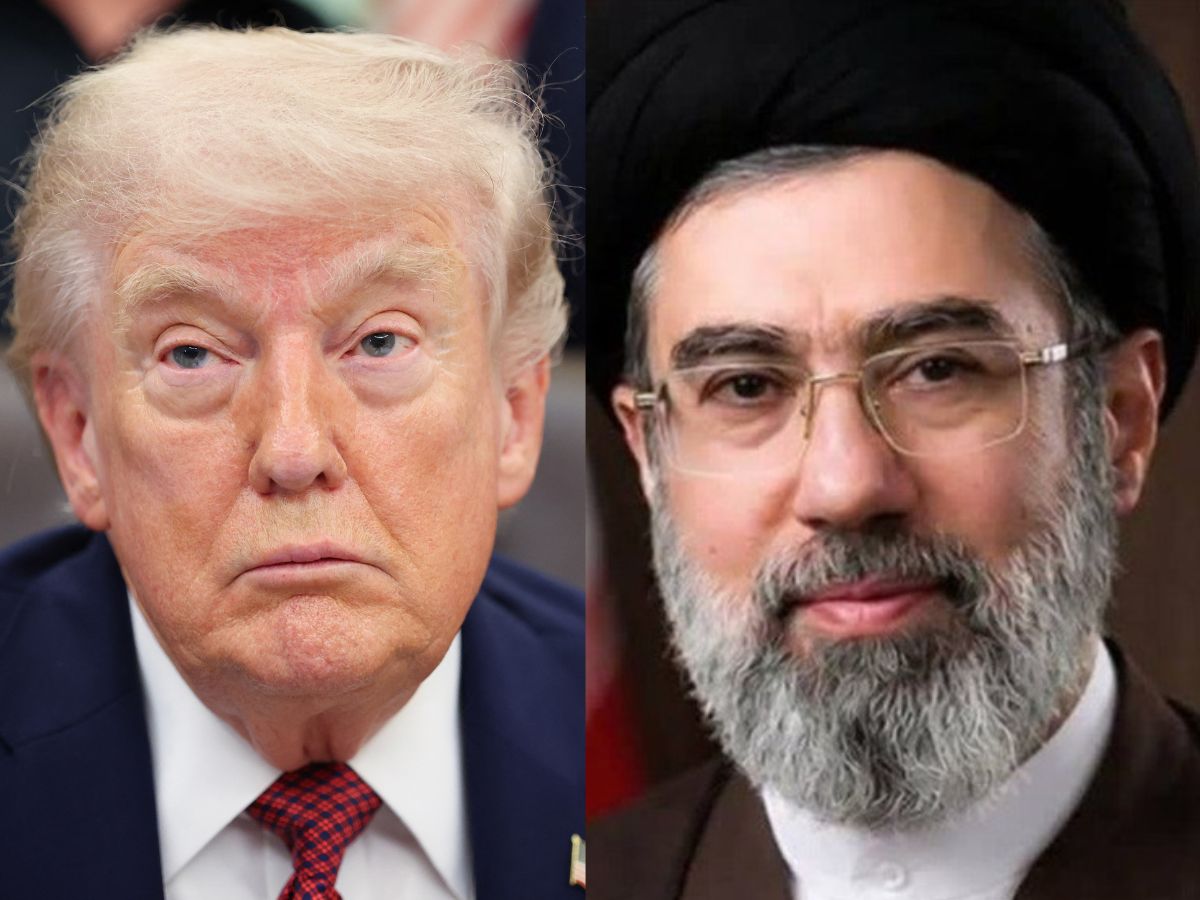
A proposed peace agreement between the United States and Iran is drawing attention over reports that Tehran is seeking economic guarantees worth at least $300 billion as part of a broader settlement to end months of conflict that disrupted global oil markets and heightened regional tensions. US President Donald Trump has presented the agreement as a diplomatic breakthrough, declaring, ‘The deal with the Islamic Republic of Iran is now complete,’ and arguing that it could stabilise energy markets and help reopen the Strait of Hormuz.
Reported Economic Demands
Although the draft memorandum, reportedly expected to be signed in Switzerland on June 19, has not been publicly released, debate has intensified over its reported economic provisions.
According to Iranian media reports, Tehran is seeking reconstruction plans worth at least $300 billion, along with the release of $24 billion in frozen assets, sanctions relief on oil and petrochemical exports, and full access to its financial resources. Iranian officials have long argued that compensation is necessary after conflict-related damage, with some estimates placing losses as high as $1 trillion.
Tehran And Washington Offer Different Narratives
Iranian officials have portrayed the package as reconstruction assistance linked to war damages. In contrast, Western reports have described the proposal as an international investment and recovery programme that the United States would help facilitate, potentially through private-sector involvement rather than through direct government payments.
The reported plan reflects ideas previously associated with Trump’s Middle East advisers, including investment-led redevelopment projects and large-scale economic initiatives aimed at post-conflict recovery.
Political And Economic Stakes For Both Sides
For Washington, the agreement offers an opportunity to reduce tensions, secure shipping routes, and ease pressure on energy markets. Trump celebrated the reported breakthrough on Truth Social, writing, ‘Congratulations to all! Let the oil flow!’
However, critics argue that even if the package is framed as investment rather than reparations, a commitment of this scale could create the impression that the US is adjusting to realities on the ground rather than dictating terms. Iran, meanwhile, has used the negotiations to push for sanctions relief and reconstruction guarantees as conditions for lasting peace.
Regional Challenges Remain
Questions continue to surround the framework, as key details, including the reported $300 billion figure, have not been independently verified. Iran International noted that the draft remains unconfirmed, while US officials have not publicly endorsed several provisions circulating in media reports.
Regional tensions could also complicate implementation. Former diplomat Aaron David Miller warned that Lebanon may become an early test of the agreement, stating, ‘I think they are using Lebanon now to try to push Trump to push Netanyahu and to establish a new equation.’ ‘ Former US Assistant Secretary of State Elliott Abrams argued that Iran’s internal politics may ultimately shape the agreement’s future, saying, ‘The only real end of this is the end of the regime, which is to say, let the Iranian people govern themselves.’
A Framework, Not a Final Peace Treaty
At this stage, the proposal remains a preliminary framework rather than a binding peace treaty. Without greater transparency and clear verification mechanisms, uncertainty remains over whether the reported reconstruction commitments can be implemented and whether the ceasefire can evolve into a lasting peace.
The coming weeks are likely to determine whether the framework survives political opposition, regional disputes, and competing expectations on both sides.
ALSO READ: Iran–US 14-Point MoU Draft Framework
Harshita is a journalist and digital content writer specializing in breaking news, current affairs, travel, education, and trending stories. She is focused on delivering accurate, timely, and engaging content with a strong emphasis on clarity and audience relevance.





