
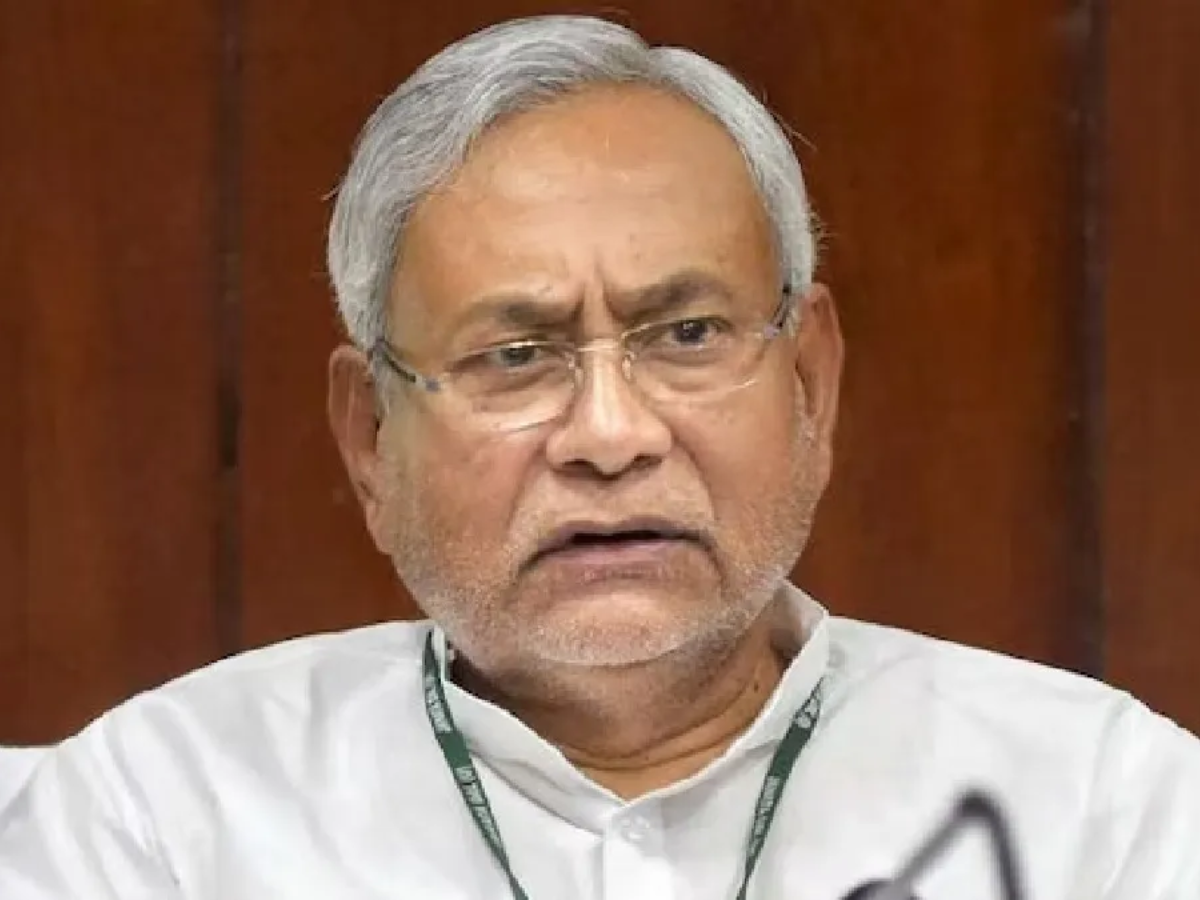

Nitish Kumar and the NDA are storming their way to a huge win in Bihar. The alliance, which includes the BJP, JDU, LJP, RLM, and HAM has a massive lead, with over 200 seats, way more than the 122 needed to form a government. By noon, the NDA was ahead in 187 seats: BJP had 87, JDU 75, and Chirag Paswan’s LJP 20.
On the other side, the Mahagathbandhan has fallen apart. The RJD has crashed from 75 seats in 2020 to just 36, and Congress dropped from 19 to 6. It’s not even close.
Bihar Elections: How Nitish Kumar managed to woo women voters
What’s driving all this? Women voters, plain and simple. Nitish Kumar’s back for a record 10th term, and it looks like women made all the difference. There’s a sense this could be Nitish’s last election, and people are crediting him for pulling Bihar out of the old days of “Jungle Raj.” After two decades in charge, voters decided he’s earned another term.
And let’s talk about that Rs 10,000 direct transfer for women. Before the election, the NDA rolled out the Mukhyamantri Mahila Rojgar Yojana, a Rs 7,500-crore scheme to boost self-employment for women.
Around 1.2 crore women got Rs 10,000 each. This isn’t the first time Nitish has focused on women: he gave them 50% reservation in panchayats back in 2006 and 35% quota in state government jobs in 2013.
The numbers tell the story. According to the Election Commission, women outvoted men in 37 out of Bihar’s 38 districts. In some places, women’s turnout beat men’s by 14% or more, and in another ten districts, the gap was over 10%.
Only in Patna did men show up more than women. Overall turnout hit 67.13%, the highest ever in Bihar, with women’s turnout at a whopping 71.78%, compared to 62.98% for men.
Why did so many women vote for Nitish Kumar?
The liquor ban played a big part. There was real worry that if the opposition won, they’d roll back prohibition. Tejashwi Yadav and Prashant Kishor talked about relaxing or removing the ban, and that really bothered women voters many of whom have seen firsthand the trouble alcohol causes at home.
Bihar’s been a dry state since 2016, thanks to Nitish. Sure, there are problems with enforcement, but most women aren’t blaming Nitish, they’re blaming the folks selling fake booze at crazy prices.
Tejashwi tried to win over the Pasi community by promising to legalize toddy, a traditional drink, but that just made more women stick with Nitish.
What do the numbers say?
Let’s look closer at the numbers. Women voters didn’t just show up, they outnumbered men at the polls. According to the Election Commission, women’s turnout was 71.6%, men’s 62.8%. In the first phase, 69% of women voted compared to 61.5% of men. In the final phase, women’s turnout jumped to 74%, while men’s hit just 64%.
There are 3.5 crore female voters in Bihar, compared to 3.93 crore men, as of 2025 data. And this doesn’t even count service voters, postal ballots, or transgender voters.
Even though there are fewer women than men on the rolls by about 42 lakh women keep turning out in bigger numbers.
This isn’t new. Back in 2015, women’s turnout was 60.48%, men’s was 53.32%. In 2020, women were at 60%, men at 54%. Nitish has always done better with women than men. In 2020, post-poll data showed that the NDA’s narrow win of just about 12,000 votes came down to women voters.
Among women, 38% backed the NDA, while 37% went for the Mahagathbandhan. Among men, the opposition led. That 1% edge among women, who turned out in bigger numbers, made all the difference.
Caste Arithmetic
In Bihar, things aren’t as simple as campaign promises about jobs or poverty. Caste still calls the shots here, as it does in much of India. It decides who gets power, who’s left out, and who manages to pull ahead.
Let’s break down how the big caste groups stack up:
The EBC Piece
The 2023 caste survey showed that Extremely Backward Classes (EBCs) make up a huge chunk of Bihar, over 36 percent of its 130 million people. OBCs are another 27 percent.
EBCs, who aren’t counted among the Scheduled Castes, are still some of the most disadvantaged folks in the state. They have little say in government, and when it comes to land or money, they sit just above Dalits.
For years, most EBCs backed JD(U) and Nitish Kumar. Nitish, himself a Kurmi (a group that’s just 3 percent of the population), built his brand by championing EBC-friendly policies. Lately, though, his image has taken a hit. Some EBC voters may just look elsewhere this time.
Dalits
Scheduled Castes, about 20 percent of Bihar, are another key group. Sub-groups like the Paswans and Manjhis have carved out some political space for themselves, with leaders and resources to match.
The NDA leans on heavyweights like Chirag Paswan (LJP-RV) and Jitan Ram Manjhi (HAM) to pull in Dalit votes. The Mahagathbandhan, on the other hand, has Pashupati Kumar Paras, brother of the late Ram Vilas Paswan, trying to do the same.
Less privileged Dalits, especially the so-called ‘Mahadalits,’ often side with Nitish Kumar, mostly because of his welfare schemes. The Left parties also have a loyal following among Dalits who still feel left out.
Muslims
Muslims make up about 18 percent of Bihar’s population, and for years, most have stood with the RJD. Nitish Kumar, careful to keep a “secular” image even while working with the NDA, also held onto a good chunk of Muslim support especially among women. But some Muslims are frustrated with how he’s handled communal tensions, and that could cost him.
The Mahagathbandhan picked up a boost when Ali Anwar Ansari, a big name among Pasmanda (backward) Muslims, joined the Congress. That might help consolidate the Pasmanda Muslim vote. Still, Asaduddin Owaisi’s AIMIM offers another option for Muslim voters tired of the usual parties.
Dominant Castes
Then there are the so-called dominant castes Brahmins, Bhumihars, Rajputs together about 11 percent of the population. They usually back the BJP, drawn by Hindutva politics. Congress is hoping to woo some of them, but Prashant Kishor’s Jan Suraaj Party could split this vote and shake things up for the NDA.
ALSO READ: Bihar Election Key Candidates Results LIVE: Tejashwi, Tej Pratap Trail In Latest Trends




