
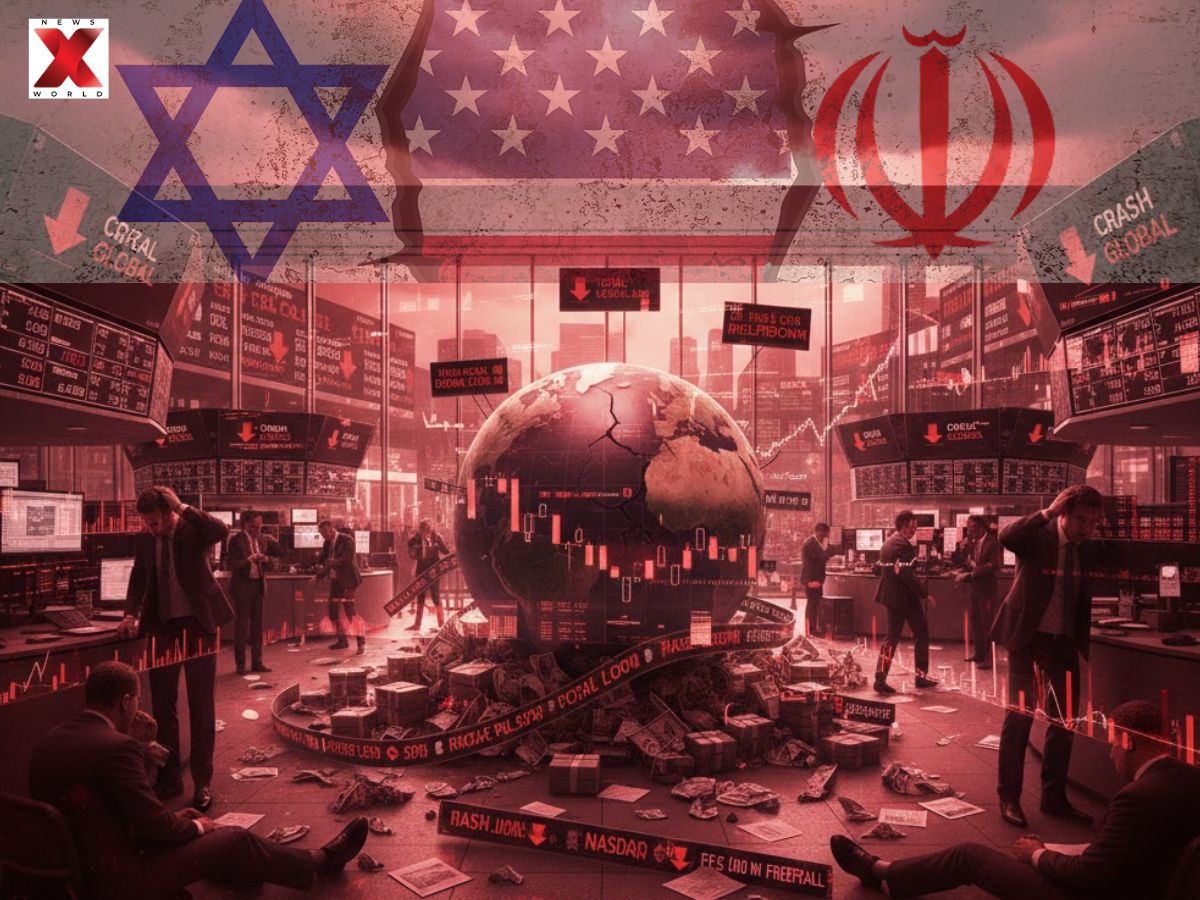

Indian equity markets are bracing for another volatile session on Monday, March 16, as geopolitical tensions in the Middle East continue to weigh on investor sentiment.
The ongoing Iran‑Israel‑US conflict, combined with rising crude oil prices and sustained foreign institutional investor outflows, has triggered sharp losses on Dalal Street this month.
Sensex and Nifty have fallen around 8 percent in March alone, reflecting widespread caution among investors. Friday’s trading extended the decline, with the Sensex dropping nearly 1,500 points and Nifty slipping below 23,200, marking the third consecutive session of losses.
Market capitalization across BSE-listed companies has decreased by roughly ₹34 lakh crore since the start of the month.
Geopolitical Tensions Keep Pressure on Markets
The closure of the Strait of Hormuz amid the Iran‑Israel‑US conflict has heightened risk sentiment, impacting energy markets and equities alike. Crude oil prices have surged above $100, keeping inflation and input-cost pressures elevated.
Meanwhile, the Indian rupee weakened, crossing the 92 mark against the US dollar, and foreign institutional investors continued their selling streak for the 11th consecutive session. These developments have combined to keep Dalal Street on edge ahead of Monday’s trading.
Analysts Expect Continued Volatility
Market experts expect Monday’s trend to remain weak unless there is meaningful de-escalation in the Middle East or positive macroeconomic developments.
Technical charts remain bearish, with Nifty showing lower highs and lower lows on its weekly pattern, while key supports are being monitored in the 22,700–22,400 range. Although oversold conditions could trigger a short-term rebound, no clear reversal signals have emerged. Volatility is likely to remain elevated, driven by geopolitical headlines, crude price swings, and foreign fund flows.
Lessons from Past Geopolitical Shocks
Financial experts advise investors to remain calm and maintain a long-term perspective. Radhika Gupta, MD & CEO of Edelweiss Mutual Fund, highlights that markets historically recover after geopolitical shocks.
Following the 9/11 attacks in 2001, markets fell 6–7 percent over a month but gained around 14 percent over the next six months. Similarly, during the Iraq War in 2003, the stock market dropped 7–8 percent in a month but surged 15–16 percent the following year.
Investors are encouraged to review portfolios carefully and avoid panic selling, especially as markets have remained largely flat over the past 18 months.
What Could Shape Monday’s Trading
As Dalal Street prepares for Monday’s session, investors remain vigilant, weighing the possibility of a relief rally against continued war-driven selling pressure. The market’s direction will largely depend on developments in the Middle East, crude oil and currency movements, and foreign fund activity, making volatility and cautious trading the likely themes for the day.
Sofia Babu Chacko is a journalist with over five years of experience reporting on Indian politics, crime, human rights, gender issues, and stories about marginalized communities. She believes journalism plays a crucial role in amplifying unheard voices and bringing attention to issues that truly matter. Sofia has contributed articles to The New Indian Express, Youth Ki Awaaz, and Maktoob Media. She is also a recipient of the 2025 Laadli Media Awards for gender sensitivity. Beyond the newsroom, she is a music enthusiast who enjoys singing. Connect with Sofia on X: https://x.com/SBCism




