
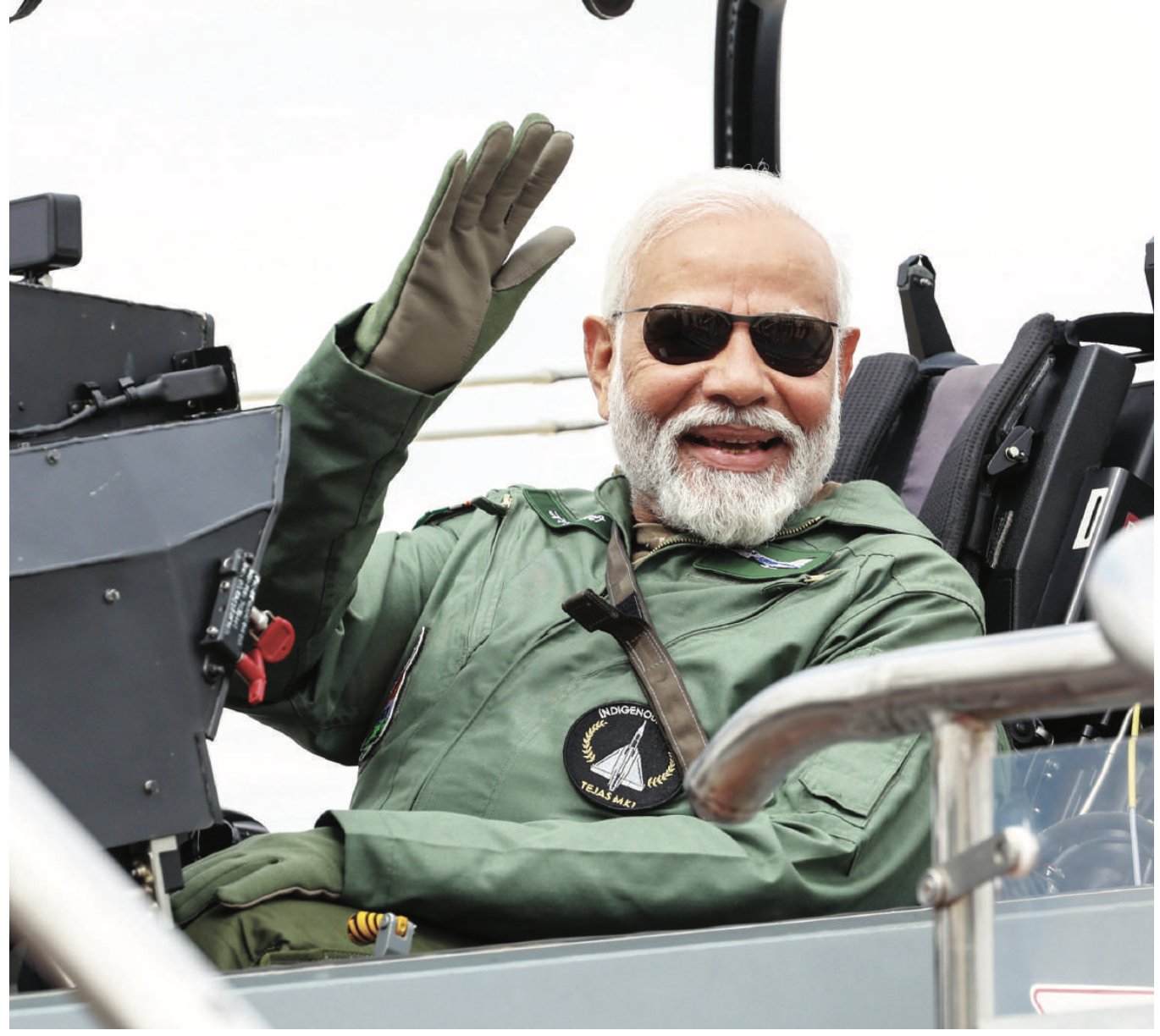

On 17 September, rendra Modi turns 75. It is a milestone in any life, but in his case the num- ber feels almost misleading. Modi at 75 does not look like a leader winding down. His energy and pace, often greater than those decades younger, have become part of his political capital. Consider the rhythm of his days. He can return from a punishing week of back-to- back engagements across multiple continents, step off the aircraft at odd hours, and head straight into meet- ings that stretch long into the night. Bureaucrats and ministers speak of the near impossibility of matching his pace, of a leader who seems to treat sleep as optional. For him, travel is not merely about diplomacy or invest- ment—it is a performance of energy, a signal to allies and rivals alike that he will not slow down, that the business of India cannot wait.
One striking example of this rhythm came during his Saudi Arabia visit April this year. He was prepared for a crucial dinner with the top political leadership in Riyadh when news of the Pahalgam massacre reached him. Without hesitation, he flew back to Delhi. In the early hours of 23 April, even before leaving the airport, he met the National Security Adviser, the External Affairs Minister and the Foreign Secretary. Within hours, the Cabinet Committee on Secu- rity was convened. This was trademark Modiquick but considered action, calibrated for national interest. Within two weeks, Operation Sin- door was launched, with staggering success.
For journalists following him, the episode revealed how little distance he al- lows between events and response. Few days before Sindoor was launched , i was told that come what may, military strike will happen, and it will happen soon. The resolve to destroy Pakistan’s terror infrastructure, in my view, was taken by PM much before his flight landed in Delhi from Jeddah. This ability to turn person- al traits into political capital has marked Modi’s rise from the beginning. When he was Chief Minister of Gujarat, he recognised early that show- casing the state’s strengths was not a matter of dry policy papers but of theatre.
The Vibrant Gujarat summits were not only a platform for investment; they were a stage on which he projected himself as a man with vi- sion, someone who could convene global capital and domestic ambition in the same space. That instinct for spectacle has never left him. It has since scaled up to G20 presidencies and di- aspora rallies abroad, but the DNA remains the same: use events to transmit the mes- sage that he is a doer, a leader with reach. Yet stamina and vision alone cannot explain Modi.
There is also the matter of his extraordinary memory. Those who have worked closely with him recount how he can recall conversa- tions from decades ago, the details of interactions that would have long slipped from most minds. It is not only about remembering facts; it is about remem- bering people—who stood by him, who opposed him, who tried to equivocate. In a political culture where al- liances are often temporary and loyalty easily forgotten, Modi’s long memory is both unusual and consequential.
He does not trust quickly, but once he does, that trust is rarely broken. Equally, slights are rarely forgiven. For colleagues and oppo- nents alike, this has meant that dealings with him must be precise, because nothing is lost to oblivion. That clarity extends to how he handles officialdom. Bu- reaucrats have told stories of how difficult it is to bluff or meander in his presence.
He has little patience for jargon, and even less for fluff. Rising from the ground as a party worker, riding his Vespa scooter through Rajkot, he acquired a sense of how things actually function at the level of the street. That grounding has meant that even as Prime Minister, he cuts through officialese with questions that are concrete, sometimes uncomfortably so.
The path to this point has been anything but smooth. From the turbulence that followed the Godhra riots in 2002, Modi faced unre- lenting opposition—within his own party, from powerful sections of the political class, and from international quar- ters that sought to isolate him. For years he was treated as a liability by parts of the establishment, with foreign governments denying him entry, opposition parties mo- bilising against him, and me- dia, NGOs and international entities pressing for his mar- ginalisation. The resistance was not only external. Inside his own political home, there were attempts to check his rise, to keep him confined to Gujarat. It was through this web of hostility that Modi constructed his path to nation- al leadership.
He endured sustained campaigns de- signed to weaken him, and yet methodically turned adversity into an argument for resilience. By the time he emerged as the BJP’s prime ministerial candidate in 2014, it was less a sudden rise than a hard-fought es- cape from years of siege. His eventual election to na- tional office, and his ability to consolidate power since, was forged in the crucible of those early battles. Modi’s governance priori- ties also reflect a distinctive focus. Gas connections, ration cards, health insur- ance, tap water—these are not electoral tools but foun- dational guarantees. The idea has been to remove the indignity of struggling for basics, to ensure that an or- dinary family is not forced to negotiate endlessly for what should already be theirs. For decades, the Indian state’s in- ability to provide such essen- tials kept people dependent and frustrated.
By making delivery more efficient and widespread, Modi has sought to alter that reality and recast the relationship between citizen and state. Equally, he has imposed a level of discipline on the bureaucracy that India had rarely seen before. Officials understand that work must be done on time and with precision, because excuses and laxity will not be enter- tained. That pressure has made the administration sharper and more account- able, allowing projects to move faster and benefits to reach more households. Modi’s reach is also de- fined by the way the Prime Minister’s Office has been restructured under him. When things stall in the states, when bureaucrats drag their feet or police of- ficers ignore directions, the common refrain is: “PMO hai — wahan bolunga, wah- an sunwai hogi.” It reflects a perception that accountabili- ty ultimately flows to him. To institutionalise that channel, he launched a dedicated por- tal where ordinary citizens can register grievances directly.
A specialised team in the PMO sifts through these inputs, tracks responses, and ensures that matters are not lost in the labyrinth of the system. A significant part of Modi’s success lies in this machinery. His PMO team, rarely in the media spot- light, works with quiet effi- ciency, coordinating across ministries and states, and ensuring that his priorities are translated into delivery. Their understated presence reinforces the idea that this is an office that listens, acts, and holds the system to- gether in a country where, for decades, accountability was diffuse and evasive. On the global stage, Modi’s gestures of warmth have been much discussed. His handshakes and hugs are part of an authenticity that he does not try to mask. Whether with global lead- ers or party workers, he makes little attempt to con- ceal the affection he feels or the camaraderie he wants to project.
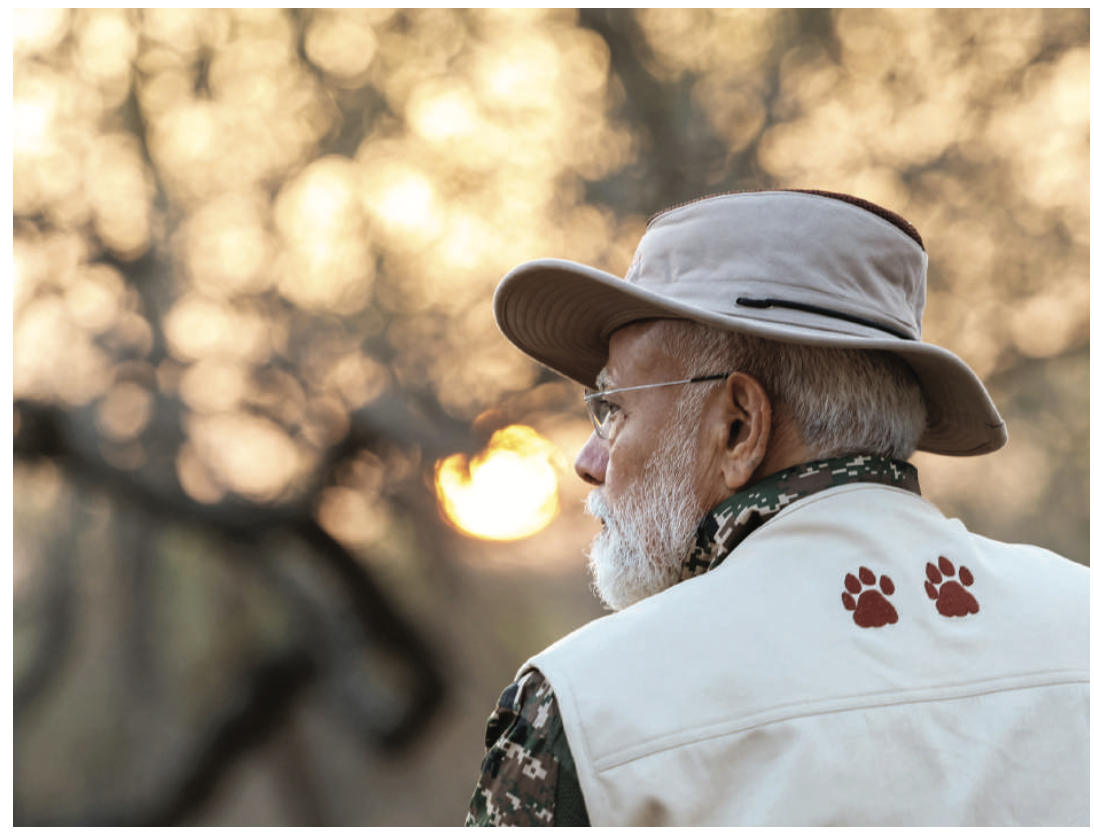
This is not the studied reserve of traditional diplomacy; it is the instinct of someone who has always dealt directly with people, who has spent decades nav- igating relationships in the streets and lanes of Gujarat. In that sense, his interna- tional behaviour is not a per- formance but a continuation of the politics he practiced at home. At the same time, his for- eign policy is never con- fused with personal friend- ship. His rapport with U.S. President Donald Trump was widely written about, but when Washington pur- sued steps that ran counter to India’s interests, Modi made sure the message was delivered clearly to Trump himself.
Relationships may be warm, but national interest remains non-negotiable. At 75, what is most striking about Modi is not only his position as India’s most dominant politician but the endurance that got him there. Few leaders have faced such a mix of domestic opposition, international censure, and internal party resistance, and emerged stronger. Few have combined such a granular understanding of grassroots realities with such an appetite for global stagecraft. And fewer still have managed to turn their personal traits—energy, memory, loyalty—into the architecture of political power.
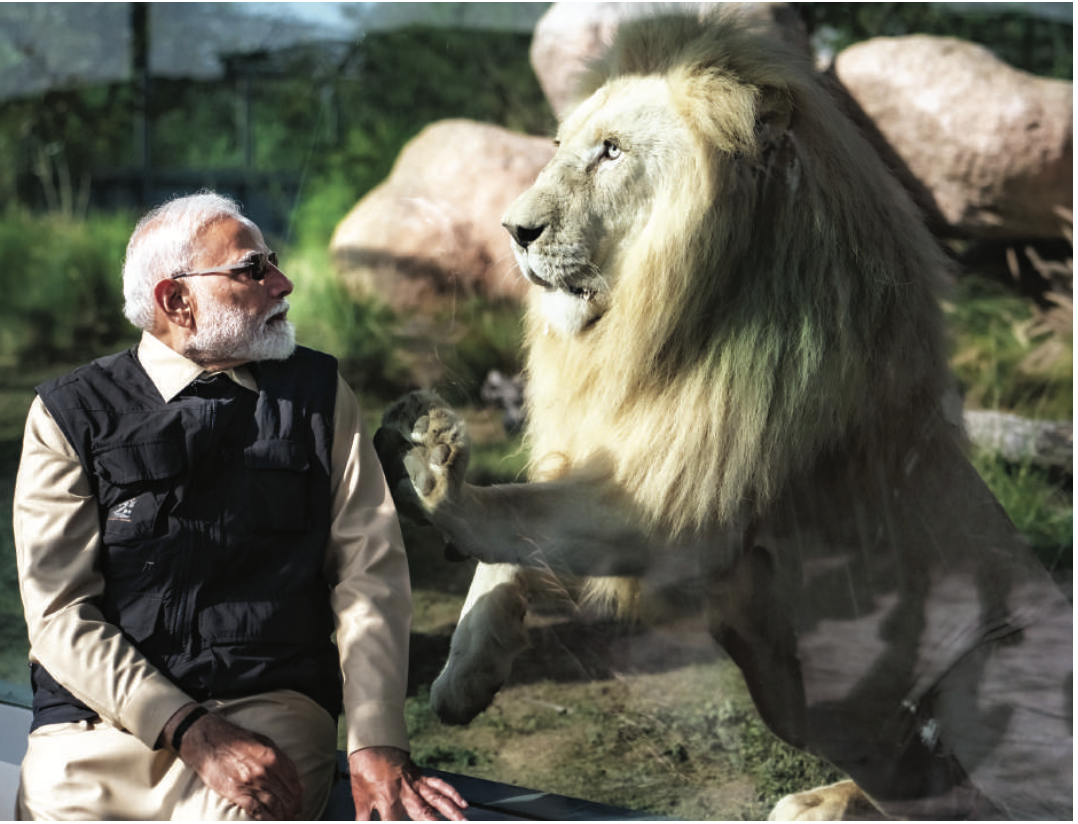
Already among the country’s three longest-serving Prime Ministers, alongside Nehru and Indira Gandhi, he faces a different kind of test: not whether he can endure, but what legacy his endur- ance will finally etch into the history of the republic.




