
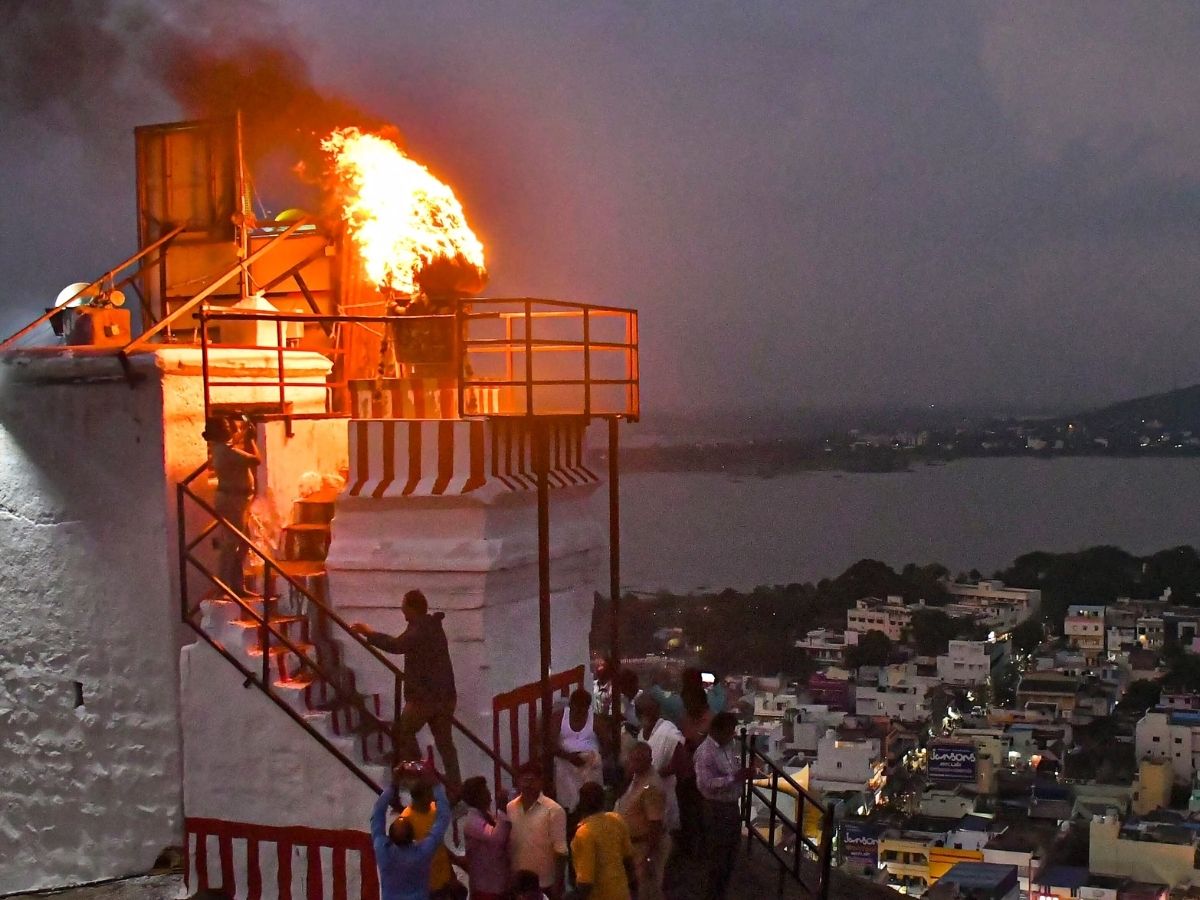

Deepam Row: The Madurai Bench of the Madras High Court on Tuesday upheld an order permitting the lighting of Karthigai Deepam at the stone pillar, known as Deepathoon, atop the Thiruparankundram hills, dismissing the Tamil Nadu government’s concerns over law-and-order and communal harmony.
Court Rejects State’s Law-and-Order Fears
A Division Bench comprising Justices G Jayachandran and K.K. Ramakrishnan delivered the verdict while disposing of appeals filed by the executive officer of the Thiruparankundram Murugan Temple, the Madurai District Collector and the city police commissioner. The bench observed that it was “hard to believe” that the state could claim lighting a ceremonial lamp on temple land would disrupt public peace, calling such apprehensions unacceptable.
The court also firmly rejected arguments suggesting that the stone pillar belonged to a nearby dargah, describing the submission as “mischievous” and without merit.
Lighting the Lamp Is a Recognised Religious Practice
Upholding the December 1 order of single judge Justice G.R. Swaminathan, the bench noted that lighting a deepam at an elevated spot visible to devotees is a long-established Hindu religious practice. It found no valid reason for the temple authorities to delay or deny devotees the right to perform the ritual during Karthigai Deepam.
The judges further remarked that repeatedly citing vague law-and-order concerns amounted to creating an “imaginary ghost,” which could instead foster mistrust between communities.
Clear Directions For Orderly Conduct
While directing the temple Devasthanam to proceed with lighting the lamp, the court laid down strict safeguards. The Archaeological Survey of India has been permitted to impose conditions to protect the monument, and no members of the public will be allowed to accompany temple officials during the ritual. The Madurai District Collector has been tasked with overseeing the entire process to ensure it is carried out smoothly.
The case stemmed from a petition filed by Hindu Tamil Party leader Rama Ravikumar and was heard with inputs from multiple stakeholders, including representatives of the Sikandar Dargah, the Wakf Board and the temple administration.




