

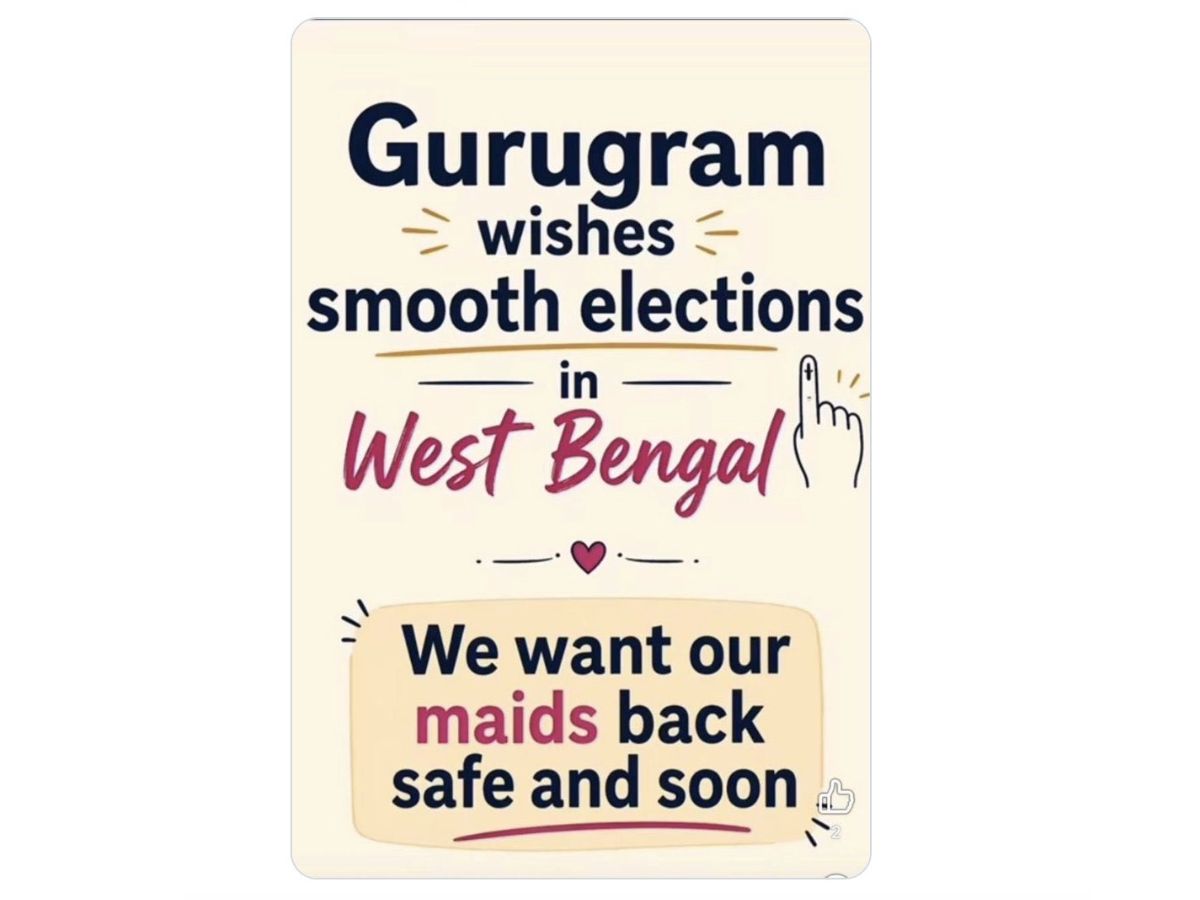
A viral meme about the elections in West Bengal has taken the country by storm, exposing some uncomfortable truths about migration, labour and class divisions in urban India. The seemingly innocuous post “Gurugram wishes smooth elections in West Bengal. We want our maids back safe and soon” snowballed into a burning social media topic. While some dismissed it as dark humour, others slammed it for reducing an entire state’s workforce to domestic help. While it has sparked outrage, it has also brought to the fore issues around the dignity of labour, economic migration & the reliance of metros on workers from states like Bengal.
Why is the ‘Maids Back’ Meme Going Viral?
The post found resonance because it struck a chord with urban dwellers, especially in places like Gurugram, Pune and Bengaluru, where a large chunk of domestic workers come from West Bengal. The post had many variations, pointing out the difficulties households face during elections when the workers return to their home state to cast votes.
So as per this, WB exports nothing but cheap labour to the rest of the country? And no Bhadralok Bong has a problem with this? Whatever happened to Bengali pride? pic.twitter.com/ZuRUSdChDR
— Shefali Vaidya. 🇮🇳 (@ShefVaidya) April 26, 2026
But a viral spread also heightened its troublesome subtext depicting migrant workers as simply the service providers, not the individuals exercising their democratic right.
Is This Dark Humour or Class Insensitivity?
On the internet, the responses were broadly divided. A section of the internet users defended this as a satire portraying real inconvenience faced by urban households. The other section, however, denounced it as offensive classist.
It is said that such framing perpetuates the myth of skilled and unskilled migrant labourers as “maids” or “helpers” without taking into account their socio-economic status and aspirationsWhy Are Gurugram Households Facing a Worker Shortage?
The viral narrative is based on a real phenomenon. A good number of domestic workers are employed in Gurugram and are registered voters in West Bengal. During elections, they return to their native places. This temporary migration has led to a noticeable absence in the households.
Workers from various sectors have reported increased workload cleaning, cooking, and other daily chores. Working professionals, particularly in nuclear families, have reported a significant disruption in their routine.
What Are Residents Saying About the Situation?
Many residents have reported the situation as, although difficult, it is temporary. They have not been able to find a replacement worker. As a result, they find themselves juggling between work and household chores.
Other residents have reported that chores are piling up while others have mentioned the additional burden of household duty in addition to office work. Despite the inconvenience, many have admitted that the workers have a right to exercise their democratic right.
Why has the meme caused a furor over the class divide in India?
The outrage over the meme comes because it highlights how the urban elite are so dependent on migrant labour, and at the same time shows their lack of sensitivity to the dignity of those who serve their homes.
Senior advocate Mahesh Jethmalani’s criticism that “to call this state a source of household help is a civilisational tragedy” has added fuel to the debate.
What does it mean about migration and urban India?
But, beyond the public outrage, it may also be a way of looking at a structural reality: large-scale migration to the cities from West Bengal and other states due to the stark economic disparity between the urban and rural areas.
And as elections in West Bengal are expected to finish soon, most of the workers will return home and with them, normalcy will return. But the debate over the meme is perhaps here to stay, and the questions it raises about respect, labour, and the invisible workforce that keeps India’s cities running are something that need to be examined.
Sofia Babu Chacko is a journalist with over five years of experience reporting on Indian politics, crime, human rights, gender issues, and stories about marginalized communities. She believes journalism plays a crucial role in amplifying unheard voices and bringing attention to issues that truly matter. Sofia has contributed articles to The New Indian Express, Youth Ki Awaaz, and Maktoob Media. She is also a recipient of the 2025 Laadli Media Awards for gender sensitivity. Beyond the newsroom, she is a music enthusiast who enjoys singing. Connect with Sofia on X: https://x.com/SBCism





