
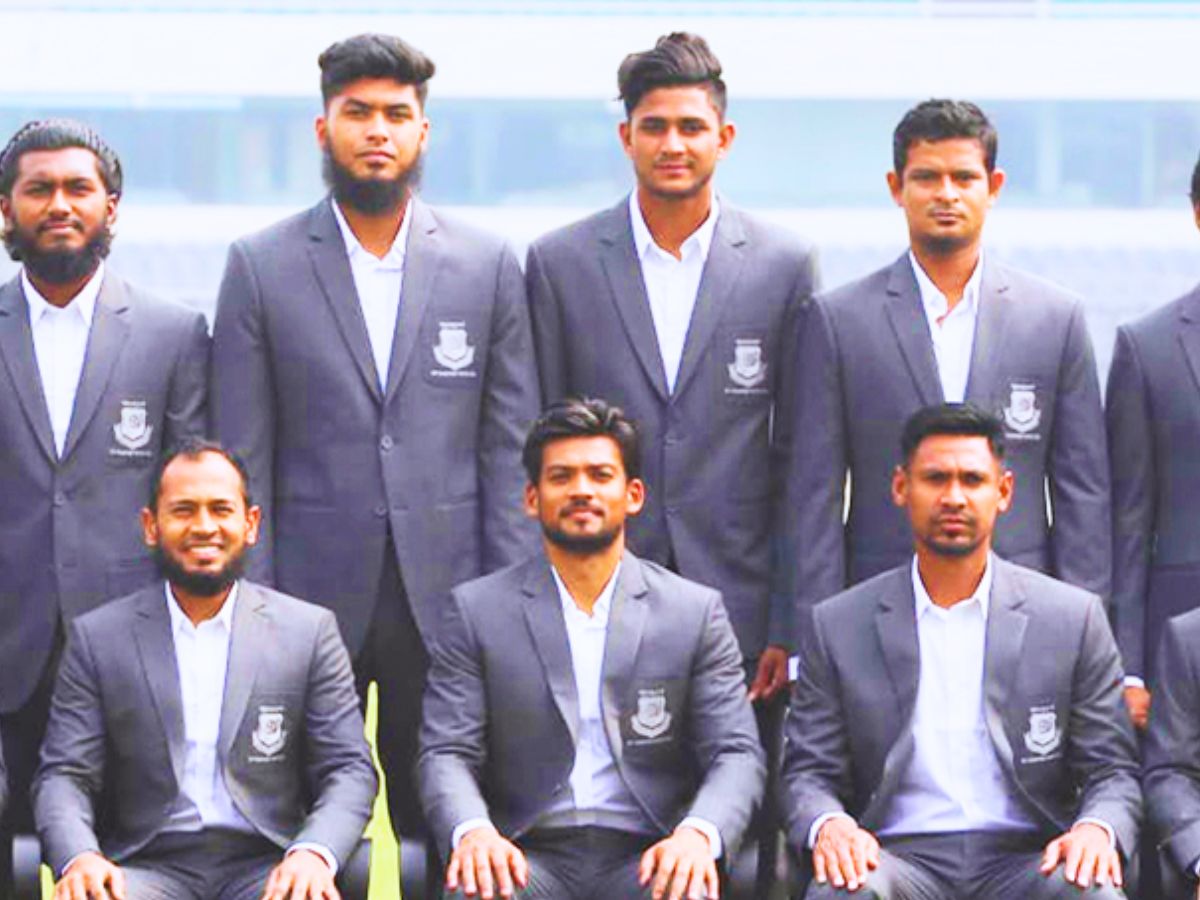

The 2026 ICC Men’s T20 World Cup has been thrown into uncertainty after the Bangladesh Cricket Board (BCB) formally requested the International Cricket Council (ICC) to move all of their matches out of India. The board cited concerns over the safety and security of the players, team officials, and other stakeholders amid growing tensions in the region.
Bangladesh Refuses to Play in India
In an official statement, the BCB confirmed that the Litton Das-led Bangladesh national team will not travel to India for the tournament, which is scheduled from February 7 to March 8, 2026. The decision came a day after the Board of Control for Cricket in India (BCCI) instructed Kolkata Knight Riders (KKR) to release Bangladesh pacer Mustafizur Rahman from their IPL 2026 squad, just weeks after he was signed for Rs 9 crore.
“Following a thorough assessment of the prevailing situation and the growing concerns regarding the safety and security of the Bangladesh contingent in India, and considering the advice from the Bangladesh Government, the board resolved that the national team will not travel to India for the tournament under the current conditions,” the BCB said in a press release.
Past Precedents and What Could Happen
If Bangladesh sticks to its stance, there are three possible outcomes, according to historical ICC precedents. First, the ICC could relocate all of Bangladesh’s matches to Sri Lanka. A similar arrangement was followed in December 2024 when Pakistan played its 2026 T20 World Cup matches in Sri Lanka instead of India.
Second, Bangladesh could face penalties for forfeiting matches in India, losing points to opposing teams. This has happened in previous World Cups, such as when Australia and the West Indies refused to travel to Sri Lanka in 1996, and New Zealand and England gave walkovers to Kenya and Zimbabwe in 2003.
Third, if Bangladesh withdraws entirely, they may be replaced by another team. Australia’s refusal to travel to Bangladesh for the 2016 U-19 World Cup led to Ireland taking their spot, though it remains unclear who would replace Bangladesh if a similar situation arises in 2026.
Bangladesh’s 2026 T20 World Cup Schedule
Bangladesh is scheduled to play all four of its group-stage matches in India, with three fixtures at Eden Gardens in Kolkata and one at Wankhede Stadium in Mumbai. The teams they are set to face include the West Indies, Italy, England, and Nepal.
With Sri Lanka as co-host, relocating the matches there is considered the most straightforward solution if the ICC grants Bangladesh’s request. However, any venue change this close to the tournament could disrupt logistics, ticketing, and scheduling.
IPL Controversy Sparks Safety Concerns
The controversy surrounding Mustafizur Rahman’s release from KKR has amplified Bangladesh’s concerns. Sports adviser Asif Nazrul criticized the BCCI’s decision, stating that if a Bangladeshi cricketer cannot play safely in India, the national team cannot feel secure either.
“We welcome this decision taken in the context of the extreme communal policy of India’s cricket board,” Nazrul wrote. “We will not accept any insult to Bangladeshi cricket, cricketers, and Bangladesh under any circumstances.”
ICC’s Delicate Decision
The ICC, led by former BCCI chief Jay Shah, is currently evaluating Bangladesh’s request. Granting it could protect player welfare but may set a precedent for venue changes driven by political disputes. Operational challenges include re-slotting fixtures, revising ticketing plans, and ensuring all teams are briefed on the new arrangements without compromising the tournament’s integrity.
A decision from the ICC is expected within 24–48 hours as organizers weigh player safety against tournament certainty. Bangladesh’s stance has already put the T20 World Cup 2026 in a state of uncertainty, leaving cricket fans and stakeholders closely watching the next developments.
ALSO READ: World Cup-Winning Skipper To Lead THIS Team In WPL 2026; Check All Details
Sofia Babu Chacko is a journalist with over five years of experience reporting on Indian politics, crime, human rights, gender issues, and stories about marginalized communities. She believes journalism plays a crucial role in amplifying unheard voices and bringing attention to issues that truly matter. Sofia has contributed articles to The New Indian Express, Youth Ki Awaaz, and Maktoob Media. She is also a recipient of the 2025 Laadli Media Awards for gender sensitivity. Beyond the newsroom, she is a music enthusiast who enjoys singing. Connect with Sofia on X: https://x.com/SBCism




