
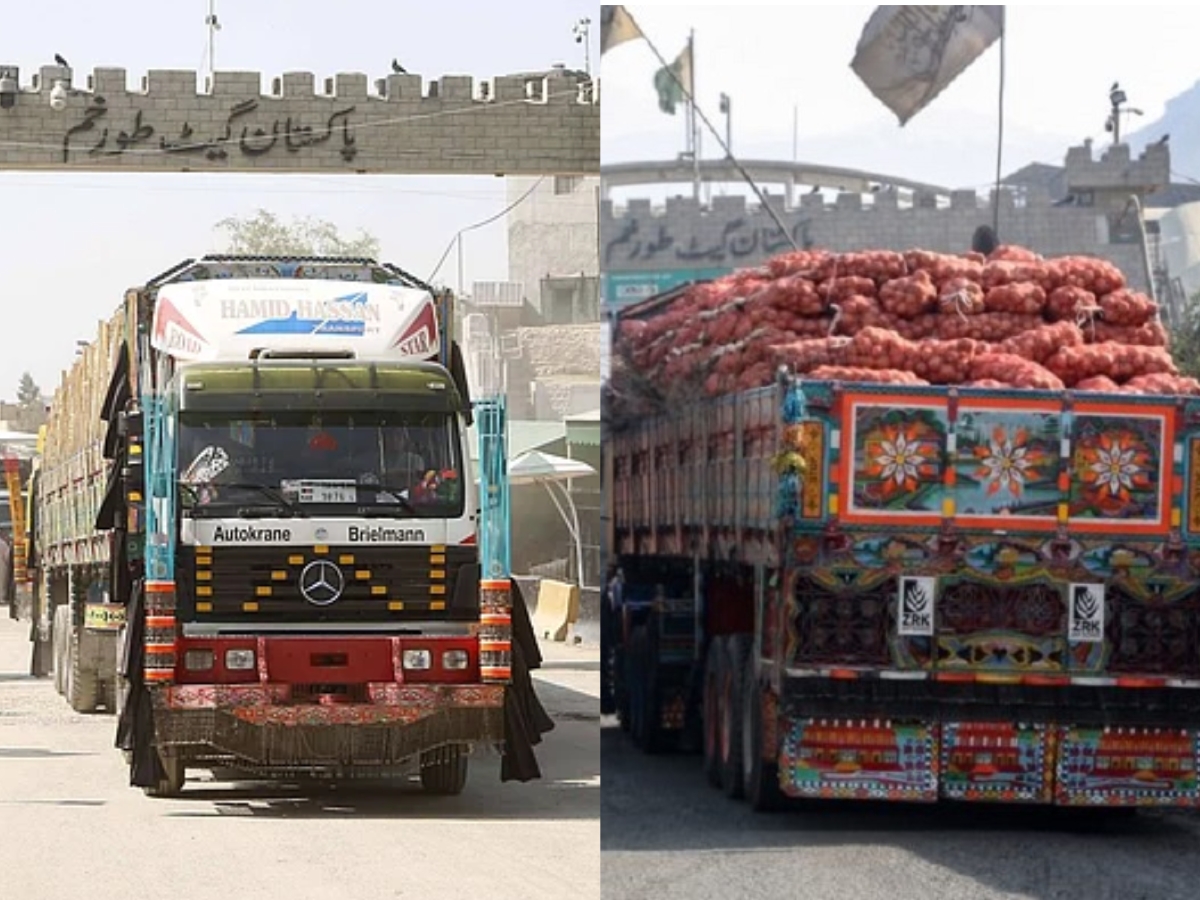

Pakistan-Afghanistan War: Pakistan’s decision to close trade routes with Taliban-ruled Afghanistan has set off a chain reaction for the country, with Islamabad reportedly to lose around USD 1 billion annually. After Pakistan’s trade ban, Kabul has responded by shifting trade routes toward Iran and India, according to reports. The tension escalated after Islamabad launched airstrikes across the border in retaliation for repeated insurgent attacks. Pakistan blames Afghanistan for supporting militant groups that carry out terrorist attacks against Islamabad.
Pakistan-Afghanistan Trade War
The standoff has frozen two-way trade, caused shortages, triggered price spikes, and disrupted production across industries dependent on Afghan imports and exports. Social media platforms are abuzz with discussions, with Afghans sharing videos of unsold produce in Pakistani mandis.
Pakistan’s Foreign Minister and Deputy Prime Minister Ishaq Dar told Tolo News that the United Nations has urged Islamabad to reconsider the border closure. He added that the matter would be discussed with Prime Minister Shehbaz Sharif and Army Chief Asim Munir.
Economic Fallout Of Pakistan-Afghanistan Trade War
Since October 11, the Pakistan-Afghanistan border closure has hit Pakistan’s economy hard, worsening the country’s already fragile economic situation.
According to Dawn, the disruption has halted imports and exports, causing shortages, price hikes, and production setbacks in multiple sectors.
Cement Industry Suffers Heavy Losses
The cement sector has been among the hardest hit. Imports of Afghan coal and cement exports to Afghanistan have ceased entirely. Manufacturers in northern Pakistan now rely on costlier coal from South Africa, Indonesia, and Mozambique.
Local coal prices have surged from PKR 30,000–32,000 per tonne to PKR 42,000–45,000, while Afghan coal, previously priced at PKR 30,000–38,000, is no longer available. Companies like Cherat Cement, Fauji Cement, and Maple Leaf Cement are facing significant revenue losses, as Afghan exports had accounted for a notable share of their earnings.
How Pharmaceutical Exports Were Hit
The pharmaceutical sector is also reeling. Kaiser Waheed, former chairman of the Pakistan Pharmaceutical Manufacturers Association, noted that Pakistan exports medicines worth USD 187 million annually to Afghanistan, with informal trade nearly triple that volume.
With border routes closed, consignments remain stranded at factories, and some medicines cannot be redirected to domestic markets as they are not registered for sale in Pakistan. Searle Pakistan has projected potential losses of PKR 2 billion if the standoff persists.
Agricultural Trade Disrupted
Pakistan’s fruit and vegetable exports, valued at USD 150 million annually to Afghanistan and Central Asian countries, have largely ground to a halt. Many consignments have been dumped or destroyed, while prices for imported fruits like pomegranates and grapes have doubled due to supply shortages.
Over 9,000 containers are reportedly stuck at ports and border points, with business leaders warning that the situation is “alarming”, according to Dawn.
Afghanistan Turns to India
Leading pharmaceutical companies from India and Afghanistan recently signed a USD 100 million MoU in Dubai.
The agreement between Afghanistan’s Rofi’s International Group of Companies and India’s Zydus Lifesciences, aims to rebuild Afghanistan’s pharmaceutical capacity and expand India’s footprint in the country’s healthcare sector. The signing ceremony was attended by the Afghan Ambassador and senior commercial officials at the Afghan Consulate in Dubai.
This move comes after Taliban Minister for Industry and Commerce Alhaj Nooruddin Azizi visited India to seek deeper trade and investment ties.
Analysts view the new India-Afghanistan pact as a direct setback to Pakistan, which has historically served as a key transit hub for Afghan commerce.
(With inputs from ANI)
Also Read: Finland, The World’s Happiest Country, To Shut Its Embassy In Pakistan In 2026, Reason Is…
Zubair Amin is a Senior Journalist at NewsX with over seven years of experience in reporting and editorial work. He has written for leading national and international publications, including Foreign Policy Magazine, Al Jazeera, The Economic Times, The Indian Express, The Wire, Article 14, Mongabay, News9, among others. His primary focus is on international affairs, with a strong interest in US politics and policy. He also writes on West Asia, Indian polity, and constitutional issues. Zubair tweets at zubaiyr.amin




