
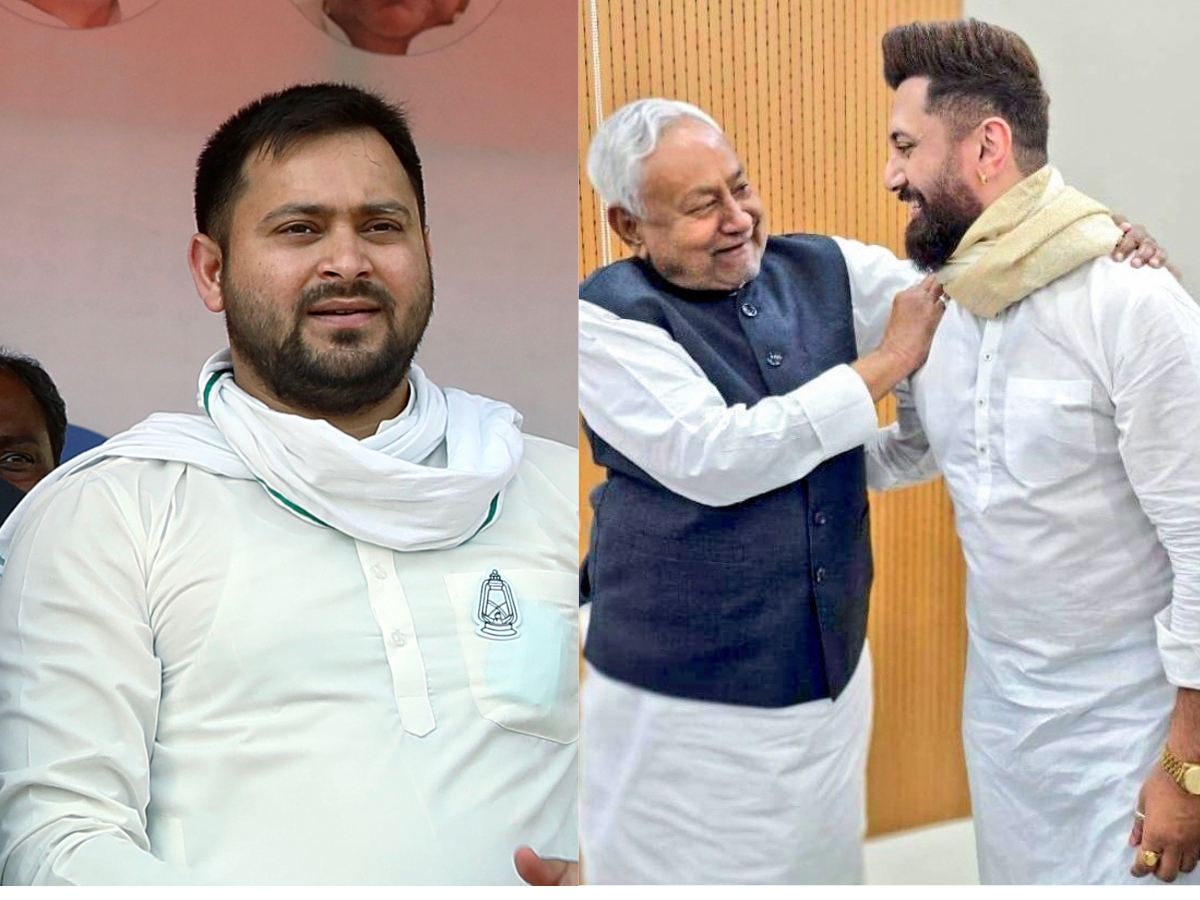

The National Democratic Alliance (NDA) produced a decisive mandate in Bihar on Friday, November 14, coming back to power after winning 202 seats. The Opposition collation, Mahagathbandhan, was left far behind. Bharatiya Janata Party (BJP) emerged as the largest party at 89 seats, closely followed by Nitish Kumar’s Janata Dal (United), which won 85 seats.
In contrast, the Mahagathbandhan, comprising the Rashtriya Janata Dal (RJD) and the Congress, faced a severe setback, and despite running an expansive campaign across the state, Prashant Kishor’s Jan Suraaj Party failed to win a single seat.
Bihar Election Result: Comparison Between 2020 And 2025 Verdicts
In 2020, NDA won 122, MGB won 114. In comparison, NDA won 202 seats while MGB won just 35 seats. The 2020 Bihar assembly election ended in an extremely tight race, with the National Democratic Alliance (NDA) and the Mahagathbandhan (MGB) separated by barely 0.03 percentage points in vote share. Five years later, the gap has widened dramatically. In 2025, the NDA has secured a 10 percentage point lead over the Grand Alliance, a shift that has translated into an even larger difference in seat share: a massive 68.7 percentage point advantage for the NDA, compared to a modest six-point lead in 2020.
Also Read: Top Losers In Bihar Election 2025: Heavy Defeats For Key Candidates
MGB Maintains Its Vote Share, NDA Makes Big Gains
While the MGB’s vote share has remained nearly unchanged, 37.23% in 2020 and 37.9% in 2025, the NDA’s share has risen sharply from 37.26% to 46.6%.
A significant portion of the NDA’s additional support, nearly five percentage points, came from its two core parties: the Bharatiya Janata Party (BJP) and the Janata Dal (United) or JD(U). Notably, both parties contested fewer seats in 2025 (202 seats) than they did in 2020 (225 seats.
Among the two, JD(U) made the larger leap, having started from a weaker position than the BJP in the previous election.
The remainder of the increased vote share is mainly attributable to the Lok Janshakti Party (Ram Vilas) or LJP(RV). The LJP had contested separately in 2020 and significantly damaged the JD(U)’s prospects by acting as a spoiler. Its vote share remained largely stable, 5.7% in 2020 and 5% in 2025, but its return to the NDA fold strengthened the alliance.
The NDA also gained from Upendra Kushwaha’s Rashtriya Lok Morcha (RLM), which joined the alliance in 2025 instead of contesting with the AIMIM-led coalition in 2020. Meanwhile, the Hindustani Awami Morcha (Secular) marginally improved its vote share.
Higher Vote Consolidation Raised the Winning Threshold
With more non-MGB voters consolidating behind the NDA, the threshold for winning a seat rose notably in 2025.
The average winning candidate secured 47.8% of the vote, the highest median victory level since 1977. When ranked by vote share, 71.4% of MGB’s winning candidates polled below this median in 2025, a clear indication that previous performance levels from 2020 were no longer sufficient.
Bihar Election Result: Seat Share Comparison (2025 vs 2020)
| Party | 2025 Result | 2020 Result |
|---|---|---|
| JD(U) | 85 | 43 |
| BJP | 89 | 74 |
| RJD | 25 | 75 |
| LJP (RV) | 19 | 1 |
| HAM | 5 | 4 |
| RLM | 4 | NA |
| INC | 6 | 19 |
| AIMIM | 5 | — |
| Others | 5 | — |
| RSHTLKM | 4 | — |
Zubair Amin is a Senior Journalist at NewsX with over seven years of experience in reporting and editorial work. He has written for leading national and international publications, including Foreign Policy Magazine, Al Jazeera, The Economic Times, The Indian Express, The Wire, Article 14, Mongabay, News9, among others. His primary focus is on international affairs, with a strong interest in US politics and policy. He also writes on West Asia, Indian polity, and constitutional issues. Zubair tweets at zubaiyr.amin




