

“What Bengal thinks today, India thinks tomorrow.” The old political adage feels upended this election cycle, with the Bharatiya Janata Party (BJP) making deep inroads into West Bengal, a state long synonymous with Chief Minister and Trinamool supremo Mamata Banerjee. But on the ground, the story is far more layered than a simple saffron surge.
Across constituencies, conversations reveal a state caught between fatigue and familiarity, between the desire for change and the pull of a leader many still feel emotionally connected to.
In Shyampukur, disillusionment is stark. A voter says the promise of “poriborton” has given way to “corruption at the core, zero development, and a breakdown of law and order,” adding that women’s safety has become a serious concern. For them, the current shift is less ideological and more about the absence of alternatives.
Yet in Rashbehari, the hesitation around change is palpable. A resident notes that Mamata Banerjee “still carries a certain lived familiarity,” even if governance is debated. The discomfort, they say, lies in how the BJP is perceived, “as if Bengal needs to be corrected,” a tone that feels dismissive of the state’s cultural complexity. The result: voters torn between dissatisfaction and uncertainty.
Howrah Uttar reflects this duality. “There is anti-incumbency after the SSC scam and RG Kar incident,” one voter says, but Mamata’s journey from grassroots politics to Chief Minister still inspires “a kind of fan following.” At the same time, fears of cultural dilution under a BJP rise remain real for some.
In Barabani (Paschim Bardhaman), the argument shifts firmly to development. Poulomi Deb, a resident, puts it bluntly: “People are tired—of corruption, lack of jobs, and no real development. Culture matters, but it doesn’t create employment.” While acknowledging Mamata’s emotional connect and strong grassroots presence, she questions “continuity without progress” and adds that, even without fully endorsing the BJP, many see it as the only vehicle for change.
SSC Scam Eroded Trust In Mamata?
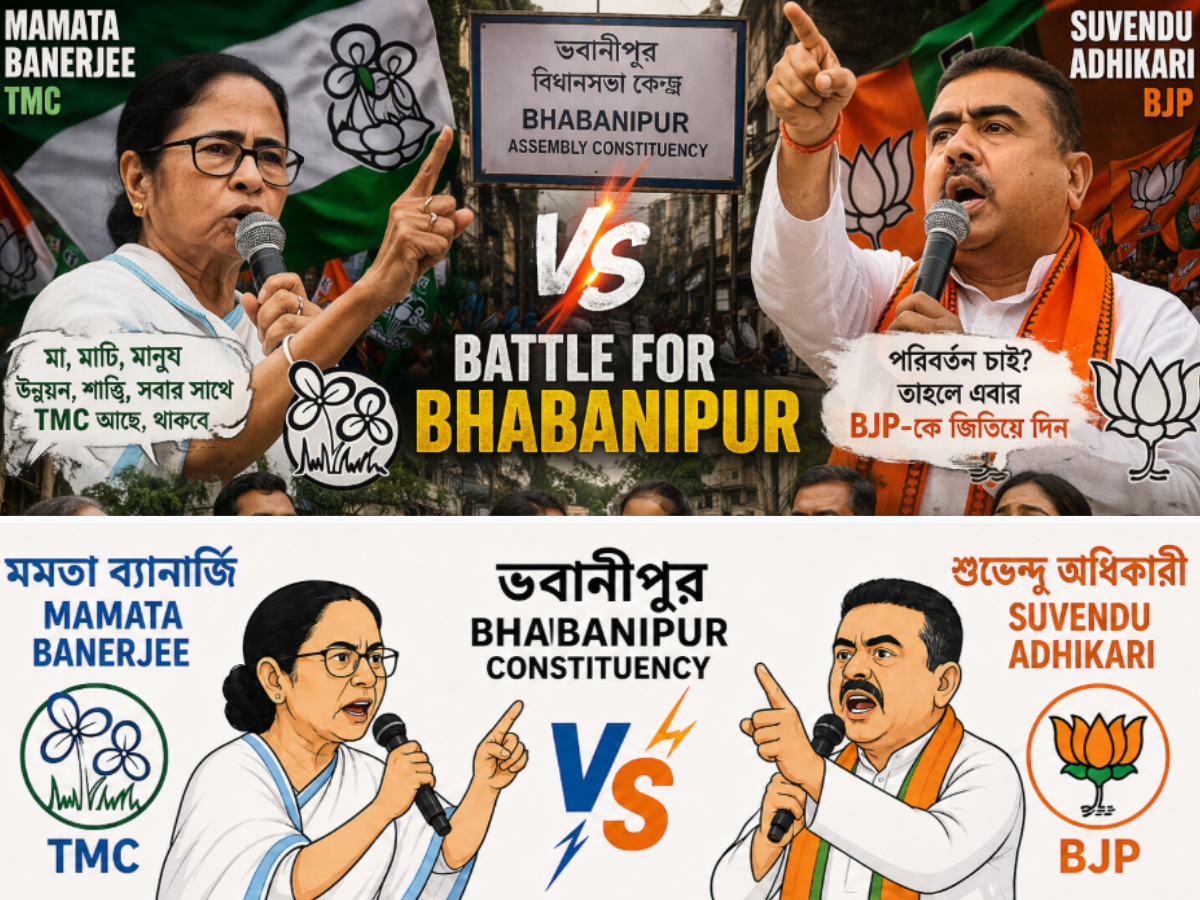
A similar frustration echoes in Bhabanipur, the TMC supremo’s home constituency, where governance failures in education and healthcare, along with controversies like the SSC scam, have eroded trust. “No government should be in power for more than two terms,” a voter argues, linking prolonged rule to rising corruption.
But Bengal’s politics is rarely just about governance metrics. In Jadavpur, a resident captures the cultural undercurrent with characteristic wit: “Bengalis thrive on nostalgia and food, and often vote with both.” The emotional residue of Mamata dismantling the Left still lingers, even as new choices emerge.
Cynicism takes a sharper edge in Bidhannagar, where a voter remarks, “A known mafia boss is more bearable than an unknown godman,” a reflection of distrust that cuts across party lines.
‘Premature To Write Off Didi’
Meanwhile, in Ballygunge, Susmita Pakrasi frames Bengal’s political psyche with humour and insight: “Writing off Didi is like declaring the monsoon over in June — premature.” For her, the state wants both development and identity. Support for Mamata, she suggests, persists due to “habit, welfare, loyalty, and the instinct to wait and watch.”
In Maheshtala, the distinction between leader and party emerges clearly. “Mamata Banerjee is strong and fearless,” a voter says, “but TMC’s image is tied to corruption and violence.” This gap is pushing some voters to “bet on BJP’s performance.”
The economic argument is perhaps strongest in Behala Paschim. A resident points to migration, poor infrastructure, and a lack of industry: “Young people are leaving for better opportunities. When they return, they see the gap between Bengal and other states.” Slogans, they add, no longer convince — “people want visible change.”
In Bolpur, Deepro Majumder offers a more structural reading of the moment: “Mamata Banerjee’s relevance will depend on the post-poll power balance. If she holds Bhabanipur and TMC secures around 90-plus seats, it can still be a strong opposition. This saffron surge is less pro-BJP and more anti-TMC, largely an anti-incumbency wave, reminiscent of 2011. While factors like Hindu consolidation and SIR fears played a role, the broader social mood clearly favoured an ‘alternative.’”
Development vs Identity: What’s Driving Bengal?
What emerges is not a clean swing but a complex churn. Development including jobs, infrastructure and investment is clearly a growing priority, especially among younger and migrant voters. Yet identity, which majorly comprises language, culture, and a distinct Bengali political ethos, continues to shape electoral hesitation.
Mamata Banerjee remains a formidable force, not just politically but emotionally. Her connect, built over decades, hasn’t eroded as quickly as anti-incumbency might suggest. At the same time, the BJP’s rise signals that aspiration and impatience are catching up.
The real question Bengal seems to be asking itself isn’t just who should rule, but what should matter more now: the comfort of continuity, or the risk of change.




