
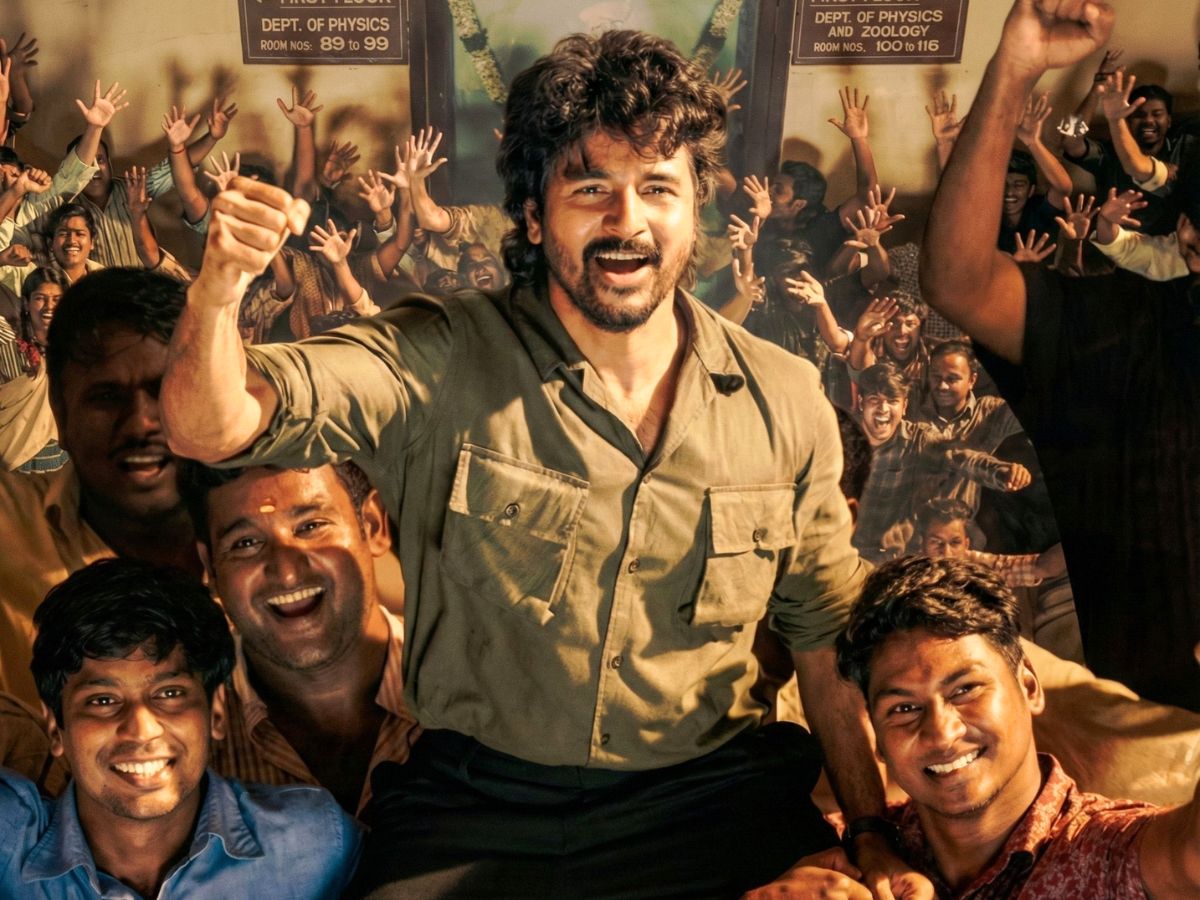

Parasakthi, one of the most-anticipated Tamil releases of early 2026, is a period political drama inspired by historical events. Starring Sivakarthikeyan, Ravi Mohan, Atharvaa, and Sreeleela, the film dives into the socio-political unrest during Tamil Nadu’s 1965 Anti-Hindi Imposition Movement.
While it features a star-studded cast, the film prioritizes content over spectacle, focusing on language, identity, and political ideology rather than box-office glamour.
Parasakthi: Fact or Fiction?
Director Kongara has clarified that Parasakthi is a work of fiction, but its backdrop is rooted in real history.
The characters’ personal stories are dramatized, but the protests, ideological conflicts, and student-led movements portrayed in the film reflect historical truths. The film does not follow a strict chronology but evokes the “emotional truths” of that turbulent period in Tamil Nadu.
The Real History Behind the Film
In 1965, the Indian Constitution designated Hindi as an official language alongside English for a transitional period. On 26 January 1965, this period ended, triggering widespread fear in South India, particularly in Tamil Nadu, that Hindi would replace regional languages.
This led to mass protests led mainly by students and youth organisations. The demonstrations were about identity, political autonomy, and federalism as much as language. University campuses became hotbeds of dissent, and clashes with police sometimes turned deadly.
Sivakarthikeyan’s lead character is widely believed to be inspired by R. Rajendran, a student of Annamalai University who was shot during a protest in 1965. His death, and those of other protestors, symbolized the cost of the youth-led struggle for Tamil identity and became a defining part of political memory in the state.
Voices from the Film Industry
The release of Parasakthi comes amid debates over censorship in Tamil cinema. Actor-politician Kamal Haasan recently issued a statement emphasizing artistic freedom, transparency, and accountability in the film certification process.
Sharing a note titled “For Art, For Artists, For the Constitution”, he underlined that India’s Constitution guarantees freedom of expression, which should not be undermined by opaque censorship practices.
Haasan called for reforms like defined timelines, transparent evaluation processes, and written justifications for any suggested cuts. “When clarity is absent, creativity is constrained, economic activity is disrupted, and public trust is weakened,” he said, urging constructive dialogue between the film industry and government institutions.
Director Pa Ranjith also weighed in, criticizing the censor board for misleading guidance and suppression of dissenting voices. “A regressive approach to films that challenge dominant narratives must be strongly condemned,” he wrote, citing past experiences with similar pressures during his releases.
While Parasakthi is a work of fiction, its portrayal of Tamil Nadu’s 1965 Anti-Hindi Imposition protests draws heavily from historical events.
The film highlights student activism, ideological conflicts, and identity politics of the era, making it more than just a cinematic spectacle it’s a reflection on history, democracy, and the power of cultural expression.
Sofia Babu Chacko is a journalist with over five years of experience covering Indian politics, crime, human rights, gender issues, and stories about marginalized communities. She believes that every voice matters, and journalism has a vital role to play in amplifying those voices. Sofia is committed to creating impact and shedding light on stories that truly matter. Beyond her work in the newsroom, she is also a music enthusiast who enjoys singing.




