
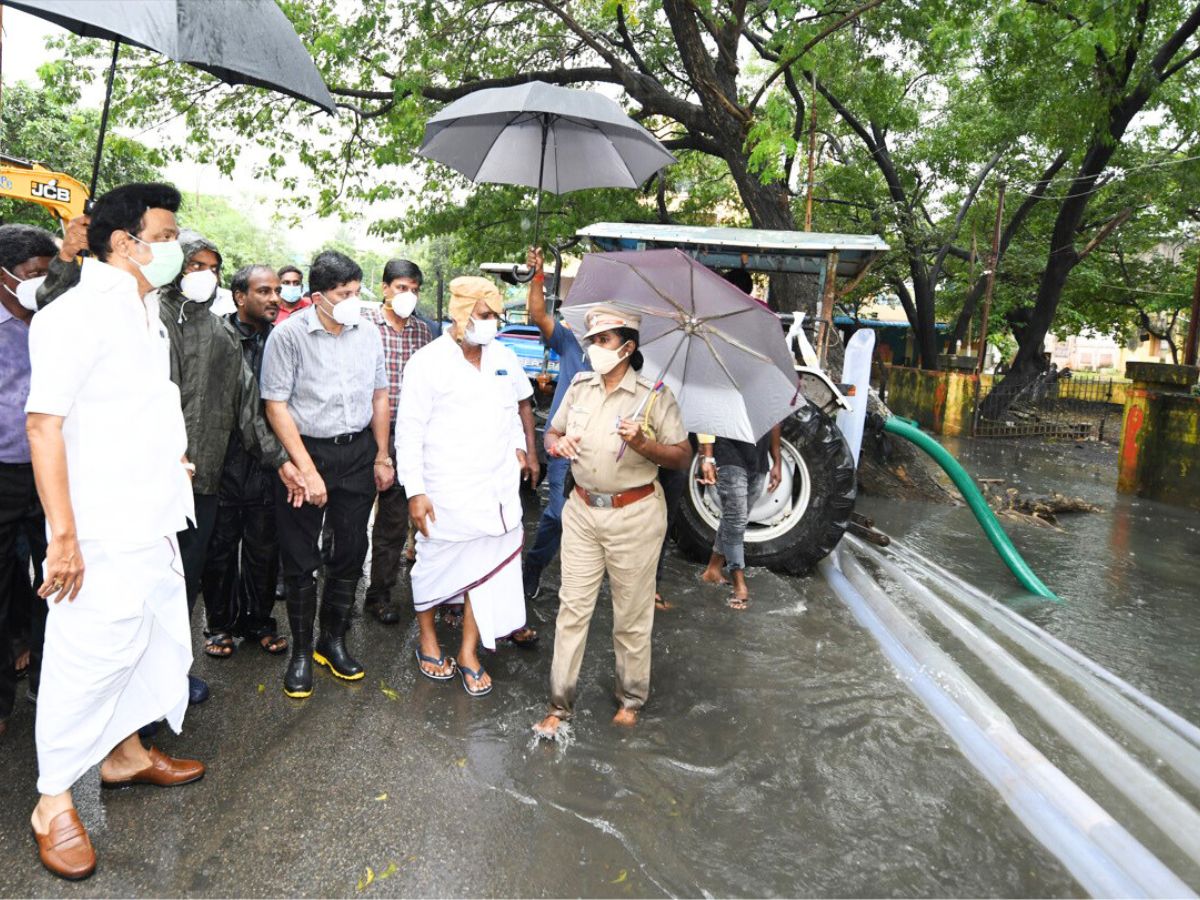

The Indian Meteorological Department has issued a red alert for Tamil Nadu, Puducherry, and south Andhra Pradesh due to Cyclone Ditwah, which is expected to make landfall along the southeast coast of India on November 30. The intensifying system over the southwest Bay of Bengal is forecast to bring extremely heavy rainfall, strong winds, and dangerous sea conditions that raise concerns over urban flooding across major coastal cities, especially Chennai.
What is urban flooding?
Urban flooding is a scenario wherein very heavy rainfall exceeds the carrying capacity of city drainage systems, stormwater channels, and natural waterways, and the rapid flooding of roads, residential areas, and commercial places ensues.
Unlike river flooding, urban floods are mainly influenced by dense concrete infrastructure, encroached water bodies, inadequate drainage networks, and blocked stormwater channels.
Even a few hours of rain are enough to paralyse daily life, disrupt power supply, transport, communication systems, and emergency services, while also causing infrastructure damage and exposing residents to health hazards in these highly congested areas.
Chennai’s Previous Floods: A Look Back
Chennai has faced recurrent flood disasters over the past decades, driven by extreme rainfall events linked to depressions and cyclones in the Bay of Bengal. Some of the worst flood years include 1976, 1985, 1996, 1998, 2005, 2008, 2010 and 2015.
The most devastating occurred in December 2015, when the city received the heaviest rainfall in over a century, recording 423 mm in a single day. Over 500 people were killed, thousands displaced and large parts of the city – including hospitals, the airport and IT corridors – were submerged for days. Experts later reported that the crisis was aggravated by encroachment of wetlands, bottlenecks in stormwater drains, and blocked waterways like the Adyar and Cooum rivers and the Buckingham Canal.
The disaster was further exacerbated by the massive loss of lakes and marshlands. The city of Chennai originally had more than 6,000 lakes and water bodies; through the process of rapid, unplanned urbanization, fewer than 30 are active today, greatly reducing water storage and natural flood absorption capacity. Even moderate rain now causes severe waterlogging.
Cyclone Ditwah: Expected Impact
The cyclone Ditwah is moving north-northwest and will approach the coast over north Tamil Nadu–Puducherry–south Andhra Pradesh by the early morning hours of November 30. The IMD has forecast extremely heavy rainfall across coastal districts with gale wind reaching a speed of 90 kmph. The fishermen have been advised not to venture into the sea.
Satellite images show dense cloud bands over the southwest Bay of Bengal, and officials have warned that waterlogging may begin quickly if rains intensify overnight.
How Prepared Are the States?
With the threat of widespread flooding looming, several states have activated emergency measures:
Tamil Nadu has deployed 14 NDRF teams and 16 SDRF units, erected 6,000 relief camps, and positioned senior officials in the most vulnerable districts. CM M.K. Stalin has ordered evacuation from low-lying areas, round-the-clock medical support, and immediate pumping of stormwater.
Puducherry has mobilised control rooms and issued advisories asking the residents to stay indoors during periods of intense rainfall.
Besides, Andhra Pradesh has deployed NDRF teams across the coastal districts and prepared shelters and reservoir monitoring systems.
Major train services in southern districts have been cancelled or rescheduled due to high wind speeds on the Pamban Bridge and safety concerns.
A Test of Resilience as Climate Disasters Rise
Urban flooding is turning out to be one of the biggest concerns in modern Indian cities like Mumbai, Chennai, Bengaluru, and Hyderabad, largely because of rapid expansion, coupled with declining natural drainage systems. And with the latest Cyclone Ditwah approaching, the preparedness for any emergencies of the coastal states would be tested once again.
Authorities urge residents to follow safety advisories, avoid unnecessary travel and keep emergency contacts accessible.
(This is a developing story and will be updated.)
ALSO READ: What Is Cyclone Ditwah: Check It’s Meaning Behind The Name And Its Landfall Timing
Sofia Babu Chacko is a journalist with over five years of experience reporting on Indian politics, crime, human rights, gender issues, and stories about marginalized communities. She believes journalism plays a crucial role in amplifying unheard voices and bringing attention to issues that truly matter. Sofia has contributed articles to The New Indian Express, Youth Ki Awaaz, and Maktoob Media. She is also a recipient of the 2025 Laadli Media Awards for gender sensitivity. Beyond the newsroom, she is a music enthusiast who enjoys singing. Connect with Sofia on X: https://x.com/SBCism




