
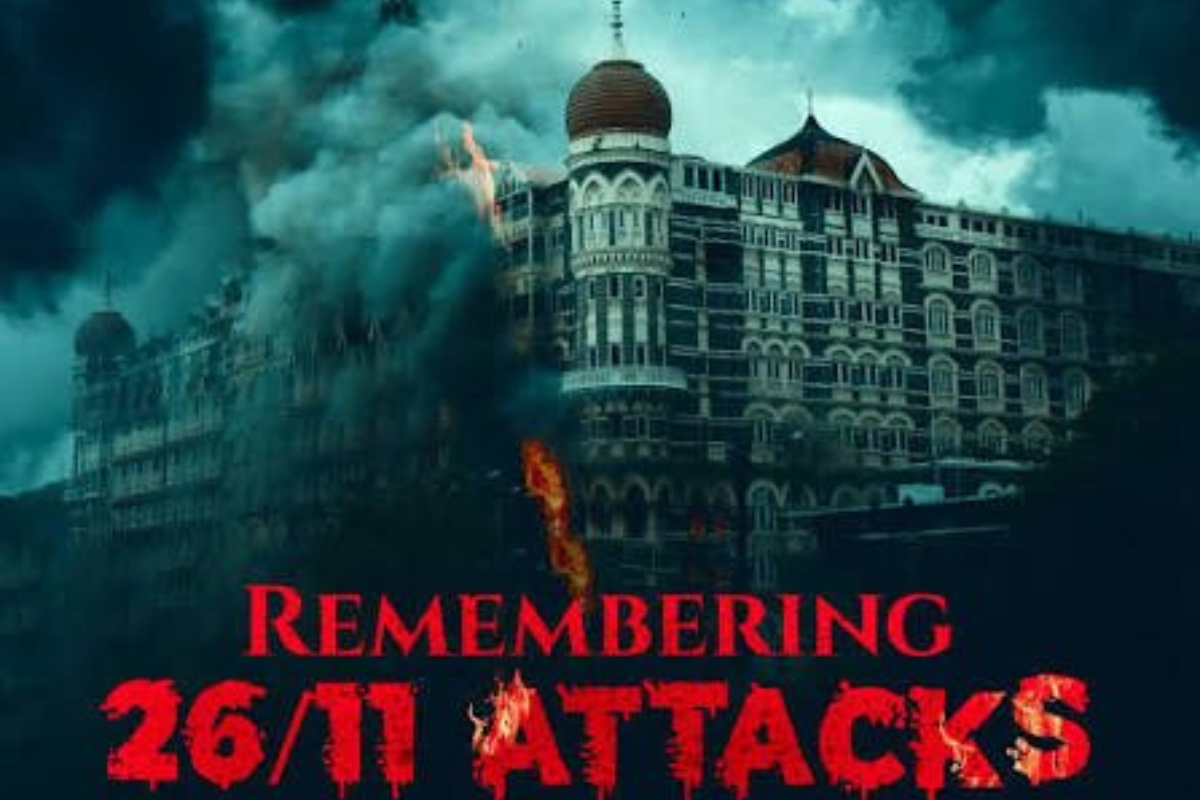

Today in the year 2008, marked a horrific terror attack in Mumbai in broad daylight. The terror attack on November 26, 2008, became one of the deadliest strikes in India. Ten militants from Lashkar-e-Taiba entered Mumbai and carried out coordinated shootings and bombings across the city. Their actions killed 166 people and wounded more than 300. This count includes 26 foreign nationals. Informing that the total death toll was 175 that also included 166 victims and 9 terrorists.
It marks 17 years since the attack and recalling it – Assistant Police Inspector Hemant Bawdhankar, a member of the team that caught Ajmal Kasab during the 26/11 terror attack, says, “Seventeen years have passed since the attack, but the memories of that night remain clear. Ten terrorists from Pakistan-backed Lashkar-e-Taiba attacked Mumbai, and every Mumbaikar and Indian who witnessed it still remembers it. I witnessed it too. I was part of the GB Marg Police Station team that intercepted the Skoda car carrying Kasab and Abu Ismail. They fired at us, we fired back, and Abu Ismail was killed. We captured Kasab alive. It still feels recent. Our colleagues Tukaram Ombale, Karkare Sahab, Salaskar Sahab and Shinde Sir were martyred, and many innocent people lost their lives.”
The attack continued for four days and ended on November 29. The militants targeted major public places, including hotels, hospitals, a railway station, a cafe and a Jewish centre. Security forces killed nine attackers, while one militant, Ajmal Kasab, survived. A court sentenced Kasab to death in 2010, and authorities carried out the sentence in 2012.
VIDEO | Mumbai: Assistant Police Inspector Hemant Bawdhankar, who was part of the police party which nabbed Ajmal Kasab during 26/11 terror attack, says, “It’s been 17 years since the terror attack, however, the memories of the day when 10 Pakistan sponsored Lashkar-e-Taiba… pic.twitter.com/YDtDYBnW74
— Press Trust of India (@PTI_News) November 26, 2025
The Taj Attack Operation Began On Nov 23
The operation began on November 21 when ten armed militants left Karachi and moved toward India by boat. They crossed the Arabian Sea for nearly 38 hours before reaching Indian waters. On November 23, they hijacked an Indian fishing boat named Kuber and forced its crew to cooperate.
The boat carried them close to the Mumbai coast without attracting attention. The terrorists planned each step carefully and kept moving until they reached the shoreline. Their approach marked the beginning of the multi-day assault that would unfold across several locations in Mumbai once they entered the city.
The 26/11 Attack Began On Nov 26
On the evening of November 26, the militants killed the captain of the fishing vessel and approached Mumbai in inflatable dinghies. Between 8 PM and 9 PM, they split into smaller groups and landed near Sassoon Docks and Badhwar Park. Between 9:20 PM and 10:30 PM, Ajmal Kasab and Ismail Khan opened fire at Chhatrapati Shivaji Terminus, killing 58 people and injuring more than 100.
Other attackers struck Leopold Cafe and Nariman House. They also planted bombs in taxis. Four militants entered the Taj Hotel, while two entered the Oberoi-Trident, where they began shooting.
Between 10:30 PM and 11:30 PM- the attacks became more intense. Kasab and Khan moved toward Cama Hospital and Albless Hospital and fired at police officers. Explosions and gunfire shook several areas of southern Mumbai. Senior officials, including Anti-Terrorism Squad Chief Hemant Karkare, died while attempting to stop the attackers. Marine commandos from the Indian Navy entered the Taj Hotel and engaged the terrorists. At the same time, more gunmen continued firing at the Oberoi-Trident. The situation worsened quickly, and security teams faced difficulty because the attackers kept moving between different locations across the city.
Kasab Is Captured and the Taj Hotel Catches Fire
Shortly after midnight on November 27, Kasab and Khan reached the Metro Cinema area. Security forces killed Khan, and police arrested Kasab in the early hours. The Taj Hotel became the main battle zone as people hid in rooms to escape gunfire. Around 1 AM, explosions damaged the central dome of the hotel, and several parts caught fire.
Security teams cordoned off the Oberoi-Trident as the attacks continued. Firefighters reached the Taj Hotel between 1 AM and 3 AM and tried to control the blaze. Army soldiers also reached the hotel to support rescue operations.
Rescue Teams Begin Evacuations as NSG Takes Charge
Around 4 AM, firefighters evacuated more than 200 people from the Taj Hotel in the first large rescue operation. By 6 AM, National Security Guard commandos arrived in Mumbai and took control of operations at both hotels. At around 6:30 AM, the government gave approval for the commandos to storm the buildings.
The NSG teams continued fighting the attackers while rescuing guests and hotel staff. They also moved toward Nariman House to free people trapped inside. The commandos worked through the day as the militants held their positions at different points inside the buildings.
Attacks On Nariman House and Oberoi-Trident
On the morning of November 28, NSG commandos entered Nariman House from the roof after descending from a helicopter. They engaged the militants inside the building and began clearing each floor. Between 11 AM and 3 PM, security forces took control of the Oberoi-Trident Hotel and killed the two attackers hiding there.
They rescued the remaining hostages and confirmed that about 30 people had died in the hotel. Between 4 PM and 10 PM, commandos neutralised the militants inside Nariman House and brought the surviving hostages out. Seven people lost their lives in this location.
The Siege Ends as NSG Secures the Taj Hotel
On November 29, NSG commandos carried out the final operations inside the Taj Mahal Palace Hotel. Between 6 AM and 9 AM, they secured the last areas and killed the remaining attackers. They freed the remaining hostages and ended the four-day siege. The Taj Hotel recorded around 31 deaths during the attack.
The coordinated assault across Mumbai came to an end after nearly 60 hours of gunfire, explosions and rescue operations. The completion of the operation brought relief to the city after days of fear and uncertainty, and authorities began investigating the planning behind the attack.
Swastika Sruti is a Senior Sub Editor at NewsX Digital with 5 years of experience shaping stories that matter. She loves tracking politics- national and global trends, and never misses a chance to dig deeper into policies and developments. Passionate about what’s happening around us, she brings sharp insight and clarity to every piece she works on. When not curating news, she’s busy exploring what’s next in the world of public interest. You can reach her at [swastika.newsx@gmail.com]




