
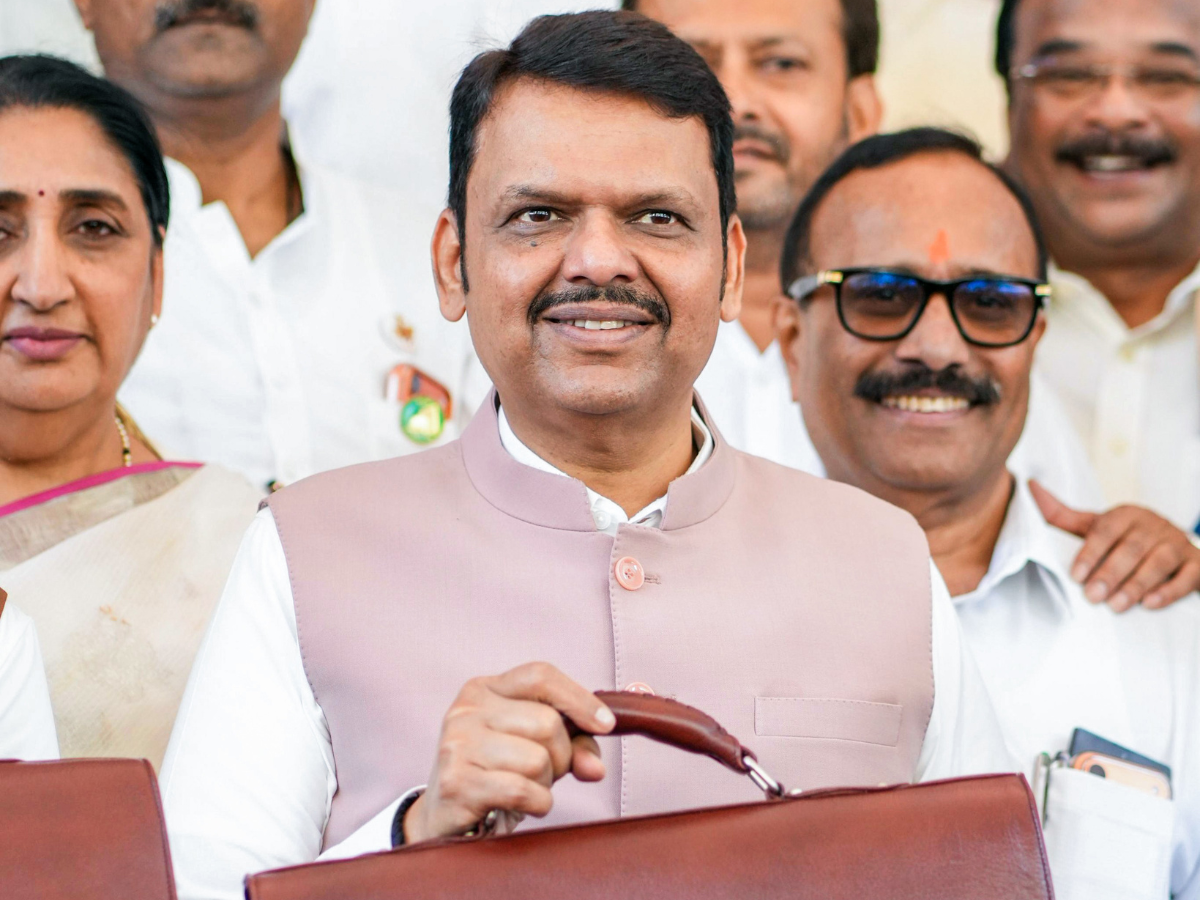

Devendra Fadnavis, who also holds the finance portfolio, on Friday announced a farm loan waiver scheme under which eligible farmers with overdue crop loans will get relief of up to Rs 2 lakh.
Presenting the 2026–27 Maharashtra state budget, Fadnavis also proposed an incentive of Rs 50,000 for farmers who have been regularly repaying their loans.
The state budget unveiled a wide range of initiatives focusing on agriculture, infrastructure development, industry, social welfare and green energy as part of the government’s vision for a “progressive, sustainable and inclusive” Maharashtra.
Push For Natural Farming And AI In Maharashtra Agriculture
The government said it will promote natural farming across five lakh hectares and strengthen agricultural value chains for 10 to 15 crops to help improve access to global markets. It also plans to use artificial intelligence and digital platforms to support farming activities and set up AI innovation and incubation centres at four agricultural universities.
In the irrigation and water sector, the government announced several river-linking projects along with measures to improve water availability. The budget also aims to provide 55 litres per capita per day in rural areas and 135 litres per capita per day in urban areas by 2047.
Several initiatives were also announced for women’s empowerment. The government said it will allocate significant funds for the Mukhyamantri Majhi Ladki Bahin scheme and expand programmes aimed at creating more “Lakhpati Didis”, with a target of creating 25 lakh additional women entrepreneurs in 2026–27.
‘EduCity’ In Navi Mumbai With International Universities
In the education sector, the government proposed setting up an “EduCity” in Navi Mumbai with six international universities and plans to develop eight to ten educational cities across the state. It also said it will support the startup ecosystem with a target of nurturing 1.25 lakh entrepreneurs and strengthening 50,000 startups over the next five years.
On the health front, the state announced the creation of a Maharashtra Institute of Public Health in Nagpur and the expansion of the Mahatma Phule Jan Arogya Yojana to increase the number of treatments and hospitals covered under the scheme. It also announced a Rs 4,500 crore rural disease detection programme for cancer, diabetes and heart diseases with assistance from the Asian Development Bank.
The budget placed strong emphasis on infrastructure development. Major metro rail projects in Mumbai and Pune were announced along with plans to expand the state’s metro network to 1,200 kilometres. The government also highlighted the progress of the Mumbai-Ahmedabad Bullet Train and proposed new expressways and transport corridors across the state.
18 Mega Industrial Hubs Planned To Boost Jobs
In Mumbai, the government said around 20 lakh slum houses will be redeveloped and 10 lakh affordable homes will be built under various housing initiatives.
To boost industrial growth and employment, the government announced plans to set up 18 mega industrial hubs and establish MSME centres in every district, which it said could generate up to 50 lakh jobs. A major steel hub has also been proposed in Gadchiroli, with significant investment expected in the region.
Green Energy Targets And Solar Initiatives Announced
The budget also outlined Maharashtra’s green energy roadmap, including a target to achieve 50 per cent green energy by 2029 and 65 per cent by 2035. The government also announced a large-scale tree plantation drive and rooftop solar initiatives to encourage renewable energy adoption.
According to budget estimates, the total outlay for 2026–27 is Rs 7.69 lakh crore, with revenue receipts estimated at Rs 6.16 lakh crore and revenue expenditure at Rs 6.56 lakh crore.
The government said the budget aims to accelerate Maharashtra’s journey towards becoming a one trillion-dollar economy in the coming years.
(With inputs from ANI)




