
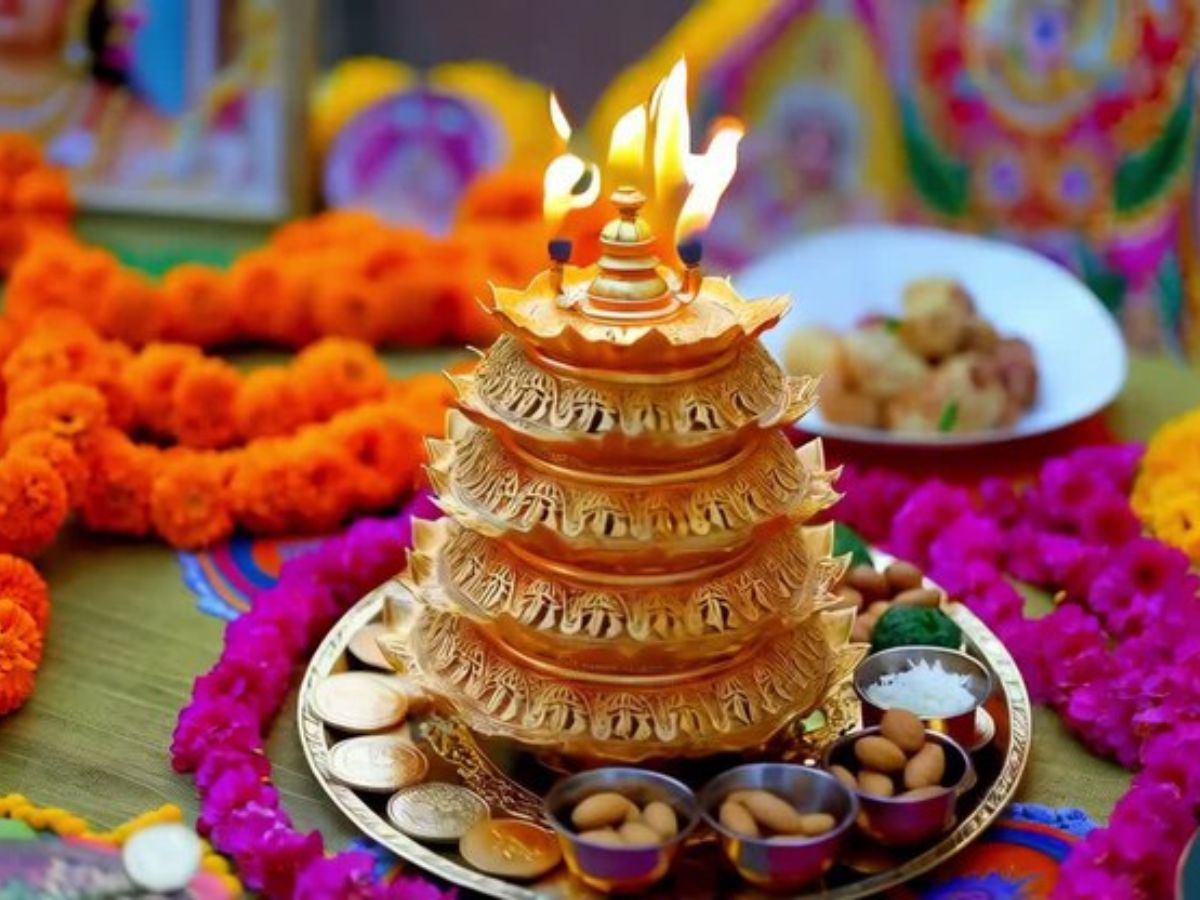

Rangbhari Ekadashi 2026 marks the joyous beginning of Holi celebrations in Kashi. On this sacred occasion, devotees worship Lord Vishnu and Lord Shiva, perform the auspicious Amalaki (amla) puja, and observe the Ekadashi fast with devotion and faith.
In 2026, Rangbhari Ekadashi will be observed on Friday, February 27.
Rangbhari Ekadashi – Also Known as Amalaki Ekadashi
Rangbhari Ekadashi is also called Amalaki Ekadashi, owing to the special worship of the amla (Indian gooseberry) tree on this day. The festival holds deep spiritual significance and is celebrated with immense enthusiasm in Varanasi (Kashi).
According to religious belief, this day commemorates the first visit of Lord Shiva to Kashi with Goddess Parvati after their divine marriage. The occasion symbolically marks the beginning of Holi festivities in Kashi.
Rangbhari Ekadashi 2026 – Date, Tithi and Parana Time
As per Drik Panchang:
Phalguna Shukla Ekadashi Tithi begins: 12:33 AM on February 27, 2026
Tithi ends: 10:32 PM on February 27, 2026
Since the fast is observed based on the Udaya Tithi (sunrise timing), devotees will observe Amalaki Ekadashi Vrat on February 27, 2026.
What Is Rangbhari Ekadashi?
In Kashi, the Ekadashi of the Phalguna Shukla Paksha is celebrated as Rangbhari Ekadashi. On this day, Kashi Vishwanath (Baba Vishwanath) is adorned with special decorations, and the city begins to immerse itself in the vibrant colors of Holi.
A grand procession of Lord Shiva is carried out through the streets, where devotees joyfully throw abir and gulal. From this day onward, the tradition of playing with colors continues in Kashi for six days, leading up to Holi.
Why Is It Called Amalaki Ekadashi?
The day derives its name from the sacred amla tree, which is worshipped with great reverence. According to religious belief, worshipping the amla tree on this Ekadashi bestows:
- Good health
- Prosperity
- Good fortune
- Amla is offered to the deity during puja and later consumed as prasad.
- Planting an amla sapling on this day is also considered highly auspicious.
Rangbhari Ekadashi Puja Vidhi (Ritual Procedure)
On this sacred day, devotees should:
- Wake up early, bathe, and wear clean clothes.
- Meditate on Lord Vishnu and take a vow to observe the Ekadashi fast.
- Perform Vishnu puja and offer amla as prasad.
- Visit a Shiva temple carrying water, sandalwood paste, bel leaves, and abir-gulal.
- Apply sandalwood paste to the Shivling.
- Offer bel leaves and water.
- Conclude by offering abir-gulal.
- Pray for relief from financial difficulties and overall well-being.
- Feed a poor person or a Brahmin after the puja.
- How to Worship the Amla Tree on Amalaki Ekadashi
- Visit the amla tree after your morning bath.
- Offer water at its roots.
- Light a diya and offer incense and flowers.
- Perform 9 or 27 circumambulations (parikrama).
- Pray for health, prosperity, and happiness.
Religious Significance of Rangbhari Ekadashi
In Hindu tradition, nature is revered as a manifestation of the divine. The worship of trees, rivers, and living beings reflects a deep respect for creation. The amla tree, known for its medicinal and spiritual importance, is therefore worshipped on this sacred day.
Rangbhari Ekadashi beautifully combines devotion, celebration, and reverence for nature—ushering in the colorful spirit of Holi in the sacred city of Kashi.




