
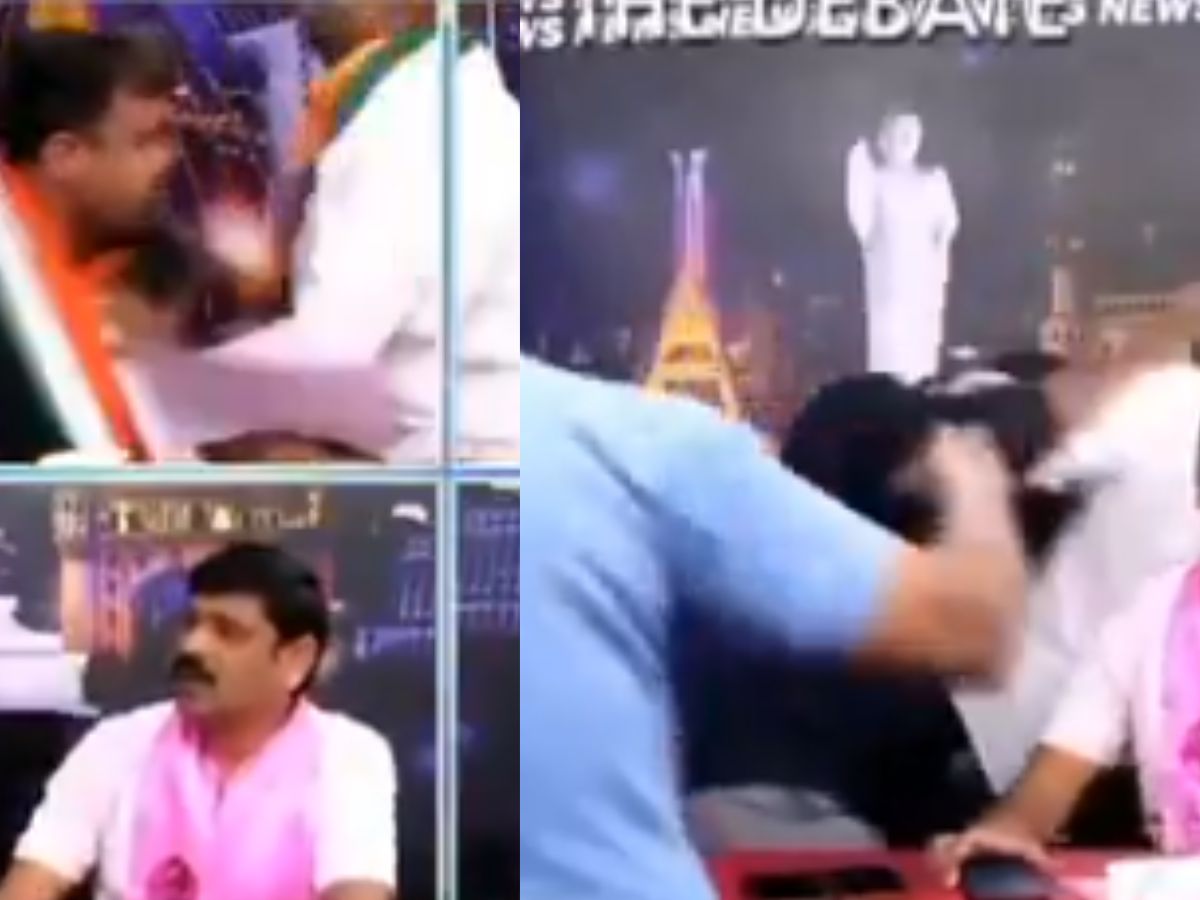

The political discourse reached an unprecedented low last night as a live televised national news channel debate turned into a shocking physical fight between a representative of the Bharatiya Janata Party (BJP) and a representative of the Indian National Congress (Congress).
What started as a passionate debate on the most recent state election outcome, fiery rhetoric soon before it was an outright physical aggression, two representatives were throwing verbal punches, pushing one another and nearly collapsing the studio set.
The disgusting display which featured the anchor apparently fighting a losing battle to regain control has drawn a lot of condemnation and ridicule across social media, one of the viral comments even referred to the whole incident as “Tollywood’s Next Movie Script Being Written”.
The Breakdown of Debate Decorum: The Theatrics of Television
The unpleasant occurrence is not merely a single event but a clear indication of the deteriorating levels of public involvement through civil means in the political argumentation. Events like this, which ought to be platforms for delicate discussions and democratic justifications, have turned out to be nothing but high-energy echo chambers that are aimed at the maximum clash and viewer ratings.
The spokespersons, representing their parties as gladiators, seem to give preference to personal attacks and hostile non-verbal communication rather than policy discussions. The on-air fight demonstrates in a striking way that the struggle for being the most talked about in the evening news has taken the place of the very need for rational political comment, which has been the cause of turning politicians into dramatist and making them resort to sensationalism.
Kalesh b/w BJP worker and Congress worker during Live TV debate:
pic.twitter.com/FMGooyLvxk— Ghar Ke Kalesh (@gharkekalesh) November 20, 2025
The Viral Verdict: Accountability in Airwaves
At first, both sides were trying to blame each other for the provocations during the immediate aftermath; however, the public opinion court quickly gave a verdict that was quite uniform and mainly in favor of the opinion that both the national parties were responsible for the disgraceful action. The evidence in the form of pictures, which is now widely shared on social media, shows total disregard for the rules of politeness.
Such dramatic displays of emotions are not only a dangerous precedent for a country with a strong democratic tradition but also a suggestion that political victory can be won by superior loudness and power rather than by reason and facts. This unfortunate incident should compel both the political and the media establishments to reconsider the disorderly, ratings-driven format that continually trades real political analysis for low-cost entertainment.
A recent media graduate, Bhumi Vashisht is currently making a significant contribution as a committed content writer. She brings new ideas to the media sector and is an expert at creating strategic content and captivating tales, having working in the field from past four months.




