
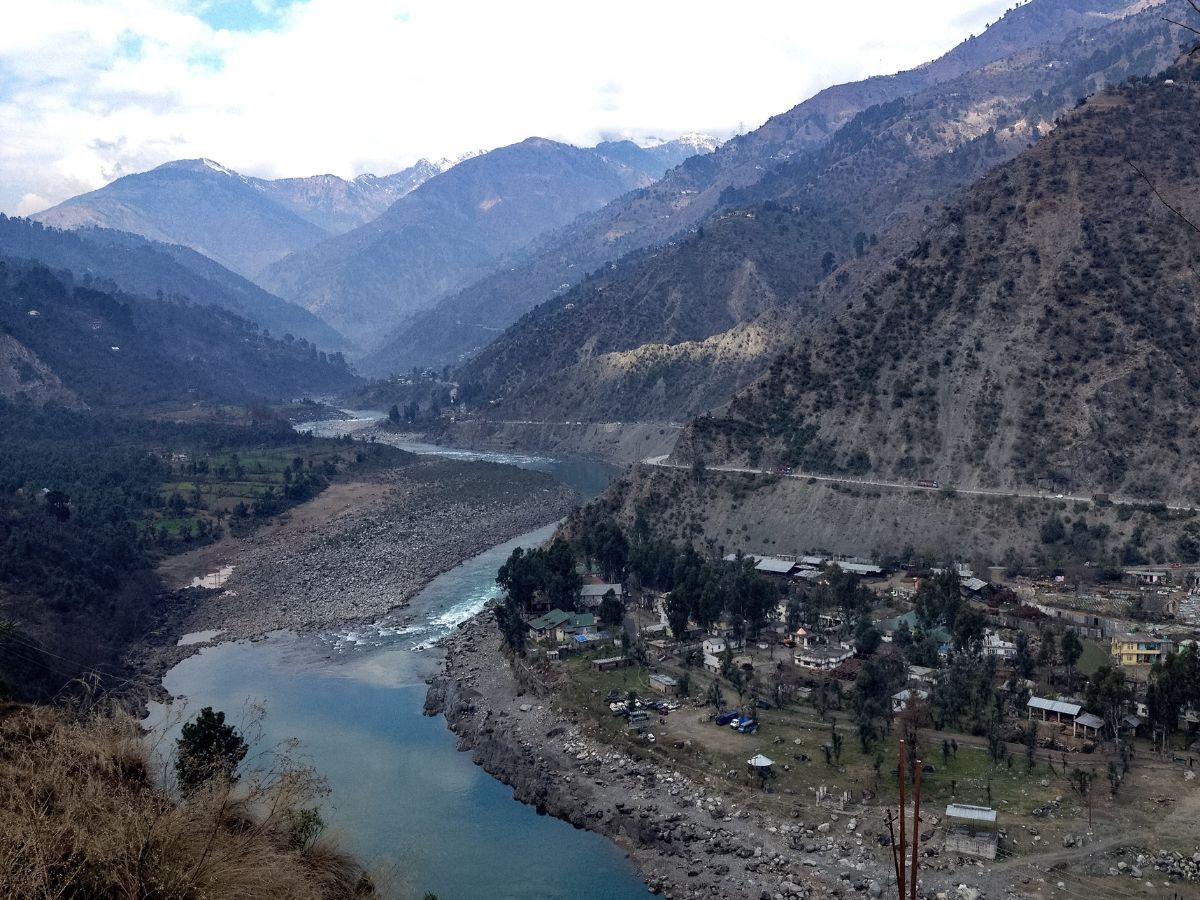

Chenab river: In a major push to harness the waters of the Indus basin, the Centre has approved the 260-megawatt Dulhasti Stage-II hydropower project on the Chenab river in Jammu and Kashmir’s Kishtwar district. The clearance comes even as the Indus Waters Treaty (IWT) with Pakistan remains suspended.
India Steps Up Hydropower Push On Western Rivers
Following the suspension of the 1960 Indus Waters Treaty in the aftermath of the Pakistan-sponsored Pahalgam terror attack, New Delhi has moved swiftly to utilise the western tributaries of the Indus, the Indus, Jhelum and Chenab, which were earlier allocated largely to Pakistan.
The approval of Dulhasti Stage-II follows the National Hydroelectric Power Corporation’s move to invite global tenders for the 1,856-MW Sawalkote Hydroelectric Power Project on the Chenab in July. Together, the projects underline India’s renewed focus on maximising hydropower potential, water security and strategic autonomy.
While adherence to the IWT earlier restricted India to non-consumptive use of these rivers, the new projects are run-of-the-river schemes, which are technically permissible even under the treaty’s original framework.
Pakistan Cries Foul, Raises ‘Water Weaponisation’ Charge
Islamabad has reacted sharply to India’s decision. Pakistan Peoples Party leader and former federal minister Sherry Rehman termed the move a “serious weaponisation” of the Chenab’s waters, alleging a violation of Pakistan’s water rights.
Pakistani media outlets, echoed similar concerns, while Pakistan again flagged what it called declining and erratic river flows into its territory. Islamabad has repeatedly claimed such fluctuations threaten its agriculture, particularly during sowing seasons, and has even raised the issue at the United Nations.
India, however, maintains that the projects comply with technical norms and international principles governing run-of-the-river hydropower.
Inside The Dulhasti Stage-II Project
The 260-MW Dulhasti Stage-II project was cleared during the 45th meeting of the environment ministry’s appraisal panel earlier this month. Estimated to cost over ₹3,200 crore, the approval paves the way for floating construction tenders.
Planned as an extension of the existing 390-MW Dulhasti Stage-I project, operational since 2007, the new stage will divert water through a 3.7-km tunnel to create a horseshoe-shaped pondage. The project will feature an underground powerhouse with two 130-MW units, along with surge and pressure shafts.
The total land requirement is 60.3 hectares, including 8.27 hectares of private land to be acquired from Benzwar and Palmar villages in Kishtwar.




