

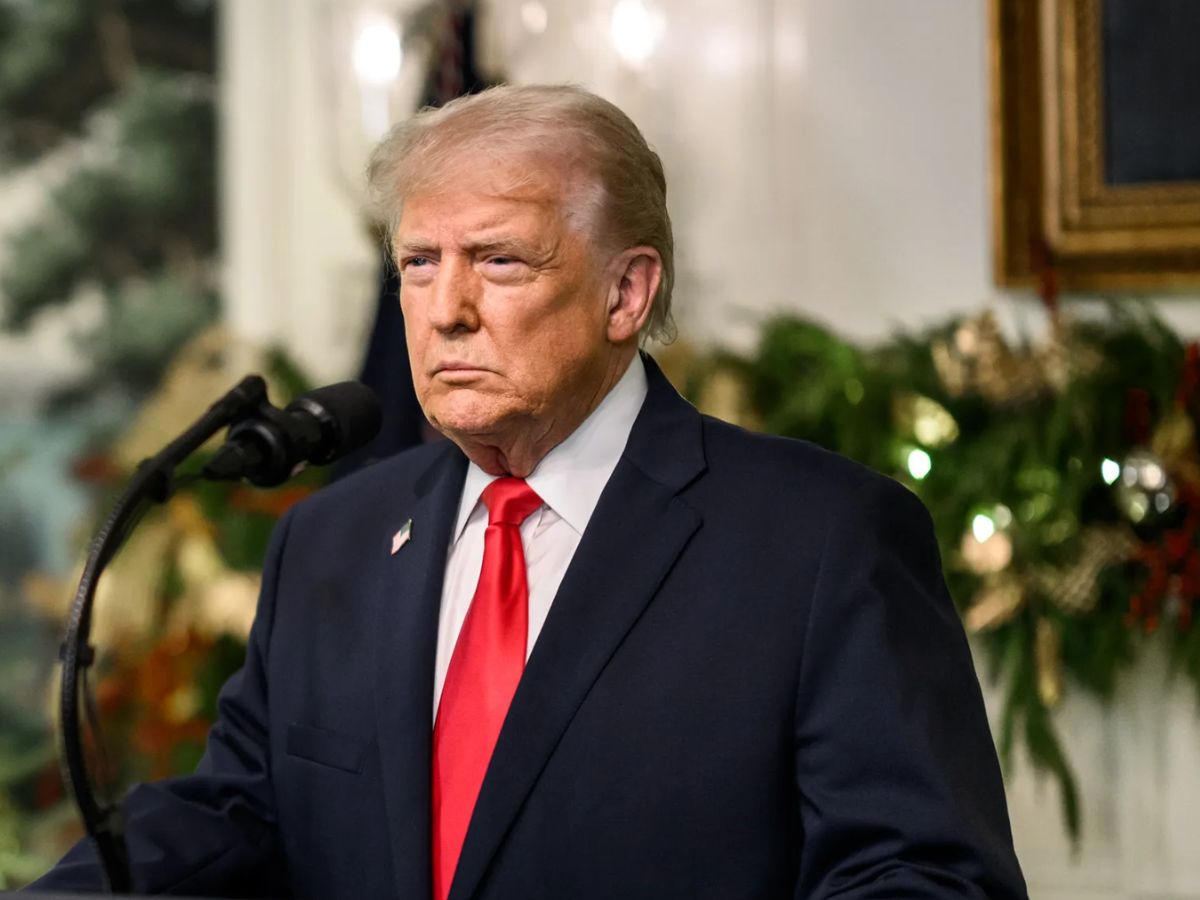
The Trump administration’s Justice Department dropped a bombshell on 1st April 2026 declaring the Presidential Records Act (PRA), a cornerstone law born out of the Watergate era, to be unconstitutional. Since then, the fallout has only grown louder.
The Justice Department’s Office of Legal Counsel told President Donald Trump that he was no longer obligated to comply with the Presidential Records Act; a law that has, for nearly five decades, required every president and their staff to preserve government records and hand them over to the National Archives at the end of their term.
A New Era of “Discretionary” Recordkeeping
White House Counsel David Warrington issued a memo on 2nd April, the day after the OLC opinion was published, stating that White House staff are still following the “preservation” mandates of the Act. So they’re not complying with the law, but they’re still sort of following it. Confusing? Very.
The new guidance says text messages must be preserved only “when they are the sole record of official decision-making, government action, or contain unique information not available elsewhere.” Everything else, the chatter, the gossip, the informal exchanges on Signal or WhatsApp, could simply vanish. And that’s exactly what’s alarming historians and transparency advocates.
The memo does not outline how President Trump or Vice President JD Vance should preserve their own records, a glaring omission that critics have been quick to highlight.
The Legal Counter-Offensive
Stepping into the fight are two heavyweights that is the American Historical Association and American Oversight, who have asked a federal court in Washington to declare the Presidential Records Act lawful and to bar federal agencies from relying on the Justice Department’s memo that deemed it illegal.
Their concern isn’t just procedural and it’s existential. At stake is the fate of millions of papers and electronic messages, not just for Trump’s second term in office, but for future presidents and people who want to understand them.
Columbia University history professor Matthew Connelly put it bluntly. He says the move shows President Trump is trying to ensure the presidency “is answerable to no one, not even the court of history.”
Executive Power vs Public Accountability
Not everyone sees it that way. Gene Hamilton, who served as deputy White House counsel, supports robust executive power. He argues that “the notion that the United States Congress gets to tell the President of the United States what he gets to do with his paperwork is, from a constitutional perspective, insane.”
But experts warn that loosening these rules has real consequences. Jason R. Baron, a University of Maryland professor, said the new White House memo “seriously undermines government accountability in making recordkeeping at the White House largely discretionary rather than mandatory.”
The White House, for its part, insists everything is in order. Spokeswoman Abigail Jackson said President Trump “is committed to preserving records from his historic Administration.” But lawyers for the historical association and the watchdog group said that training does not appear to apply to the country’s two highest-ranking leaders i.e., President Donald Trump or Vice President Vance.
This legal battle is far from over, and its outcome could redefine how America remembers its presidents for generations to come.
Syed Ziyauddin is a media and international relations enthusiast with a strong academic and professional foundation. He holds a Bachelor’s degree in Mass Media from Jamia Millia Islamia and a Master’s in International Relations (West Asia) from the same institution.
He has work with organizations like ANN Media, TV9 Bharatvarsh, NDTV and Centre for Discourse, Fusion, and Analysis (CDFA) his core interest includes Tech, Auto and global affairs.
Tweets @ZiyaIbnHameed





